Margins




548 Market St PMB 65688, San Francisco California 94104-5401 USA
© 2026 Paratext Inc. All rights reserved
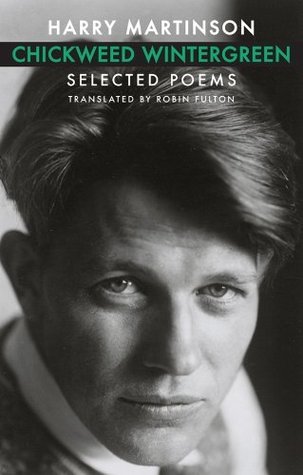
Harry Martinson (1904-78) sailed the oceans from 1920 to 1927 as an escape from an unhappy childhood in rural southwest Sweden. Returning to his native tracts, he devoted himself to writing and eventually became one of the best-known authors of his time. His election to the Swedish Academy in 1949 was seen as a gesture towards a generation of more or less self-educated working-class writers, and he shared the 1974 Nobel Prize in Literature with novelist Eyvind Johnson. While his prose books have reached a wide readership in several languages, Martinson's poems have appeared only sporadically in English. Robin Fulton's translations provide the first substantial selection of Harry Martinson's poetry for English-language readers. "His inimitable voice, his 'life's language' retained its measured intensity to the very end. For the first time in English, thanks to Robin Fulton's chiseled translations, we can now read this important poet at length." - World Literature Today