Margins




548 Market St PMB 65688, San Francisco California 94104-5401 USA
© 2026 Paratext Inc. All rights reserved
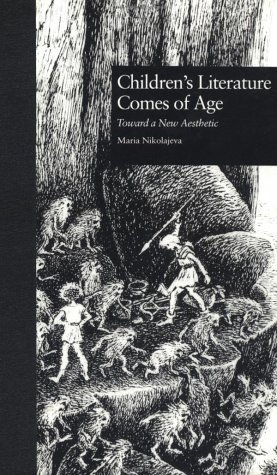
Taking a fresh approach to the genre, the author examines children's literature as an art form. She notes that in reviewing the history of the genre, it is obvious that many of the classic works still read today have a high literary quality and that many contemporary works have advanced themes, discuss controversial subjects, use sophisticated narrative technique, and employ a multitude of semiotic codes. Opening chapters discuss world literature for children vs. national literature, as well as children's literature as a specific text type or as part of a canon. The discussion also outlines the principal difference between juvenile and adult literature. Following chapters discuss the evolution of children's literature in a semiotic vein; new structures within children's books; and Bakhtin's notion of the chronotope in investigating fantasy, traditional epics, adventure tales, girls' stories, modern novels, picture books, historical and retrospective fiction. Final chapters look at intertextual relations and the intersection of author, text, reader, and the problems of realism. Among the English-language writers examined Vivian Alcock, Lloyd Alexander, Natalie Babbitt, J.M. Barrie, Frank L. Baum, Lewis Carroll, Aidan Chambers, Susan Cooper, Robert Cormier, Penelope Farmer, Alan Garner, Russell Hoban, Diana Wynne Jones, Ursula K. Le Guin, Madeleine L'Engle, C.S. Lewis, L.M. Richler, Cythnia Voigt, Patricia Wrightson. Also discussed are works of internationally renowned Swedish authors, among them, Maria Gripe, Tove Jansson, and Astrid Lingren. An index is included.