Authors


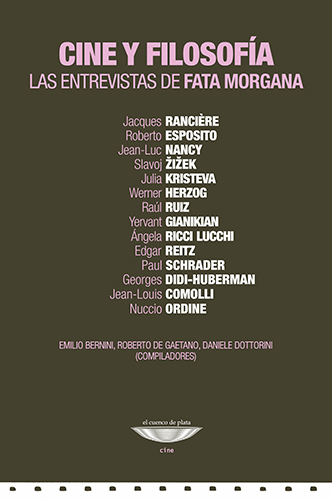
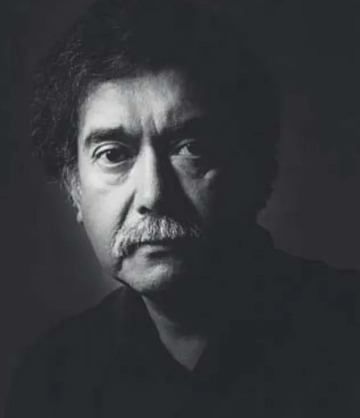
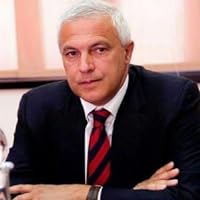
Jean-Louis Comolli (born 30 July 1941) is a French writer, editor, and film director. He was editor in chief of Cahiers du cinéma from 1966 to 1978, during which period he wrote the influential essays "Machines of the Visible" (1971) and "Technique and Ideology: Camera, Perspective, Depth of Field" (1971-2), both of which have been translated in English anthologies of film and media studies. This work was important in the discussion on apparatus theory, an attempt to rethink cinema as a site for the production and maintenance of dominant state ideology in the wake of May 1968. After his tenure at Cahiers, Comolli continued his work as a director and published numerous works on film theory, documentary, and jazz. He taught film theory at the Universities of Paris VIII, Barcelona, Strasburg and Genève. (Via wiki)


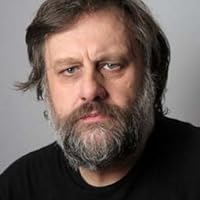
Slavoj Žižek is a Slovene sociologist, philosopher, and cultural critic. He was born in Ljubljana, Slovenia (then part of SFR Yugoslavia). He received a Doctor of Arts in Philosophy from the University of Ljubljana and studied psychoanalysis at the University of Paris VIII with Jacques-Alain Miller and François Regnault. In 1990 he was a candidate with the party Liberal Democracy of Slovenia for Presidency of the Republic of Slovenia (an auxiliary institution, abolished in 1992). Since 2005, Žižek has been a member of the Slovenian Academy of Sciences and Arts. Žižek is well known for his use of the works of 20th century French psychoanalyst Jacques Lacan in a new reading of popular culture. He writes on many topics including the Iraq War, fundamentalism, capitalism, tolerance, political correctness, globalization, subjectivity, human rights, Lenin, myth, cyberspace, postmodernism, multiculturalism, post-marxism, David Lynch, and Alfred Hitchcock. In an interview with the Spanish newspaper El País he jokingly described himself as an "orthodox Lacanian Stalinist". In an interview with Amy Goodman on Democracy Now! he described himself as a "Marxist" and a "Communist."

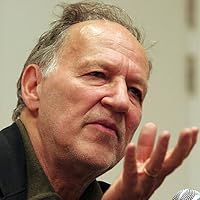
Werner Herzog (born Werner Stipetić) is a German film director, screenwriter, actor, and opera director. He is often associated with the German New Wave movement (also called New German Cinema), along with Rainer Werner Fassbinder, Margarethe von Trotta, Volker Schlöndorff, Wim Wenders and others. His films often feature heroes with impossible dreams, or people with unique talents in obscure fields.

Although his name is often linked to that of the 'movie brat' generation (Spielberg, Scorsese, Coppola, Lucas, De Palma, etc.) Paul Schrader's background couldn't have been more different. Schrader's strict Calvinist parents refused to allow him to see a film until he was eighteen. Although he more than made up for lost time when studying at Calvin College, Columbia University and UCLA's graduate film program, his influences were far removed from those of his contemporaries - Bresson, Ozu and Dreyer (about whom he wrote a book, Transcendental Style in Film: Ozu Bresson Dreyer Da Capo Paperback) rather than Saturday morning serials. After a period as a film critic (and protégé of Pauline Kael), he began writing screenplays, hitting the jackpot when he and his brother, Leonard Schrader (a Japanese expert), were paid the then-record sum of $325,000, for The Yakuza, thus establishing his reputation as one of Hollywood's top screenwriters - which was consolidated when Martin Scorsese filmed Schrader's script [Book:Taxi Driver] (1976), written in the early 1970s during a bout of drinking and depression. The success of the film allowed Schrader to start directing his own films, which have been notable for their willingness to take stylistic and thematic risks while still working squarely within the Hollywood system. The most original of his films (which he and many others regard as his best) was the Japanese co-production Mishima: A Life in Four Chapters (1985). Biography Source: http://www.imdb.com/name/nm0001707/bio

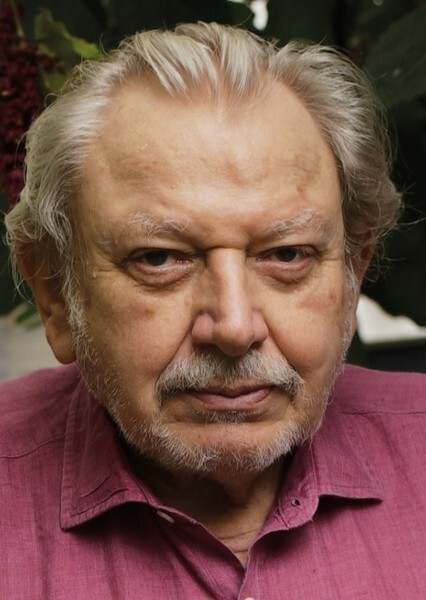
Roberto Esposito was born in Naples where he graduated at University of Naples 'Federico II'. He is Vice Director of the Istituto Italiano di Scienze Umane, is Full Professor of Theoretical Philosophy and the coordinator of the doctoral programme in Philosophy. For five years he was the only Italian member of the International Council of Scholars of the Collège International de Philosophie in Paris. He was one of the founders of the European Political Lexicon Research Centre and the International Centre for a European Legal and Political Lexicon, which was established by a consortium made up of the Universities of Bologna, Florence, Padua, Salerno, Naples L'Orientale and Naples S. Orsola Benincasa. He is co-editor of Filosofia Politica published by il Mulino, the 'Per la Storia della Filosofia Politica' series for publishers Franco Angeli, the series 'Storia e teoria politica' for publishers Bibliopolis and the series 'Comunità e Libertà' for Laterza. He is editor of the 'Teoria e Oggetti' series published by Liguori and also acts as a philosophy consultant for publishers Einaudi.