Margins
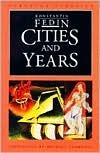
Cities and Years book cover
Cities and Years
1962
First Published
3.87
Average Rating
402
Number of Pages
The cities are Berlin and Moscow, the years those of the First World War and the Russian Revolution, and the theme enduring: what role should the intelligentsia play in the inevitable revolution looming over society? Konstantin Fedin's intense exploration of war and its aftermath focuses on Andrei Startsov, an intellectual who must wrestle with his ambivalence toward the convulsions in his homeland and with his love for the rebellious and fiercely independent Marie.

Avg Rating
3.87
Number of Ratings
45
5 STARS
36%
4 STARS
31%
3 STARS
22%
2 STARS
7%
1 STARS
4%
goodreads

Author

Konstantin Fedin
Konstantin Fedin
Author · 2 books

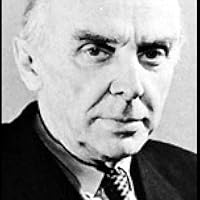
Konstantin Aleksandrovich Fedin (Russian: Константин Александрович Федин) was a Russian novelist and literary functionary. Born in Saratov of humble origins, Fedin studied in Moscow and Germany and was interned there during World War I. After his release he worked as an interpreter in the first Soviet embassy in Berlin. On returning to Russia he joined the Bolsheviks and served in the Red Army; after leaving the Party in 1921 he joined the literary group called the Serapion Brothers, who supported the Revolution but wanted freedom for literature and the arts. His first story, "The Orchard," was published in 1922, as was his play Bakunin v Drezdene (Bakunin in Dresden). His first two novels are his most important; Goroda i gody (1924; tr. as Cities and Years, 1962, "one of the first major novels in Soviet literature") and Bratya (Brothers, 1928) both deal with the problems of intellectuals at the time of the October Revolution, and include "impressions of the German bourgeois world" based on his wartime imprisonment. His later novels include Pokhishchenie Evropy (The rape of Europe, 1935), Sanatorii Arktur (The Arktur sanatorium, 1939), and the historical trilogy, Pervye radosti (First joys, 1945), Neobyknovennoe leto (An unusual summer, 1948), and Kostyor (The fire, 1961-67). He also wrote a memoir Gorky sredi nas (Gorky among us, 1943). Edward J. Brown sums him up as follows: "Fedin, while he is probably not a great writer, did possess in a high degree the talent for communicating the atmosphere of a particular time and place. His best writing is reminiscent re-creation of his own experiences, and his memory is able to select and retain sensuous elements of long-past scenes which render their telling a rich experience." From 1959 until his death he served as chair of the Union of Soviet Writers.

548 Market St PMB 65688, San Francisco California 94104-5401 USA
© 2026 Paratext Inc. All rights reserved