Margins
Margins
Sign in
Margins
Subscribe to our newsletter
548 Market St PMB 65688, San Francisco California 94104-5401 USA
hello@margins.app
·
+1 (650) 223-5283
Privacy Policy
·
Terms of Use
© 2026 Paratext Inc. All rights reserved
🕰️
classic
1984
1949
George Orwell
The year 1984 has come and gone, but George Orwell's prophetic, nightmarish vision in 1949 of the world we were becoming is timelier than ever. 1984 is still the great modern classic of "negative utopia"—a startlingly original and haunting novel that creates an imaginary world that is completely convincing, from the first sentence to the last four words. No one can deny the novel's hold on the imaginations of whole generations, or the power of its admonitions—a power that seems to grow, not lessen, with the passage of time.
The Secret History
1992
Donna Tartt
Under the influence of their charismatic classics professor, a group of clever, eccentric misfits at an elite New England college discover a way of thinking and living that is a world away from the humdrum existence of their contemporaries. But when they go beyond the boundaries of normal morality they slip gradually from obsession to corruption and betrayal, and at last—inexorably—into evil.
No Longer Human
1948
Osamu Dazai
Osamu Dazai's No Longer Human, this leading postwar Japanese writer's second novel, tells the poignant and fascinating story of a young man who is caught between the breakup of the traditions of a northern Japanese aristocratic family and the impact of Western ideas. In consequence, he feels himself "disqualified from being human" (a literal translation of the Japanese title). Donald Keene, who translated this and Dazai's first novel, The Setting Sun, has said of the author's work: "His world … suggests Chekhov or possibly postwar France, … but there is a Japanese sensibility in the choice and presentation of the material. A Dazai novel is at once immediately intelligible in Western terms and quite unlike any Western book." His writing is in some ways reminiscent of Rimbaud, while he himself has often been called a forerunner of Yukio Mishima. Cover painting by Noe Nojechowiz, from the collection of John and Barbara Duncan; design by Gertrude Huston
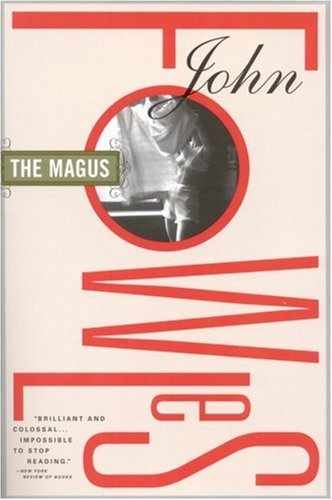
The Magus
1965
John Fowles
This daring literary thriller, rich with eroticism and suspense, is one of John Fowles' best-loved and bestselling novels and has contributed significantly to his international reputation as a writer of the first degree. At the center of The Magus is Nicholas Urfe, a young Englishman who accepts a teaching position on a remote Greek island, where he befriends a local millionaire. The friendship soon evolves into a deadly game, in which reality and fantasy are deliberately manipulated, and Nicholas finds that he must fight not only for his sanity but for his very survival.
The Club Dumas
1993
Arturo Pérez-Reverte
Lucas Corso is a book detective, a middle-aged mercenary hired to hunt down rare editions for wealthy and unscrupulous clients. When a well-known bibliophile is found dead, leaving behind part of the original manuscript of Alexandre Dumas' The Three Musketeers, Corso is brought in to authenticate the fragment. He is soon drawn into a swirling plot involving devil worship, occult practices, and swashbuckling derring-do among a cast of characters bearing a suspicious resemblance to those of Dumas' masterpiece. Aided by a mysterious beauty named for a Conan Doyle heroine, Corso travels from Madrid to Toledo to Paris on the killer's trail in this twisty intellectual romp through the book world.
A Kestrel for a Knave
1968
Barry Hines
Life is tough and cheerless for Billy Casper, a troubled teenager growing up in the small Yorkshire mining town of Barnsley. Treated as a failure at school, and unhappy at home, Billy discovers a new passion in life when he finds Kes, a kestrel hawk. Billy identifies with her silent strength and she inspires in him the trust and love that nothing else can, discovering through her the passion missing from his life. Barry Hines' acclaimed novel continues to reach new generations of teenagers and adults with its powerful story of survival in a tough, joyless world.
This Side of Paradise
1920
F. Scott Fitzgerald
This Side of Paradise, F. Scott Fitzgerald's romantic and witty first novel, was written when the author was only twenty-three years old. This semi-autobiographical story of the handsome, indulged, and idealistic Princeton student Amory Blaine received critical raves and catapulted Fitzgerald to instant fame. Now, readers can enjoy the newly edited, authorized version of this early classic of the Jazz Age, based on Fitzgerald's original manuscript. In this definitive text, This Side of Paradise captures the rhythms and romance of Fitzgerald's youth and offers a poignant portrait of the "Lost Generation."
The Unbearable Lightness of Being
1984
Milan Kundera
In The Unbearable Lightness of Being, Milan Kundera tells the story of a young woman in love with a man torn between his love for her and his incorrigible womanizing and one of his mistresses and her humbly faithful lover. This magnificent novel juxtaposes geographically distant places, brilliant and playful reflections, and a variety of styles, to take its place as perhaps the major achievement of one of the world’s truly great writers.
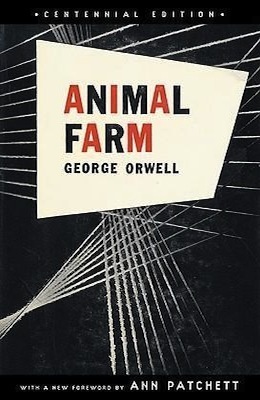
Animal Farm
1945
George Orwell
“All animals are equal, but some animals are more equal than others.” A farm is taken over by its overworked, mistreated animals. With flaming idealism and stirring slogans, they set out to create a paradise of progress, justice, and equality. Thus the stage is set for one of the most telling satiric fables ever penned—a razor-edged fairy tale for grown-ups that records the evolution from revolution against tyranny to a totalitarianism just as terrible. When Animal Farm was first published, Stalinist Russia was seen as its target. Today it is devastatingly clear that wherever and whenever freedom is attacked, under whatever banner, the cutting clarity and savage comedy of George Orwell’s masterpiece have a meaning and message still ferociously fresh.
Either/Or, Part I
1843
Soren Kierkegaard, Edna Hatlestad Hong, Howard Vincent Hong
Søren Kierkegaard, the nineteenth-century Danish philosopher rediscovered in the twentieth century, is a major influence in contemporary philosophy, religion, and literature. He regarded Either/Or as the beginning of his authorship, although he had published two earlier works on Hans Christian Andersen and irony. The pseudonymous volumes of Either/Or are the writings of a young man (I) and of Judge William (II). The ironical young man's papers include a collection of sardonic aphorisms; essays on Mozart, modern drama, and boredom; and "The Seducer's Diary." The seeming miscellany is a reflective presentation of aspects of the "either," the esthetic view of life. Part II is an older friend's "or," the ethical life of integrated, authentic personhood, elaborated in discussions of personal becoming and of marriage. The resolution of the "either/or" is left to the reader, for there is no Part III until the appearance of Stages on Life's Way . The poetic-reflective creations of a master stylist and imaginative impersonator, the two men write in distinctive ways appropriate to their respective positions.
The Divine Comedy
1320
Dante Alighieri
This Everyman’s Library edition–containing in one volume all three cantos, Inferno, Purgatorio, and Paradiso–includes an introduction by Nobel Prize—winning poet Eugenio Montale, a chronology, notes, and a bibliography. Also included are forty\-two drawings selected from Botticelli’s marvelous late\-fifteenth\-century series of illustrations. Translated in this edition by Allen Mandelbaum, The Divine Comedy begins in a shadowed forest on Good Friday in the year 1300\. It proceeds on a journey that, in its intense recreation of the depths and the heights of human experience, has become the key with which Western civilization has sought to unlock the mystery of its own identity. Mandelbaum’s astonishingly Dantean translation, which captures so much of the life of the original, renders whole for us the masterpiece of that genius whom our greatest poets have recognized as a central model for all poets.
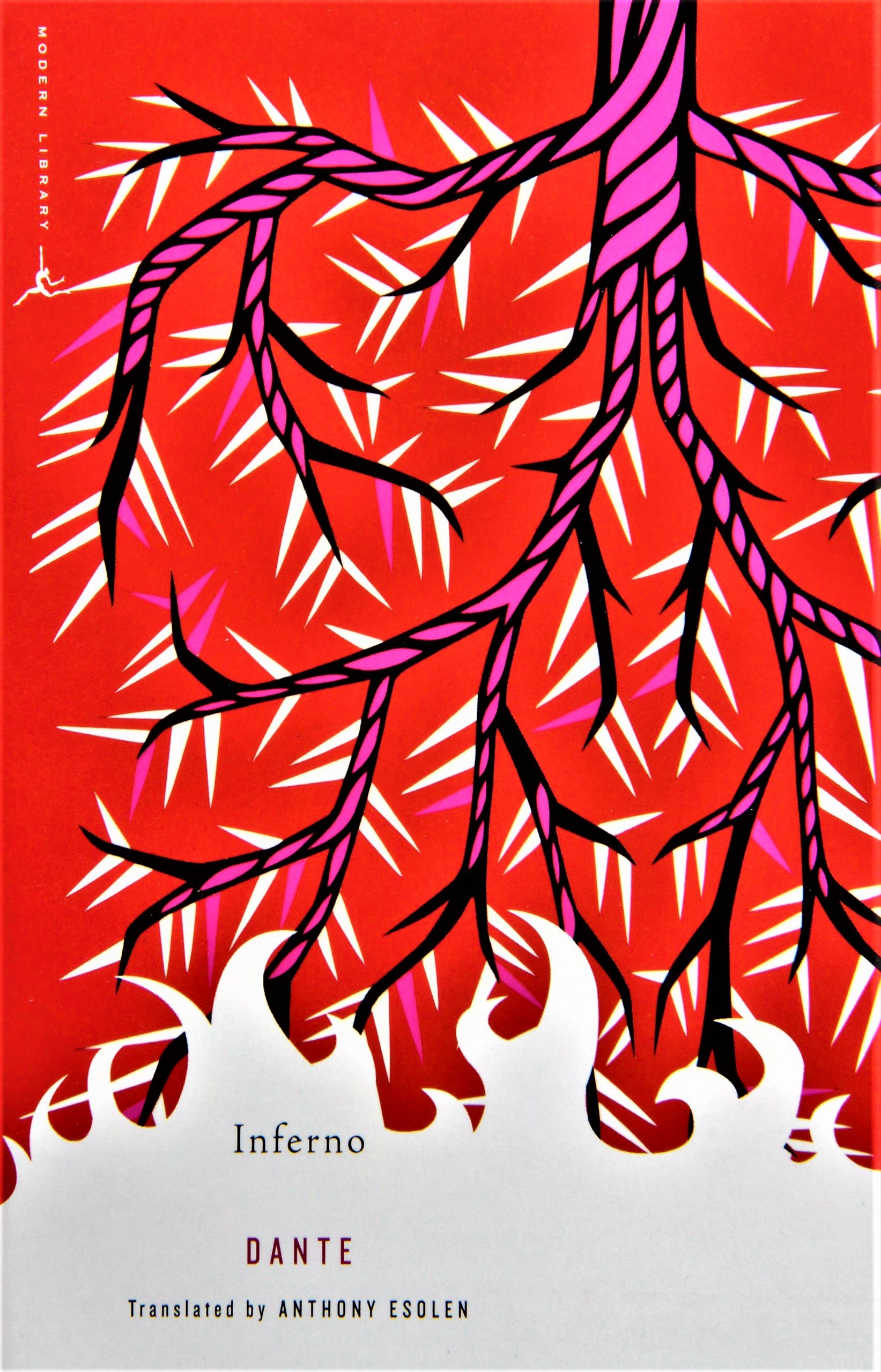
Inferno
1320
Dante Alighieri
Of the great poets, Dante is one of the most elusive and therefore one of the most difficult to adequately render into English verse. In the Inferno, Dante not only judges sin but strives to understand it so that the reader can as well. With this major new translation, Anthony Esolen has succeeded brilliantly in marrying sense with sound, poetry with meaning, capturing both the poem’s line-by-line vigor and its allegorically and philosophically exacting structure, yielding an Inferno that will be as popular with general readers as with teachers and students. For, as Dante insists, without a trace of sentimentality or intellectual compromise, even Hell is a work of divine art. Esolen also provides a critical Introduction and endnotes, plus appendices containing Dante’s most important sources—from Virgil to Saint Thomas Aquinas and other Catholic theologians—that deftly illuminate the religious universe the poet inhabited.
I Have No Mouth & I Must Scream
1967
Harlan Ellison
First published in 1967 and re-issued in 1983, I Have No Mouth and I Must Scream contains seven stories with copyrights ranging from 1958 through 1967. This edition contains the original introduction by Theodore Sturgeon and the original foreword by Harlan Ellison, along with a brief update comment by Ellison that was added in the 1983 edition. Among Ellison's more famous stories, two consistently noted as among his very best ever are the title story and the volume's concluding one, Pretty Maggie Moneyeyes. Since Ellison himself strongly resists categorization of his work, we won't call them science fiction, or SF, or speculative fiction or horror or anything else except compelling reading experiences that are sui generis. They could only have been written by Harlan Ellison and they are incomparably original. CONTENTS "I Have No Mouth & I Must Scream" "Big Sam Was My Friend" "Eyes of Dust" "World of the Myth" "Lonelyache" "Delusion for Dragonslayer" "Pretty Maggie Moneyeyes"
Dead Poets Society
1988
N.H. Kleinbaum
Todd Anderson and his friends at Welton Academy can hardly believe how different life is since their new English professor, the flamboyant John Keating, has challenged them to "make your lives extraordinary! " Inspired by Keating, the boys resurrect the Dead Poets Society—a secret club where, free from the constraints and expectations of school and parents, they let their passions run wild. As Keating turns the boys on to the great words of Byron, Shelley, and Keats, they discover not only the beauty of language, but the importance of making each moment count. But the Dead Poets pledges soon realize that their newfound freedom can have tragic consequences. Can the club and the individuality it inspires survive the pressure from authorities determined to destroy their dreams?
Orientalism
1978
Edward W. Said
More than three decades after its first publication, Edward Said's groundbreaking critique of the West's historical, cultural, and political perceptions of the East has become a modern classic. In this wide-ranging, intellectually vigorous study, Said traces the origins of "orientalism" to the centuries-long period during which Europe dominated the Middle and Near East and, from its position of power, defined "the orient" simply as "other than" the occident. This entrenched view continues to dominate western ideas and, because it does not allow the East to represent itself, prevents true understanding. Essential, and still eye-opening, Orientalism remains one of the most important books written about our divided world.
🕰️ classic