Margins
Margins
Sign in
Margins
Subscribe to our newsletter
548 Market St PMB 65688, San Francisco California 94104-5401 USA
hello@margins.app
·
+1 (650) 223-5283
Privacy Policy
·
Terms of Use
© 2026 Paratext Inc. All rights reserved
📜 Classic
📜
Classic
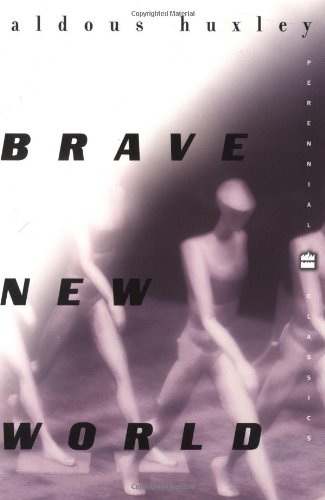
Brave New World
1932
Aldous Huxley
Brave New World is a dystopian novel by English author Aldous Huxley, written in 1931 and published in 1932. Largely set in a futuristic World State, inhabited by genetically modified citizens and an intelligence-based social hierarchy, the novel anticipates huge scientific advancements in reproductive technology, sleep-learning, psychological manipulation and classical conditioning that are combined to make a dystopian society which is challenged by only a single individual: the story's protagonist.
The Railway Children
1906
E. Nesbit
In this much-loved children's classic first published in 1906, the comfortable lives of three well-mannered siblings are greatly altered when, one evening, two men arrive at the house and take their father away. With the family's fortunes considerably reduced in his absence, the children and their mother are forced to live in a simple country cottage near a railway station. There the young trio—Roberta, Peter, and young Phyllis—befriend the porter and station master. The youngsters' days are filled with adventure and excitement, including their successful attempt to avert a horrible train disaster; but the mysterious disappearance of their father continues to haunt them. The solution to that painful puzzle and many other details and events of the children's lives come to vivid life in this perennial favorite, a story that has captivated generations of readers and, more recently, delighted television and movie audiences. In this inexpensive, unabridged edition, it will charm a whole new audience of young readers with its warmth and appeal.
The Hunchback of Notre-Dame
1831
Victor Hugo
This extraordinary historical French gothic novel, set in Medieval Paris under the twin towers of its greatest structure and supreme symbol, the cathedral of Notre-Dame, is the haunting drama of Quasimodo, the disabled bell-ringer of Notre-Dame, as he struggles to stand up to his ableist guardian Claude Frollo, who also wants to commit genocide against Paris' Romani population. The novel has been described as a key text in French literature[1] and has been adapted for film over a dozen times, in addition to numerous television and stage adaptations, such as a 1923 silent film with Lon Chaney, a 1939 sound film with Charles Laughton, and a 1996 Disney animated film with Tom Hulce (both as Quasimodo). The novel sought to preserve values of French culture in a time period of great change, which resulted in the destruction of many French Gothic structures. The novel made Notre-Dame de Paris a national icon and served as a catalyst for renewed interest in the restoration of Gothic form.
The Diary of a Young Girl
1947
Anne Frank
Discovered in the attic in which she spent the last years of her life, Anne Frank’s remarkable diary has become a world classic—a powerful reminder of the horrors of war and an eloquent testament to the human spirit. In 1942, with the Nazis occupying Holland, a thirteen-year-old Jewish girl and her family fled their home in Amsterdam and went into hiding. For the next two years, until their whereabouts were betrayed to the Gestapo, the Franks and another family lived cloistered in the “Secret Annexe” of an old office building. Cut off from the outside world, they faced hunger, boredom, the constant cruelties of living in confined quarters, and the ever-present threat of discovery and death. In her diary Anne Frank recorded vivid impressions of her experiences during this period. By turns thoughtful, moving, and surprisingly humorous, her account offers a fascinating commentary on human courage and frailty and a compelling self-portrait of a sensitive and spirited young woman whose promise was tragically cut short. —back cover
Anna Karenina
1878
Leo Tolstoy
Acclaimed by many as the world's greatest novel, Anna Karenina provides a vast panorama of contemporary life in Russia and of humanity in general. In it Tolstoy uses his intense imaginative insight to create some of the most memorable characters in all of literature. Anna is a sophisticated woman who abandons her empty existence as the wife of Karenin and turns to Count Vronsky to fulfil her passionate nature - with tragic consequences. Levin is a reflection of Tolstoy himself, often expressing the author's own views and convictions. Throughout, Tolstoy points no moral, merely inviting us not to judge but to watch. As Rosemary Edmonds comments, 'He leaves the shifting patterns of the kaleidoscope to bring home the meaning of the brooding words following the title, 'Vengeance is mine, and I will repay.
The Good Earth
1931
Pearl S. Buck
This tells the poignant tale of a Chinese farmer and his family in old agrarian China. The humble Wang Lung glories in the soil he works, nurturing the land as it nurtures him and his family. Nearby, the nobles of the House of Hwang consider themselves above the land and its workers; but they will soon meet their own downfall. Hard times come upon Wang Lung and his family when flood and drought force them to seek work in the city. The working people riot, breaking into the homes of the rich and forcing them to flee. When Wang Lung shows mercy to one noble and is rewarded, he begins to rise in the world, even as the House of Hwang falls.
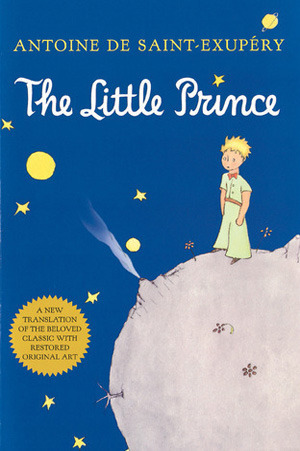
The Little Prince
1943
Antoine de Saint-Exupéry
A pilot stranded in the desert awakes one morning to see, standing before him, the most extraordinary little fellow. "Please," asks the stranger, "draw me a sheep." And the pilot realizes that when life's events are too difficult to understand, there is no choice but to succumb to their mysteries. He pulls out pencil and paper... And thus begins this wise and enchanting fable that, in teaching the secret of what is really important in life, has changed forever the world for its readers. Few stories are as widely read and as universally cherished by children and adults alike as The Little Prince, presented here in a stunning new translation with carefully restored artwork. The definitive edition of a worldwide classic, it will capture the hearts of readers of all ages.
The Wonderful Wizard of Oz
1900
L. Frank Baum
Come along, Toto, she said. We will go to the Emerald City and ask the Great Oz how to get back to Kansas again. Swept away from her home in Kansas by a tornado, Dorothy and her dog Toto find themselves stranded in the fantastical Land of Oz. As instructed by the Good Witch of the North and the Munchkins, Dorothy sets off on the yellow brick road to try and find her way to the Emerald City and the Wizard of Oz, who can help her get home. With her companions the Scarecrow, the Tin Woodman and the Cowardly Lion, Dorothy experiences an adventure full of friendship, magic and danger. A much-loved children's classic, The Wizard of Oz continues to delight readers young and old with its enchanting tale of witches, flying monkeys and silver shoes.
Sophie's World
1991
Jostein Gaarder
An alternative cover for this ISBN can be found here One day fourteen-year-old Sophie Amundsen comes home from school to find in her mailbox two notes, with one question on each: "Who are you?" and "Where does the world come from?" From that irresistible beginning, Sophie becomes obsessed with questions that take her far beyond what she knows of her Norwegian village. Through those letters, she enrolls in a kind of correspondence course, covering Socrates to Sartre, with a mysterious philosopher, while receiving letters addressed to another girl. Who is Hilde? And why does her mail keep turning up? To unravel this riddle, Sophie must use the philosophy she is learning—but the truth turns out to be far more complicated than she could have imagined.
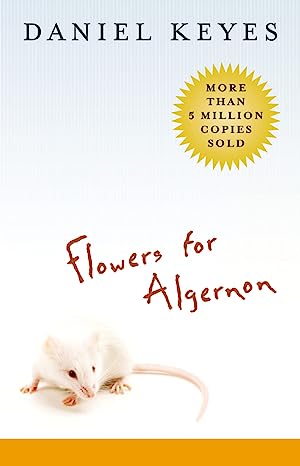
Flowers for Algernon
1966
Daniel Keyes
Winner of both the Hugo and Nebula Awards, the powerful, classic story about a man who receives an operation that turns him into a genius...and introduces him to heartache. Charlie Gordon is about to embark upon an unprecedented journey. Born with an unusually low IQ, he has been chosen as the perfect subject for an experimental surgery that researchers hope will increase his intelligence-a procedure that has already been highly successful when tested on a lab mouse named Algernon. As the treatment takes effect, Charlie's intelligence expands until it surpasses that of the doctors who engineered his metamorphosis. The experiment appears to be a scientific breakthrough of paramount importance, until Algernon suddenly deteriorates. Will the same happen to Charlie?