Margins
Margins
Sign in
Margins
Subscribe to our newsletter
548 Market St PMB 65688, San Francisco California 94104-5401 USA
hello@margins.app
·
+1 (650) 223-5283
Privacy Policy
·
Terms of Use
© 2026 Paratext Inc. All rights reserved
📚 Classical
📚
Classical
Middlemarch
1872
George Eliot
Taking place in the years leading up to the First Reform Bill of 1832, Middlemarch explores nearly every subject of concern to modern life: art, religion, science, politics, self, society, human relationships. Among her characters are some of the most remarkable portraits in English literature: Dorothea Brooke, the heroine, idealistic but naive; Rosamond Vincy, beautiful and egoistic: Edward Casaubon, the dry-as-dust scholar: Tertius Lydgate, the brilliant but morally-flawed physician: the passionate artist Will Ladislaw: and Fred Vincey and Mary Garth, childhood sweethearts whose charming courtship is one of the many humorous elements in the novel's rich comic vein.
Moby-Dick
or, The Whale
Herman Melville
Ismaël est attiré par la mer et le grand large. Il décide alors de partir à la chasse à la baleine et embarque sur le Pequod, un baleinier commandé par le capitaine Achab. Mais Ismaël s’aperçoit que le bateau ne chasse pas uniquement pour alimenter le marché de la baleine. Achab est à la recherche de Moby Dick, un cachalot blanc d'une taille impressionnante et particulièrement féroce qui par le passé lui a arraché une jambe. Achab emmène son équipage dans un périple autour du monde à la poursuite du cachalot dont il a juré de se venger. Le Pequod finira par sombrer au large des îles Gilbert en laissant Ismaël seul survivant, flottant sur un cercueil…
Crime and Punishment
1866
Fyodor Dostoevsky
Raskolnikov, a destitute and desperate former student, wanders through the slums of St Petersburg and commits a random murder without remorse or regret. He imagines himself to be a great man, a Napoleon: acting for a higher purpose beyond conventional moral law. But as he embarks on a dangerous game of cat and mouse with a suspicious police investigator, Raskolnikov is pursued by the growing voice of his conscience and finds the noose of his own guilt tightening around his neck. Only Sonya, a downtrodden sex worker, can offer the chance of redemption.
The Brothers Karamazov
1880
Fyodor Dostoevsky
The Brothers Karamazov is a murder mystery, a courtroom drama, and an exploration of erotic rivalry in a series of triangular love affairs involving the “wicked and sentimental” Fyodor Pavlovich Karamazov and his three sons―the impulsive and sensual Dmitri; the coldly rational Ivan; and the healthy, red-cheeked young novice Alyosha. Through the gripping events of their story, Dostoevsky portrays the whole of Russian life, is social and spiritual striving, in what was both the golden age and a tragic turning point in Russian culture. This award-winning translation by Richard Pevear and Larissa Volokhonsky remains true to the verbal inventiveness of Dostoevsky’s prose, preserving the multiple voices, the humor, and the surprising modernity of the original. It is an achievement worthy of Dostoevsky’s last and greatest novel.
Madame Bovary
1856
Gustave Flaubert
Madame Bovary is the debut novel of French writer Gustave Flaubert, published in 1856. The character lives beyond her means in order to escape the banalities and emptiness of provincial life. When the novel was first serialized in La Revue de Paris between 1 October 1856 and 15 December 1856, public prosecutors attacked the novel for obscenity. The resulting trial in January 1857 made the story notorious. After Flaubert's acquittal on 7 February 1857, Madame Bovary became a bestseller in April 1857 when it was published in two volumes. A seminal work of literary realism, the novel is now considered Flaubert's masterpiece, and one of the most influential literary works in history.
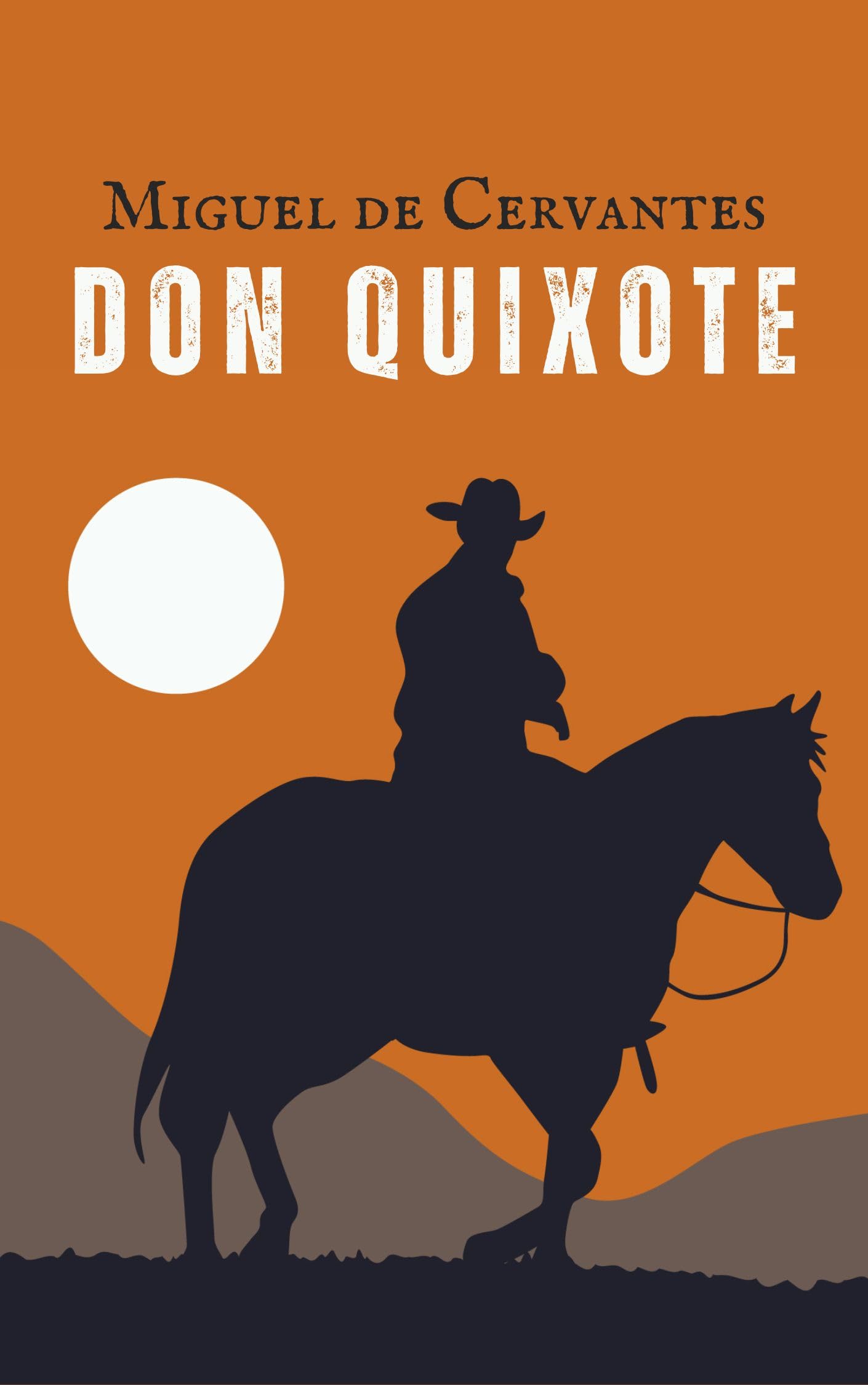
Don Quixote
The Original Unabridged and Complete Edition
Miguel de Cervantes Saavedra
Don Quixote is a Spanish epic novel by Miguel de Cervantes. It was originally published in two parts, in 1605 and 1615. Considered a founding work of Western literature, it is often labelled as the first modern novel and one of the greatest works ever written. Don Quixote is also one of the most-translated books in the world and one of the best-selling novels of all time.The plot revolves around the adventures of a member of the lowest nobility, a hidalgo from La Mancha named Alonso Quijano, who reads so many chivalric romances that he loses his mind and decides to become a knight-errant (caballero andante) to revive chivalry and serve his nation, under the name Don Quixote de la Mancha. He recruits as his squire a simple farm labourer, Sancho Panza, who brings a unique, earthy wit to Don Quixote's lofty rhetoric. In the first part of the book, Don Quixote does not see the world for what it is and prefers to imagine that he is living out a knightly story meant for the annals of all time. However, as Salvador de Madariaga pointed out in his Guía del lector del Quijote (1972 \[1926\]), referring to "the Sanchification of Don Quixote and the Quixotization of Sancho", as "Sancho's spirit ascends from reality to illusion, Don Quixote's declines from illusion to reality".
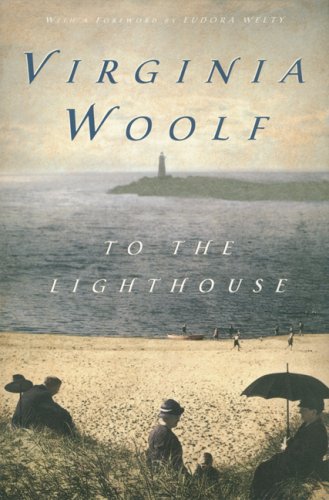
To the Lighthouse
1927
Virginia Woolf
The serene and maternal Mrs. Ramsay, the tragic yet absurd Mr. Ramsay, and their children and assorted guests are on holiday on the Isle of Skye. From the seemingly trivial postponement of a visit to a nearby lighthouse, Woolf constructs a remarkable, moving examination of the complex tensions and allegiances of family life and the conflict between men and women. As time winds its way through their lives, the Ramsays face, alone and simultaneously, the greatest of human challenges and its greatest triumph—the human capacity for change.
The Death of Ivan Ilych
1886
Leo Tolstoy
Hailed as one of the world's supreme masterpieces on the subject of death and dying, The Death of Ivan Ilyich is the story of a worldly careerist, a high court judge who has never given the inevitability of his dying so much as a passing thought. But one day, death announces itself to him, and to his shocked surprise, he is brought face to face with his own mortality. How, Tolstoy asks, does an unreflective man confront his one and only moment of truth? This short novel was an artistic culmination of a profound spiritual crisis in Tolstoy's life, a nine-year period following the publication of Anna Karenina during which he wrote not a word of fiction. A thoroughly absorbing, and, at times, terrifying glimpse into the abyss of death, it is also a strong testament to the possibility of finding spiritual salvation.