Margins
Margins
Sign in
Margins
Subscribe to our newsletter
548 Market St PMB 65688, San Francisco California 94104-5401 USA
hello@margins.app
·
+1 (650) 223-5283
Privacy Policy
·
Terms of Use
© 2026 Paratext Inc. All rights reserved
📚
Classics Read
The Great Gatsby
1925
F. Scott Fitzgerald
The Great Gatsby, F. Scott Fitzgerald's third book, stands as the supreme achievement of his career. This exemplary novel of the Jazz Age has been acclaimed by generations of readers. The story of the fabulously wealthy Jay Gatsby and his love for the beautiful Daisy Buchanan, of lavish parties on Long Island at a time when The New York Times noted "gin was the national drink and sex the national obsession," it is an exquisitely crafted tale of America in the 1920s. The Great Gatsby is one of the great classics of twentieth\-century literature. (from the back cover)
George Orwell's Animal Farm
The Graphic Novel
Les Hauts de Hurle-Vent
2023
Emily Bronte
Les Earnshaw coulent des jours heureux dans leur domaine des hauts de hurle-vent, perdu dans les landes et battu par les vents. Un soir de tempête, le père de Hindley et de Catherine revient accompagné de Heathcliff, un jeune orphelin qui va bouleverser leur destin. Le garçon éprouve une passion dévorante pour Catherine, la fille de son protecteur. Mais celle-ci choisira d'en épouser un autre. Heathcliff n'aura bientôt plus qu'une obsession : la vengeance...
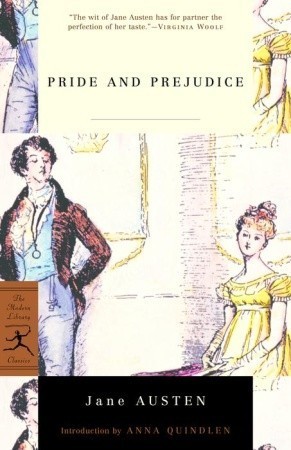
Pride and Prejudice
1813
Jane Austen
Since its immediate success in 1813, Pride and Prejudice has remained one of the most popular novels in the English language. Jane Austen called this brilliant work "her own darling child" and its vivacious heroine, Elizabeth Bennet, "as delightful a creature as ever appeared in print." The romantic clash between the opinionated Elizabeth and her proud beau, Mr. Darcy, is a splendid performance of civilized sparring. And Jane Austen's radiant wit sparkles as her characters dance a delicate quadrille of flirtation and intrigue, making this book the most superb comedy of manners of Regency England. Alternate cover edition of ISBN 9780679783268
1984
1949
George Orwell
The year 1984 has come and gone, but George Orwell's prophetic, nightmarish vision in 1949 of the world we were becoming is timelier than ever. 1984 is still the great modern classic of "negative utopia"—a startlingly original and haunting novel that creates an imaginary world that is completely convincing, from the first sentence to the last four words. No one can deny the novel's hold on the imaginations of whole generations, or the power of its admonitions—a power that seems to grow, not lessen, with the passage of time.
The Alchemist
1988
Paulo Coelho
Paulo Coelho's masterpiece tells the mystical story of Santiago, an Andalusian shepherd boy who yearns to travel in search of a worldly treasure. His quest will lead him to riches far different, and far more satisfying, listening to our hearts, of recognizing opportunity and learning to read the omens strewn along life's path, and, most importantly, to follow our dreams.
Les Nuits Blanches
de Fédor Dostoïevski | Format Broché
Fédor Dostoïevski, Fiodor Dostoïevski, Fyodor Dostoyevsky
La Princesse de Montpensier
1662
Madame de La Fayette
Marie-Madeleine Pioche de La Vergne (Comtesse de Lafayette) (1634-1693) was a French writer. She was born in Paris to a family of minor but rich nobility. In 1655, de La Vergne married Francois Motier, Comte de Lafayette, a widowed nobleman some eighteen years her senior, with whom she would have two sons. Settling permanently in Paris in 1659, Lafayette published, anonymously, La Princesse de Montpensier in 1662. Her most famous novel was La Princesse de Cleves, France's first historical novel, first published anonymously in 1678. An immense success, the work is often taken to be a prototype of the early psychological novel.
Lettre d'une inconnue / La Ruelle au clair de lune
2013
Stefan Zweig
Un écrivain viennois apprend en lisant son courrier qu'une femme l'aime en secret d'un amour absolu depuis des années. Une nuit, un voyageur rencontre dans un bar un homme autrefois dominateur, aujourd'hui humilié par une fille à matelots. Ces deux nouvelles publiées en 1922 témoignent de l'art de Stefan Zweig pour dépeindre les tourments de l'amour non partagé, la passion qui brûle les cours et détruit les vies. Traduction d'Alzir Hella et Olivier Bournac. Révision de la traduction de Brigitte Vergne-Cain et Gérard Rudent.
📚 Classics Read