Margins
Margins
Sign in
Margins
Subscribe to our newsletter
548 Market St PMB 65688, San Francisco California 94104-5401 USA
hello@margins.app
·
+1 (650) 223-5283
Privacy Policy
·
Terms of Use
© 2026 Paratext Inc. All rights reserved
📚
Classics TBR
Crime and Punishment
1866
Fyodor Dostoevsky
Raskolnikov, a destitute and desperate former student, wanders through the slums of St Petersburg and commits a random murder without remorse or regret. He imagines himself to be a great man, a Napoleon: acting for a higher purpose beyond conventional moral law. But as he embarks on a dangerous game of cat and mouse with a suspicious police investigator, Raskolnikov is pursued by the growing voice of his conscience and finds the noose of his own guilt tightening around his neck. Only Sonya, a downtrodden sex worker, can offer the chance of redemption.
Anna Karenina
1878
Leo Tolstoy
Acclaimed by many as the world's greatest novel, Anna Karenina provides a vast panorama of contemporary life in Russia and of humanity in general. In it Tolstoy uses his intense imaginative insight to create some of the most memorable characters in all of literature. Anna is a sophisticated woman who abandons her empty existence as the wife of Karenin and turns to Count Vronsky to fulfil her passionate nature - with tragic consequences. Levin is a reflection of Tolstoy himself, often expressing the author's own views and convictions. Throughout, Tolstoy points no moral, merely inviting us not to judge but to watch. As Rosemary Edmonds comments, 'He leaves the shifting patterns of the kaleidoscope to bring home the meaning of the brooding words following the title, 'Vengeance is mine, and I will repay.
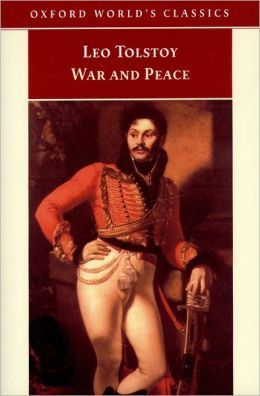
War and Peace
1867
Leo Tolstoy
In Russia's struggle with Napoleon, Tolstoy saw a tragedy that involved all mankind. War and Peace broadly focuses on Napoleon’s invasion of Russia in 1812 and follows three of the most well-known characters in literature: Pierre Bezukhov, the illegitimate son of a count who is fighting for his inheritance and yearning for spiritual fulfillment; Prince Andrei Bolkonsky, who leaves his family behind to fight in the war against Napoleon; and Natasha Rostov, the beautiful young daughter of a nobleman who intrigues both men. As Napoleon’s army invades, Tolstoy brilliantly follows characters from diverse backgrounds—peasants and nobility, civilians and soldiers—as they struggle with the problems unique to their era, their history, and their culture. And as the novel progresses, these characters transcend their specificity, becoming some of the most moving—and human—figures in world literature. Tolstoy gave his personal approval to this translation, published here in a new single volume edition, which includes an introduction by Henry Gifford, and Tolstoy's important essay `Some Words about War and Peace'.
The Brothers Karamazov
1880
Fyodor Dostoevsky
The Brothers Karamazov is a murder mystery, a courtroom drama, and an exploration of erotic rivalry in a series of triangular love affairs involving the “wicked and sentimental” Fyodor Pavlovich Karamazov and his three sons―the impulsive and sensual Dmitri; the coldly rational Ivan; and the healthy, red-cheeked young novice Alyosha. Through the gripping events of their story, Dostoevsky portrays the whole of Russian life, is social and spiritual striving, in what was both the golden age and a tragic turning point in Russian culture. This award-winning translation by Richard Pevear and Larissa Volokhonsky remains true to the verbal inventiveness of Dostoevsky’s prose, preserving the multiple voices, the humor, and the surprising modernity of the original. It is an achievement worthy of Dostoevsky’s last and greatest novel.
The Three Musketeers
1844
Alexandre Dumas
The novel follows the adventures of an 18-year-old penniless Gascon, d'Artagnan, who comes to Paris to pursue a career in the Musketeers. He befriends Athos, Porthos, and Aramis, musketeers serving King Louis XIII. These four men will oppose the Prime Minister, Cardinal Richelieu, and his agents, including the Count of Rochefort and the beautiful and mysterious Milady de Winter, in order to save the honor of the Queen of France, Anne of Austria. With its numerous sword fights and dramatic twists, The Three Musketeers is the quintessential swashbuckling novel, and its success was so great that Dumas himself adapted it for the theater and brought back the four heroes in the rest of the trilogy.
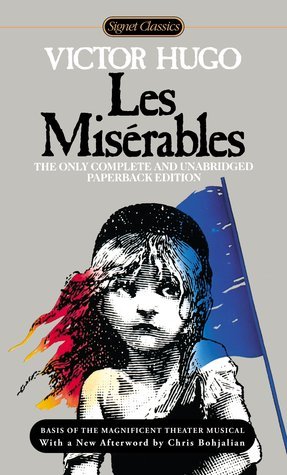
Les Misérables
1862
Victor Hugo
Victor Hugo's tale of injustice, heroism and love follows the fortunes of Jean Valjean, an escaped convict determined to put his criminal past behind him. But his attempts to become a respected member of the community are constantly put under threat: by his own conscience, when, owing to a case of mistaken identity, another man is arrested in his place; and by the relentless investigations of the dogged Inspector Javert. It is not simply for himself that Valjean must stay free, however, for he has sworn to protect the baby daughter of Fantine, driven to prostitution by poverty.
Don Quixote
1605
Don Quixote has become so entranced by reading chivalric romances that he determines to become a knight-errant himself. In the company of his faithful squire, Sancho Panza, his exploits blossom in all sorts of wonderful ways. While Quixote's fancy often leads him astray—he tilts at windmills, imagining them to be giants—Sancho acquires cunning and a certain sagacity. Sane madman and wise fool, they roam the world together, and together they have haunted readers' imaginations for nearly four hundred years. With its experimental form and literary playfulness, Don Quixote has been generally recognized as the first modern novel. The book has been enormously influential on a host of writers, from Fielding and Sterne to Flaubert, Dickens, Melville, and Faulkner, who reread it once a year, "just as some people read the Bible."
Frankenstein
1818
Mary Shelley
'Now that I had finished, the beauty of the dream vanished, and breathless horror and disgust filled my heart ...' Obsessed with creating life itself, Victor Frankenstein plunders graveyards for the material to fashion a new being, which he shocks into life with electricity. But his botched creature, rejected by Frankenstein and denied human companionship, sets out to destroy his maker and all that he holds dear. Mary Shelley's chilling Gothic tale was conceived when she was only eighteen, living with her lover Percy Shelley near Byron's villa on Lake Geneva. It would become the world's most famous work of horror fiction, and remains a devastating exploration of the limits of human creativity. Based on the third edition of 1831, this volume contains all the revisions Mary Shelley made to her story, as well as her 1831 introduction and Percy Bysshe Shelley's preface to the first edition. This revised edition includes as appendices a select collation of the texts of 1818 and 1831 together with 'A Fragment' by Lord Byron and Dr John Polidori's 'The Vampyre: A Tale'.
📚 Classics TBR