Margins
Margins
Sign in
Margins
Subscribe to our newsletter
548 Market St PMB 65688, San Francisco California 94104-5401 USA
hello@margins.app
·
+1 (650) 223-5283
Privacy Policy
·
Terms of Use
© 2026 Paratext Inc. All rights reserved
📜
Classics
The Poems of Nakahara Chuya
1993
Chuya Nakahara
Born in 1907, Nakahara Chuya was one of the most gifted and colourful of Japan’s early modern poets. A bohemian romantic, his death at the early age of thirty, coupled with the delicacy of his imagery, have led to him being compared to the greatest of French symbolist poets. Since the Second World War Nakahara’s stature has risen, and his poetry is now ranked among the finest Japanese verse of the 20th century. Influenced by both Symbolism and Dada, he created lyrics renowned for their songlike eloquence, their personal imagery and their poignant charm. This selection of poems from throughout Nakahara’s creative life includes collected and uncollected work and draws on recent scholarship to give a full account of this extraordinary figure.
Ichigo Dōmei
1990
Masahiro Mita
Una iluminación de la delgada línea que a veces separa los inexpertos amores de juventud del suicidio y la muerte El protagonista es Ryōichi Kitazawa, hijo de una familia de clase media. Su madre imparte clases de piano en el sótano de su casa, su hermano menor es un alumno brillante que estudia en una prestigiosa escuela privada, y su padre vive absorbido por el trabajo y casi nunca está en casa. Ryōichi es un chico solitario y retraído que estudia en una escuela de secundaria pública y aprende a tocar el piano, pero no con su madre, sino con una profesora particular. Se siente abrumado por la enorme presión y competitividad del sistema educativo japoné es consciente de que no tiene suficiente nivel académico para entrar en un buen instituto, y tampoco confía en que su talento como pianista le permita dedicarse a la música. Por eso a menudo se pregunta cuál es el sentido de vivir y juega con la idea del suicidio. Un día, un chico de su curso llamado Hangei Tetsuya, la estrella del equipo de béisbol, le pide a Ryōichi que grabe uno de sus partidos y que lo acompañe al hospital para enseñarle la cinta a una amiga de la infancia que está gravemente enferma. Ryōichi se siente extrañamente atraído por la joven enferma. Hasta que ella le «Quieres suicidarte conmigo?». Un chico que quiere morir conoce a una chica que quiere vivir. Ella le enseña a aferrarse a la vida con todas sus fuerzas, ya que la fugacidad de la vida es una bendición y una maldición al mismo tiempo. Una novela llena de crudeza que, no obstante, deja una puerta abierta a la esperanza.
The Travelling Cat Chronicles
2012
Hiro Arikawa
Sometimes you have to leave behind everything you know to find the place you truly belong... Nana the cat is on a road trip. He is not sure where he's going or why, but it means that he gets to sit in the front seat of a silver van with his beloved owner, Satoru. Side by side, they cruise around Japan through the changing seasons, visiting Satoru's old friends. He meets Yoshimine, the brusque and unsentimental farmer for whom cats are just ratters; Sugi and Chikako, the warm-hearted couple who run a pet-friendly B&B; and Kosuke, the mournful husband whose cat-loving wife has just left him. There's even a very special dog who forces Nana to reassess his disdain for the canine species. But what is the purpose of this road trip? And why is everyone so interested in Nana? Nana does not know and Satoru won't say. But when Nana finally works it out, his small heart will break...
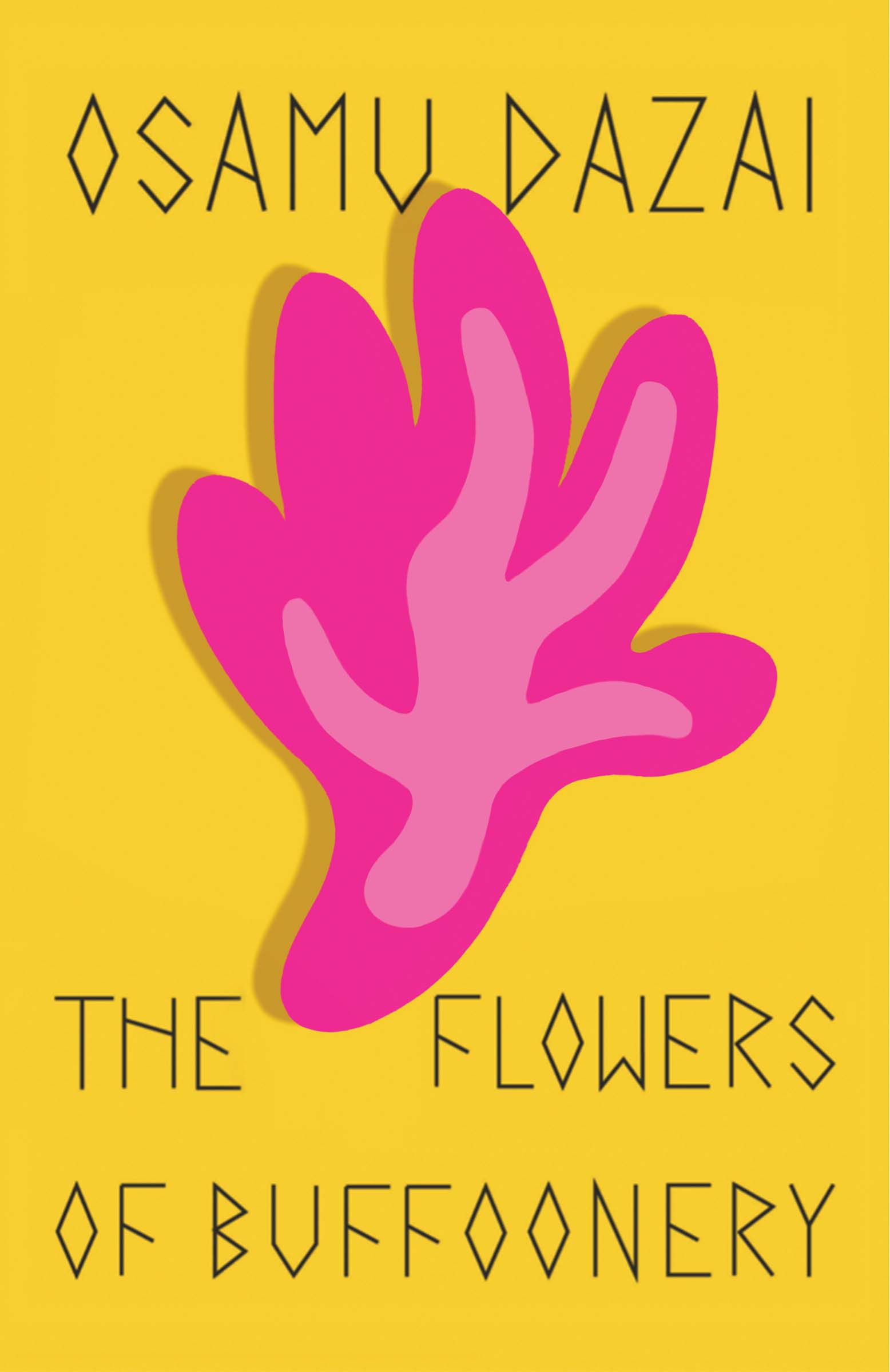
The Flowers of Buffoonery
1935
Osamu Dazai
The Flowers of Buffoonery opens in a seaside sanitarium where Yozo Oba—the narrator of No Longer Human at a younger age—is being kept after a failed suicide attempt. While he convalesces, his friends and family visit him, and other patients and nurses drift in and out of his room. Against this dispiriting backdrop, everyone tries to maintain a lighthearted, even clownish atmosphere: playing cards, smoking cigarettes, vying for attention, cracking jokes, and trying to make each other laugh. While No Longer Human delves into the darkest corners of human consciousness, The Flowers of Buffoonery pokes fun at these same emotions: the follies and hardships of youth, of love, and of self-hatred and depression. A glimpse of the lives of a group of outsiders in prewar Japan, The Flowers of Buffoonery is a darkly humorous and fresh addition to Osamu Dazai’s masterful and intoxicating oeuvre.
Matadero Cinco o La cruzada de los niños
2020
Ryan North, Albert Monteys
“Yo, Billy Pilgrim, moriré, siempre he muerto y siempre moriré el 13 de febrero de 1976”. Billy Pilgrim se ha desprendido en el tiempo. No puede controlar a dónde se dirige. Vive en un estado continuo de pánico escénico, porque no tiene ni la más remota idea de qué parte de su vida va a tener que representar a continuación. Billy se ha acostado siendo un viejo viudo y se ha despertado el día de su boda. Ha construido una familia cariñosa y ha presenciado el bombardeo de Dresde. Ha entrado por una puerta en 1955 y ha salido por ella en 1941. Ha vuelto a traspasar esa puerta y se ha encontrado en 1963. Ha visto su nacimiento y su muerte muchas veces, según dice, y viaja al azar hacia cualquier momento de su vida. Eso dice. Matadero Cinco, primera adaptación al cómic de la novela original de Kurt Vonnegut, dibujada por Albert Monteys, es a la vez una mirada mordaz al horror y la tragedia de la guerra, donde los niños son enviados al frente y mueren (así fue y será), y un conmovedor examen de lo que significa ser un humano falible. Publicada por primera vez en 1969 en plena guerra de Vietnam, el potente mensaje antibelicista de la novela, el humor negro y absurdo y las agudas observaciones de la naturaleza humana conservan toda su vigencia.
Cat's Cradle
1963
Kurt Vonnegut
Told with deadpan humour and bitter irony, Kurt Vonnegut's cult tale of global destruction preys on our deepest fears of witnessing Armageddon and, worse still, surviving it ... Dr Felix Hoenikker, one of the founding 'fathers' of the atomic bomb, has left a deadly legacy to the world. For he's the inventor of 'ice-nine', a lethal chemical capable of freezing the entire planet. The search for its whereabouts leads to Hoenikker's three ecentric children, to a crazed dictator in the Caribbean, to madness. Felix Hoenikker's Death Wish comes true when his last, fatal gift to humankind brings about the end, that for all of us, is nigh...
The Monk
1796
Matthew Gregory Lewis
'He now saw himself stained with the most loathed and monstrous sins, the object of universal execration ... doomed to perish in tortures the most severe' Shocking, erotic and violent, The Monk is the story of Ambrosio, torn between his spiritual vows and the temptations of physical pleasure. His internal battle leads to sexual obsession, rape and murder, yet this book also contains knowing parody of its own excesses as well as social comedy. Written by Matthew Lewis when he was only nineteen, it was a ground-breaking novel in the Gothic Horror genre and spawned hundreds of imitators, drawn in by its mixture of bloodshed, sex and scandal.
The Last Man
1826
Mary Shelley
A futuristic story of tragic love and of the gradual extermination of the human race by plague, The Last Man is Mary Shelley's most important novel after Frankenstein. With intriguing portraits of Percy Bysshe Shelley and Lord Byron, the novel offers a vision of the future that expresses a reaction against Romanticism, and demonstrates the failure of the imagination and of art to redeem the doomed characters.
The Sun Also Rises
1926
Ernest Hemingway
The quintessential novel of the Lost Generation, The Sun Also Rises (Fiesta) is one of Ernest Hemingway's masterpieces and a classic example of his spare but powerful writing style. A poignant look at the disillusionment and angst of the post-World War I generation, the novel introduces two of Hemingway's most unforgettable characters: Jake Barnes and Lady Brett Ashley. The story follows the flamboyant Brett and the hapless Jake as they journey from the wild nightlife of 1920s Paris to the brutal bullfighting rings of Spain with a motley group of expatriates. It is an age of moral bankruptcy, spiritual dissolution, unrealized love, and vanishing illusions. First published in 1926, The Sun Also Rises helped to establish Hemingway as one of the greatest writers of the twentieth century.
Stoner
1965
John Williams
William Stoner is born at the end of the nineteenth century into a dirt-poor Missouri farming family. Sent to the state university to study agronomy, he instead falls in love with English literature and embraces a scholar’s life, so different from the hardscrabble existence he has known. And yet as the years pass, Stoner encounters a succession of disappointments: marriage into a “proper” family estranges him from his parents; his career is stymied; his wife and daughter turn coldly away from him; a transforming experience of new love ends under threat of scandal. Driven ever deeper within himself, Stoner rediscovers the stoic silence of his forebears and confronts an essential solitude. John Williams’s luminous and deeply moving novel is a work of quiet perfection. William Stoner emerges from it not only as an archetypal American, but as an unlikely existential hero, standing, like a figure in a painting by Edward Hopper, in stark relief against an unforgiving world.
Cannery Row
1945
John Steinbeck
Cannery Row is a book without much of a plot. Rather, it is an attempt to capture the feeling and people of a place, the cannery district of Monterey, California, which is populated by a mix of those down on their luck and those who choose for other reasons not to live "up the hill" in the more respectable area of town. The flow of the main plot is frequently interrupted by short vignettes that introduce us to various denizens of the Row, most of whom are not directly connected with the central story. These vignettes are often characterized by direct or indirect reference to extreme violence: suicides, corpses, and the cruelty of the natural world. The "story" of Cannery Row follows the adventures of Mack and the boys, a group of unemployed yet resourceful men who inhabit a converted fish-meal shack on the edge of a vacant lot down on the Row. Sweet Thursday is the sequel to Cannery Row.
Paradise Rot
2009
Jenny Hval
A lyrical debut novel from a musician and artist renowned for her sharp sexual and political imagery Jo is in a strange new country for university, and having a more peculiar time than most. A house with no walls, a roommate with no boundaries, and a home that seems ever more alive. Jo’s sensitivity, and all her senses, become increasingly heightened and fraught, as the lines between bodies and plants, and dreaming and wakefulness, blur and mesh. This debut novel from critically acclaimed artist and musician Jenny Hval, presents a heady and hyper-sensual portrayal of sexual awakening and queer desire. A complex, poetic and strange novel about bodies, sexuality and the female gender.
The Mill on the Floss
1860
George Eliot
'If life had no love in it, what else was there for Maggie?' Brought up at Dorlcote Mill, Maggie Tulliver worships her brother Tom and is desperate to win the approval of her parents, but her passionate, wayward nature and her fierce intelligence bring her into constant conflict with her family. As she reaches adulthood, the clash between their expectations and her desires is painfully played out as she finds herself torn between her relationships with three very different men: her proud and stubborn brother, a close friend who is also the son of her family's worst enemy, and a charismatic but dangerous suitor. With its poignant portrayal of sibling relationships, The Mill on the Floss is considered George Eliot's most autobiographical novel; it is also one of her most powerful and moving. In this edition writer and critic A.S. Byatt provides full explanatory notes and an introduction relating Mill on the Floss to George Eliot's own life and times. Edited with an introduction and notes by A.S. BYATT
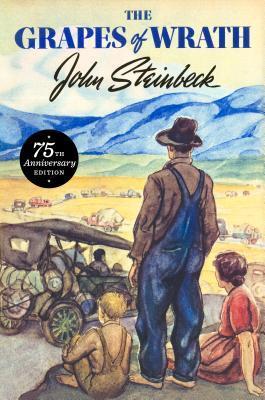
The Grapes of Wrath
1939
John Steinbeck
The Pulitzer Prize-winning epic of the Great Depression, a book that galvanized—and sometimes outraged—millions of readers. First published in 1939, Steinbeck’s Pulitzer Prize-winning epic of the Great Depression chronicles the Dust Bowl migration of the 1930s and tells the story of one Oklahoma farm family, the Joads—driven from their homestead and forced to travel west to the promised land of California. Out of their trials and their repeated collisions against the hard realities of an America divided into Haves and Have-Nots evolves a drama that is intensely human yet majestic in its scale and moral vision, elemental yet plainspoken, tragic but ultimately stirring in its human dignity. A portrait of the conflict between the powerful and the powerless, of one man’s fierce reaction to injustice, and of one woman’s stoical strength, the novel captures the horrors of the Great Depression and probes into the very nature of equality and justice in America. At once a naturalistic epic, captivity narrative, road novel, and transcendental gospel, Steinbeck’s powerful landmark novel is perhaps the most American of American Classics.
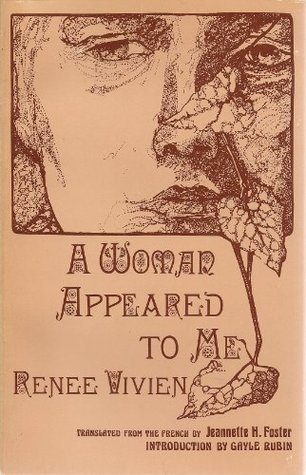
A Woman Appeared to Me
1904
Renee Vivien
"A WOMAN APPEARED TO ME is Renée Vivien's feverish, dream-like account of her tormented relationship with her muse and mistress, Natalie Clifford Barney." - Introduction
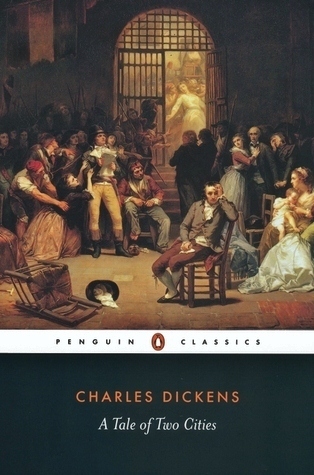
A Tale of Two Cities
1859
Charles Dickens
A Tale of Two Cities is Charles Dickens’s great historical novel, set against the violent upheaval of the French Revolution. The most famous and perhaps the most popular of his works, it compresses an event of immense complexity to the scale of a family history, with a cast of characters that includes a bloodthirsty ogress and an antihero as believably flawed as any in modern fiction. Though the least typical of the author’s novels, A Tale of Two Cities still underscores many of his enduring themes—imprisonment, injustice, social anarchy, resurrection, and the renunciation that fosters renewal.
Don Quixote
1605
Don Quixote has become so entranced by reading chivalric romances that he determines to become a knight-errant himself. In the company of his faithful squire, Sancho Panza, his exploits blossom in all sorts of wonderful ways. While Quixote's fancy often leads him astray—he tilts at windmills, imagining them to be giants—Sancho acquires cunning and a certain sagacity. Sane madman and wise fool, they roam the world together, and together they have haunted readers' imaginations for nearly four hundred years. With its experimental form and literary playfulness, Don Quixote has been generally recognized as the first modern novel. The book has been enormously influential on a host of writers, from Fielding and Sterne to Flaubert, Dickens, Melville, and Faulkner, who reread it once a year, "just as some people read the Bible."
A domestic animal
1970
Francis King
Francis King's 1970 novel A Domestic Animal is the story of Antonio Valli, a brilliant young Italian philosopher, who arrives to do a year's research at a well-to-do university. He lodges with Dick Thompson, a successful middle-aged novelist, and his good looks and impulsive yet immensely likeable character soon have Dick captivated. Valli is someone who needs to be admired and loved and has an insatiable craving for attention from everyone he meets; he needs an audience to perform to and he finds this at the university, but especially in Dick's company. It is not long before Dick Thompson has fallen completely in love with his charming - but very heterosexual - lodger. What follows is an ill-fated relationship that can only end in disaster, but in A Domestic Animal King has created a novel of bitter longing and painful complexities. 'Few English novelists have written with more might and assurance . . .' Spectator
📜 Classics