Margins
Margins
Sign in
Margins
Subscribe to our newsletter
548 Market St PMB 65688, San Francisco California 94104-5401 USA
hello@margins.app
·
+1 (650) 223-5283
Privacy Policy
·
Terms of Use
© 2026 Paratext Inc. All rights reserved
📜 Classics
📜
Classics
The Diary of a Young Girl
1947
Anne Frank
Discovered in the attic in which she spent the last years of her life, Anne Frank’s remarkable diary has become a world classic—a powerful reminder of the horrors of war and an eloquent testament to the human spirit. In 1942, with the Nazis occupying Holland, a thirteen-year-old Jewish girl and her family fled their home in Amsterdam and went into hiding. For the next two years, until their whereabouts were betrayed to the Gestapo, the Franks and another family lived cloistered in the “Secret Annexe” of an old office building. Cut off from the outside world, they faced hunger, boredom, the constant cruelties of living in confined quarters, and the ever-present threat of discovery and death. In her diary Anne Frank recorded vivid impressions of her experiences during this period. By turns thoughtful, moving, and surprisingly humorous, her account offers a fascinating commentary on human courage and frailty and a compelling self-portrait of a sensitive and spirited young woman whose promise was tragically cut short. —back cover
The Alchemist
1988
Paulo Coelho
Paulo Coelho's masterpiece tells the mystical story of Santiago, an Andalusian shepherd boy who yearns to travel in search of a worldly treasure. His quest will lead him to riches far different, and far more satisfying, listening to our hearts, of recognizing opportunity and learning to read the omens strewn along life's path, and, most importantly, to follow our dreams.
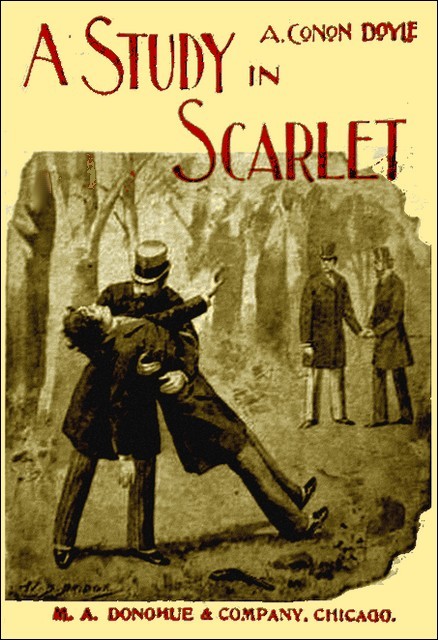
A Study in Scarlet
1887
Arthur Conan Doyle
Our first meeting with Sherlock Holmes. And John Watson's too! The young doctor is astonished by Holmes' many idiosyncrasies, including his talents on the violin. But it's not long before Sherlock Holmes, with Watson in tow, is working with Scotland Yard investigating the murder of two Americans whose deaths have some mysterious connection to sinister groups gathering power in both Britain and America. Here's where it all began, 'A Study in Scarlet.' Meet Sherlock Holmes, one of the world's leading consulting detectives - fictional of course!
1984
1949
George Orwell
The year 1984 has come and gone, but George Orwell's prophetic, nightmarish vision in 1949 of the world we were becoming is timelier than ever. 1984 is still the great modern classic of "negative utopia"—a startlingly original and haunting novel that creates an imaginary world that is completely convincing, from the first sentence to the last four words. No one can deny the novel's hold on the imaginations of whole generations, or the power of its admonitions—a power that seems to grow, not lessen, with the passage of time.
Perfume
The Story of a Murderer
Patrick Suskind
An acclaimed bestseller and international sensation, Patrick Suskind's classic novel provokes a terrifying examination of what happens when one man's indulgence in his greatest passion—his sense of smell—leads to murder. In the slums of eighteenth-century France, the infant Jean-Baptiste Grenouille is born with one sublime gift—an absolute sense of smell. As a boy, he lives to decipher the odors of Paris, and apprentices himself to a prominent perfumer who teaches him the ancient art of mixing precious oils and herbs. But Grenouille's genius is such that he is not satisfied to stop there, and he becomes obsessed with capturing the smells of objects such as brass doorknobs and fresh-cut wood. Then one day he catches a hint of a scent that will drive him on an ever-more-terrifying quest to create the "ultimate perfume"—the scent of a beautiful young virgin. Told with dazzling narrative brilliance, Perfume is a hauntingly powerful tale of murder and sensual depravity.
Wuthering Heights
1847
Emily Bronte
Another cover edition for this ISBN One of the most passionate and heartfelt novels ever written, Wuthering Heights tells of the relationship between Catherine Earnshaw and Heathcliff, the orphan boy her father adopted and brought to Wuthering Heights when they were children. While Catherine forms a deep attachment to Heathcliff, her brother Hindley despises him as a rival. Heathcliff becomes torn between love for Catherine and the rage and humiliation he suffers. Finally he can stand it no longer and, in the violence of a summer storm, leaves the Heights for three years. During his absence Catherine has married, but her tormented heart belongs eternally to Heathcliff who is now prepared to exact his tyrannical revenge. With its freedom from social convention and its unparalleled emotional intensity, Wuthering Heights is a highly original and deeply tragic work.
Kidnapped
1886
Robert Louis Stevenson
Tricked by the uncle who has stolen his inheritance, young David Balfour is kidnapped and bound for America. Or at least that was the plan, until the ship runs into trouble and David is rescued by Alan Breck Stewart, fugitive Jacobite and, by his own admission, a ‘bonny fighter’. Balfour, a canny lowlander, finds an echo of some wilder and more romantic self in the wilful and courageous Highland spirit of Alan Breck. A strange and difficult friendship is born, as their adventures begin. Kidnapped has become a classic of historical romance the world over and is justly famous as a novel of travel and adventure in the Scottish landscape. Stevenson’s vivid descriptive powers were never better than in his account of remote places and dangerous action in the Highlands in the years after Culloden.
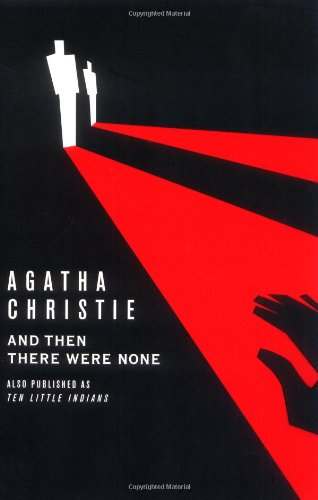
And Then There Were None
1939
Agatha Christie
First, there were ten—a curious assortment of strangers summoned as weekend guests to a little private island off the coast of Devon. Their host, an eccentric millionaire unknown to all of them, is nowhere to be found. All that the guests have in common is a wicked past they're unwilling to reveal—and a secret that will seal their fate. For each has been marked for murder. A famous nursery rhyme is framed and hung in every room of the mansion: "Ten little boys went out to dine; One choked his little self and then there were nine. Nine little boys sat up very late; One overslept himself and then there were eight. Eight little boys traveling in Devon; One said he'd stay there then there were seven. Seven little boys chopping up sticks; One chopped himself in half and then there were six. Six little boys playing with a hive; A bumblebee stung one and then there were five. Five little boys going in for law; One got in Chancery and then there were four. Four little boys going out to sea; A red herring swallowed one and then there were three. Three little boys walking in the zoo; A big bear hugged one and then there were two. Two little boys sitting in the sun; One got frizzled up and then there was one. One little boy left all alone; He went out and hanged himself and then there were none." When they realize that murders are occurring as described in the rhyme, terror mounts. One by one they fall prey. Before the weekend is out, there will be none. Who has choreographed this dastardly scheme? And who will be left to tell the tale? Only the dead are above suspicion.
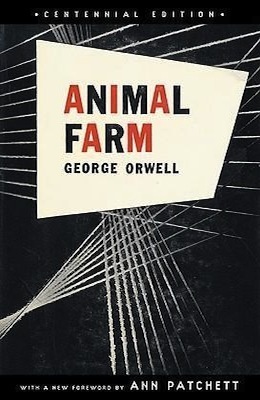
Animal Farm
1945
George Orwell
“All animals are equal, but some animals are more equal than others.” A farm is taken over by its overworked, mistreated animals. With flaming idealism and stirring slogans, they set out to create a paradise of progress, justice, and equality. Thus the stage is set for one of the most telling satiric fables ever penned—a razor-edged fairy tale for grown-ups that records the evolution from revolution against tyranny to a totalitarianism just as terrible. When Animal Farm was first published, Stalinist Russia was seen as its target. Today it is devastatingly clear that wherever and whenever freedom is attacked, under whatever banner, the cutting clarity and savage comedy of George Orwell’s masterpiece have a meaning and message still ferociously fresh.