Margins
Margins
Sign in
Margins
Subscribe to our newsletter
548 Market St PMB 65688, San Francisco California 94104-5401 USA
hello@margins.app
·
+1 (650) 223-5283
Privacy Policy
·
Terms of Use
© 2026 Paratext Inc. All rights reserved
📚 Classics
📚
Classics
1984
1949
George Orwell
The year 1984 has come and gone, but George Orwell's prophetic, nightmarish vision in 1949 of the world we were becoming is timelier than ever. 1984 is still the great modern classic of "negative utopia"—a startlingly original and haunting novel that creates an imaginary world that is completely convincing, from the first sentence to the last four words. No one can deny the novel's hold on the imaginations of whole generations, or the power of its admonitions—a power that seems to grow, not lessen, with the passage of time.
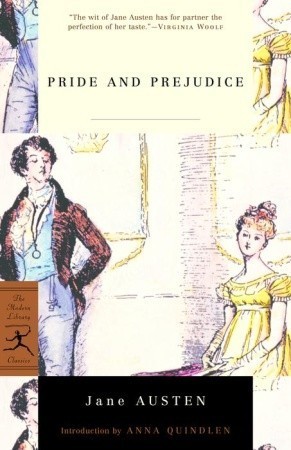
Pride and Prejudice
1813
Jane Austen
Since its immediate success in 1813, Pride and Prejudice has remained one of the most popular novels in the English language. Jane Austen called this brilliant work "her own darling child" and its vivacious heroine, Elizabeth Bennet, "as delightful a creature as ever appeared in print." The romantic clash between the opinionated Elizabeth and her proud beau, Mr. Darcy, is a splendid performance of civilized sparring. And Jane Austen's radiant wit sparkles as her characters dance a delicate quadrille of flirtation and intrigue, making this book the most superb comedy of manners of Regency England. Alternate cover edition of ISBN 9780679783268
The Insulted and Humiliated
1861
Fyodor Dostoevsky
"Humiliés et offensés" de Fédor Dostoïevski. Ecrivain russe (1821-1881).
The Brothers Karamazov
1880
Fyodor Dostoevsky
The Brothers Karamazov is a murder mystery, a courtroom drama, and an exploration of erotic rivalry in a series of triangular love affairs involving the “wicked and sentimental” Fyodor Pavlovich Karamazov and his three sons―the impulsive and sensual Dmitri; the coldly rational Ivan; and the healthy, red-cheeked young novice Alyosha. Through the gripping events of their story, Dostoevsky portrays the whole of Russian life, is social and spiritual striving, in what was both the golden age and a tragic turning point in Russian culture. This award-winning translation by Richard Pevear and Larissa Volokhonsky remains true to the verbal inventiveness of Dostoevsky’s prose, preserving the multiple voices, the humor, and the surprising modernity of the original. It is an achievement worthy of Dostoevsky’s last and greatest novel.
The Secret Garden
1911
Frances Hodgson Burnett
When orphaned Mary Lennox comes to live at her uncle's great house on the Yorkshire Moors, she finds it full of secrets. The mansion has nearly one hundred rooms, and her uncle keeps himself locked up. And at night, she hears the sound of crying down one of the long corridors. The gardens surrounding the large property are Mary's only escape. Then, Mary discovers a secret garden, surrounded by walls and locked with a missing key. One day, with the help of two unexpected companions, she discovers a way in. Is everything in the garden dead, or can Mary bring it back to life? One of the most delightful and enduring classics of children's literature, The Secret Garden has remained a firm favorite with children the world over ever since it made its first appearance. Initially published as a serial story in 1910 in The American Magazine, it was brought out in novel form in 1911.
The Monk
1796
Matthew Gregory Lewis
'He now saw himself stained with the most loathed and monstrous sins, the object of universal execration ... doomed to perish in tortures the most severe' Shocking, erotic and violent, The Monk is the story of Ambrosio, torn between his spiritual vows and the temptations of physical pleasure. His internal battle leads to sexual obsession, rape and murder, yet this book also contains knowing parody of its own excesses as well as social comedy. Written by Matthew Lewis when he was only nineteen, it was a ground-breaking novel in the Gothic Horror genre and spawned hundreds of imitators, drawn in by its mixture of bloodshed, sex and scandal.
The Vampyre and Other Tales of the Macabre
1997
Robert Morrison
John Polidori's classic tale The Vampyre (1819), was a product of the same ghost-story competition that produced Mary Shelley's Frankenstein. The present volume selects thirteen other tales of mystery and the macabre, including the works of James Hogg, J.S. LeFanu, Letitia Landon, Edward Bulwer, and William Carelton. The introduction surveys the genesis and influence of The Vampyre and its central themes and techniques, while the Appendices contain material closely associated with its composition and publication, including Lord Byron's prose fragment Augustus Darvell. JOHN POLIDORI - The Vampyre HORACE SMITH - Sir Guy Eveling's Dream WILLIAM CARLETON - Confessions of a Reformed Ribbonman EDWARD BULWER - Monos and Daimonos ALLAN CUNNINGHAM - The Master of Logan ANONYMOUS - The Victim JAMES HOGG - Some Terrible Letters from Scotland ANONYMOUS - The Curse ANONYMOUS - Life in Death N. P. WILLIS - My Hobby,—Rather CATHERINE GORE - The Red Man CHARLES LEVER - Post-Mortem Recollections of a Medical Lecturer LETITIA E. LANDON - The Bride of Lindorf JOSEPH SHERIDAN LE FANU - Passage in the Secret History of an Irish Contess
The Magic Toyshop
1967
Angela Carter
One night Melanie walks through the garden in her mother's wedding dress. The next morning her world is shattered. Forced to leave the comfortable home of her childhood, she is sent to London to live with relatives she never met: Aunt Margaret, beautiful and speechless, and her brothers, Francie, whose graceful music belies his clumsy nature, and the volatile Finn, who kisses Melanie in the ruins of the pleasure garden. And brooding Uncle Philip loves only the life-sized wooden puppets he creates in his toyshops. The classic gothic novel established Angela Carter as one of our most imaginative writers and augurs the themes of her later creative works. "Beneath its contemporary surface, this novel shimmers with blurred echoes—from Lewis Carroll, from 'Giselle' and 'Coppelia,' Harlequin and Punch… It leave behind it a flavor, pungent and unsettling" —The New York Times Book Review