Margins
Margins
Sign in
Margins
Subscribe to our newsletter
548 Market St PMB 65688, San Francisco California 94104-5401 USA
hello@margins.app
·
+1 (650) 223-5283
Privacy Policy
·
Terms of Use
© 2026 Paratext Inc. All rights reserved
📚 Classics
📚
Classics
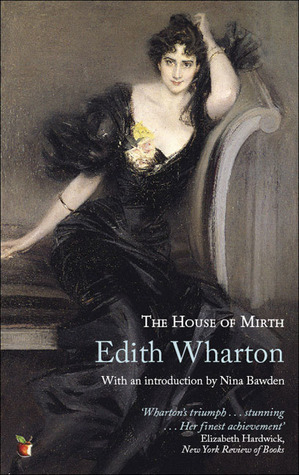
The House of Mirth
1905
Edith Wharton
First published in 1905, The House of Mirth shocked the New York society it so deftly chronicles, portraying the moral, social and economic restraints on a woman who dared to claim the privileges of marriage without assuming the responsibilities. Lily Bart, beautiful, witty and sophisticated, is accepted by 'old money' and courted by the growing tribe of nouveaux riches. But as she nears thirty, her foothold becomes precarious; a poor girl with expensive tastes, she needs a husband to preserve her social standing, and to maintain her in the luxury she has come to expect. Whilst many have sought her, something - fastidiousness or integrity- prevents her from making a 'suitable' match.
Titus Groan
1946
Mervyn Peake
Starts with the birth and ends with the first birthday celebrations of the heir to the grand, tradition-bound castle of Gormenghast. A grand miasma of doom and foreboding weaves over the sterile rituals of the castle. Villainous Steerpike seeks to exploit the gaps between the formal rituals and the emotional needs of the ruling family for his own profit.
The Sorrows of Young Werther
1774
Ellen Palmer
This is Goethe's first novel, published in 1774. Written in diary form, it tells the tale of an unhappy, passionate young man hopelessly in love with Charlotte, the wife of a friend - a man who he alternately admires and detests. 'The Sorrows of Young Werther' became an important part of the 'Sturm und Drang movement, and greatly influenced later 'Romanticism'. The work is semi-autobiographical - in 1772, two years before the novel was published, Goethe had passed through a similar tempestuous period, when he lost his heart to Charlotte Buff, who was at that time engaged to his friend Johann Christian Kestner.
Oblomov
1859
Ivan Goncharov
Even though Ivan Goncharov wrote several books that were widely read and discussed during his lifetime, today he is remembered for one novel, Oblomov, published in 1859, an indisputable classic of Russian literature, the artistic stature and cultural significance of which may be compared only to other such masterpieces as Nikolai Gogol's Dead Souls, Leo Tolstoy's Anna Karenina, and Fyodor Dostoevsky's Brothers Karamazov. Stephen Pearl's new translation, the first major English-language publication of Oblomov in more than fifty years, succeeds exquisitely to introduce this astonishing and endearing novel to a new generation of readers.
Heartsnatcher
1953
Boris Vian
Set in a bizarre and slightly sinister town where the elderly are auctioned off at an Old Folks Fair, the townspeople assail the priest in hopes of making it rain, and the official town scapegoat bears the shame of the citizens by fishing junk out of the river with his teeth. Heartsnatcher is Boris Vian's most playful and most serious work. The main character is Clementine, a mother who punishes her husband for causing her the excruciating pain of giving birth to three babies. As they age, she becomes increasingly obsessed with protecting them, going so far as to build an invisible wall around their property.
Fathers and Sons
1862
Ivan Turgenev
Bazarov—a gifted, impatient, and caustic young man—has journeyed from school to the home of his friend Arkady Kirsanov. But soon Bazarov’s outspoken rejection of authority and social conventions touches off quarrels, misunderstandings, and romantic entanglements that will utterly transform the Kirsanov household and reflect the changes taking place across all of nineteenth-century Russia. Fathers and Sons enraged the old and the young, reactionaries, romantics, and radicals alike when it was first published. At the same time, Turgenev won the acclaim of Flaubert, Maupassant, and Henry James for his craftsmanship as a writer and his psychological insight. Fathers and Sons is now considered one of the greatest novels of the nineteenth century. A timeless depiction of generational conflict during social upheaval, it vividly portrays the clash between the older Russian aristocracy and the youthful radicalism that foreshadowed the revolution to come—and offers modern-day readers much to reflect upon as they look around at their own tumultuous, ever changing world. Introduction by Jane Costlow
The Fiery Angel
1908
Valery Bryusov
The Fiery Angel is one of the great achievements of modern Russian literature, as powerful and revolutionary as its contemporary, Mikhail Bulgakov's The Master and Margarita. In a vividly atmospheric recreation of the occult underworld of sixteenth century Germany, during the age of the Inquisition, three souls meet; an innocent young man choosing between Love and Duty, a woman prone to visions and a Knight, who is either an angel or a demon. Religious experience and sexual hysteria meet in an apocalyptic vision of the spiritual crisis of modern life. The Fiery Angel is one of the great novels of decadent occultism.
A Dream of Red Mansions
1970
Cao Xueqin, Kao Ngo
"A Dream of Red Mansions" (Hung Lou Meng, sometimes translated as "The Dream of the Red Chamber"), the great classical Chinese novel written in the mid-eighteenth century during the reign of Emperor Chien-lung of the Ching Dynasty, has been widely popular throughout the last two hundred years and more. The Ching Dynasty (1644-1911) was the last feudal dynasty in China. Although it saw a period of relative stability, feudal society was already on the decline and all the contradictions inherent in it were sharpening. This classic novel (an erotic tale of love, sex and passion) is a masterpiece of realism takes as its background the decline of several related big families and drawing much from the author's own experiences. It is a book about political struggle, a political-historical novel. Cao Xueqin focused on the tragic love between Jia Baoyu and Lin Daiyu and, in the meantime, provides a panorama of the lives of people of various levels in the degenerating empire. The author's family were close to the Ching imperial house in general, and with Emperor Kang-hsi in particular. He died in 1763 without having finished his novel. It stands out in the world literature ranking with "Hamlet" and "War and Peace." This is the first English translation of the complete text of this classical Chinese novel. Translated by Yang Hsien-yi and his British wife Gladys Young with many full-page illustrations by Tai Tun-Pang. The translation appears in three volumes of forty chapters each.
Six Records of a Floating Life
1809
Shen Fu
Six Records of a Floating Life (1809) is an extraordinary blend of autobiography, love story and social document written by a man who was educated as a scholar but earned his living as a civil servant and art dealer. In this intimate memoir, Shen Fu recounts the domestic and romantic joys of his marriage to Yun, the beautiful and artistic girl he fell in love with as a child. He also describes other incidents of his life, including how his beloved wife obtained a courtesan for him and reflects on his travels through China. Shen Fu's exquisite memoir shows six parallel "layers" of one man's life, loves and career, with revealing glimpses into Chinese society of the Ch'ing Dynasty.
The Peony Pavilion
1598
Xianzu Tang
The celebrated English translation of this classic work of Chinese literature is now available in an updated paperback edition. Written in 1598 by Tang Xianzu, The Peony Pavilion is one of literature's most memorable love stories and a masterpiece of Ming drama. It's heroine, Bridal Du, is a cloistered girl who dreams of love, then dies pining for her dream suitor. Returning to earth in ghostly form, she is restored to life through the devotion of a young scholar. Cyril Birch has captured all the elegance, lyricism, and subtle, earthy humour of this panoramic tale of romance and Chinese society. When Indiana University Press first published the text in 1980, it seemed doubtful that the work would ever be performed in its entirety again, but several spectacular and controversial productions have toured the world in recent years. For this second edition, which contains a revised text of the translation, Cyril Birch and Catherine Swatek reflect upon contemporary performances of the play in light of a well-established tradition of stage interpretation in China and the sometimes heated politics of intercultural collaboration.
The Story of the Stone
1988
Barry Hughart
In the valley of Sorrows, a monk is brutally murdered for a worthless manuscript, and the abbot of the humble monastery calls upon Master Li and Number Ten Ox to investigate the seemingly senseless killing. The most likely suspect is the infamous Laughing Prince, founder of the valley, whose murderous frenzies have made him a legend. But even Master Li must concede that the prince has a pretty good alibi: he's been dead for more than seven hundred years. Undaunted, Master Li and Number Ten Ox begin their search for the Laughing Prince. Together they roam a mystical countryside populated by demons, ghosts, murderers, and mad kings to the very gates of heaven itself—and what they find there is even stranger still.
The Last Temptation of Christ
1955
Nikos Kazantzakis
The internationally renowned novel about the life and death of Jesus Christ. Hailed as a masterpiece by critics worldwide, The Last Temptation of Christ is a monumental reinterpretation of the Gospels that brilliantly fleshes out Christ’s Passion. This literary rendering of the life of Jesus Christ has courted controversy since its publication by depicting a Christ far more human than the one seen in the Bible. He is a figure who is gloriously divine but earthy and human, a man like any other—subject to fear, doubt, and pain. In elegant, thoughtful prose Nikos Kazantzakis, one of the greats of modern literature, follows this Jesus as he struggles to live out God’s will for him, powerfully suggesting that it was Christ’s ultimate triumph over his flawed humanity, when he gave up the temptation to run from the cross and willingly laid down his life for mankind, that truly made him the venerable redeemer of men. “Spiritual dynamite.” — San Francisco Chronicle “A searing, soaring, shocking novel.” — Time
Beloved
1987
Toni Morrison
Winner of the Pulitzer Prize, Toni Morrison’s Beloved is a spellbinding and dazzlingly innovative portrait of a woman haunted by the past. Sethe was born a slave and escaped to Ohio, but eighteen years later she is still not free. She has borne the unthinkable and not gone mad, yet she is still held captive by memories of Sweet Home, the beautiful farm where so many hideous things happened. Meanwhile Sethe’s house has long been troubled by the angry, destructive ghost of her baby, who died nameless and whose tombstone is engraved with a single word: Beloved. Sethe works at beating back the past, but it makes itself heard and felt incessantly in her memory and in the lives of those around her. When a mysterious teenage girl arrives, calling herself Beloved, Sethe’s terrible secret explodes into the present. Combining the visionary power of legend with the unassailable truth of history, Morrison’s unforgettable novel is one of the great and enduring works of American literature.
Carmilla
1872
J. Sheridan Le Fanu
In an isolated castle deep in the Austrian forest, Laura leads a solitary life with only her ailing father for company. Until one moonlit night, a horse-drawn carriage crashes into view, carrying an unexpected guest – the beautiful Carmilla. So begins a feverish friendship between Laura and her mysterious, entrancing companion. But as Carmilla becomes increasingly strange and volatile, prone to eerie nocturnal wanderings, Laura finds herself tormented by nightmares and growing weaker by the day… Pre-dating Dracula by twenty-six years, Carmilla is the original vampire story, steeped in sexual tension and gothic romance.
The Enchanted April
1922
Elizabeth von Arnim
A recipe for happiness: four women, one medieval Italian castle, plenty of wisteria, and solitude as needed. The women at the center of The Enchanted April are alike only in their dissatisfaction with their everyday lives. They find each other—and the castle of their dreams—through a classified ad in a London newspaper one rainy February afternoon. The ladies expect a pleasant holiday, but they don’t anticipate that the month they spend in Portofino will reintroduce them to their true natures and reacquaint them with joy. Now, if the same transformation can be worked on their husbands and lovers, the enchantment will be complete. The Enchanted April was a best-seller in both England and the United States, where it was a Book-of-the-Month Club selection, and set off a craze for tourism to Portofino. More recently, the novel has been the inspiration for a major film and a Broadway play.
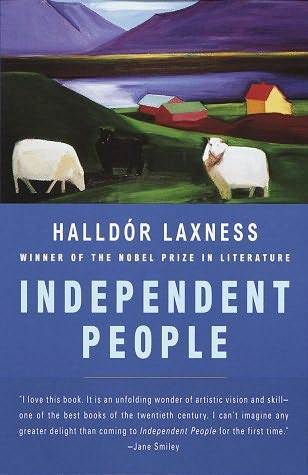
Independent People
1934
Halldor Laxness
This magnificent novel—which secured for its author the 1955 Nobel Prize in Literature—is at last available to contemporary American readers. Although it is set in the early twentieth century, it recalls both Iceland's medieval epics and such classics as Sigrid Undset's Kristin Lavransdatter. And if Bjartur of Summerhouses, the book's protagonist, is an ordinary sheep farmer, his flinty determination to achieve independence is genuinely heroic and, at the same time, terrifying and bleakly comic. Having spent eighteen years in humiliating servitude, Bjartur wants nothing more than to raise his flocks unbeholden to any man. But Bjartur's spirited daughter wants to live unbeholden to him. What ensues is a battle of wills that is by turns harsh and touching, elemental in its emotional intensity and intimate in its homely detail. Vast in scope and deeply rewarding, Independent People is simply a masterpiece
A Month in the Country
1980
J.L. Carr
In J. L. Carr's deeply charged poetic novel, Tom Birkin, a veteran of the Great War and a broken marriage, arrives in the remote Yorkshire village of Oxgodby where he is to restore a recently discovered medieval mural in the local church. Living in the bell tower, surrounded by the resplendent countryside of high summer, and laboring each day to uncover an anonymous painter's depiction of the apocalypse, Birkin finds that he himself has been restored to a new, and hopeful, attachment to life. But summer ends, and with the work done, Birkin must leave. Now, long after, as he reflects on the passage of time and the power of art, he finds in his memories some consolation for all that has been lost.
The Corner That Held Them
1948
Sylvia Townsend Warner
An alternative cover edition for this ISBN can be found here In memory of the wife who had once dishonoured and always despised him, Brian de Retteville founded a 12th-century convent in Norfolk. Two centuries later, the Benedictine community is well established there and, as befits a convent whose origin had such ironic beginnings, the inhabitants are prey to the ambitions, squabbles, jealousies, and pleasures of less spiritual environments. An outbreak of the Black Death, the collapse of the convent spire, the Bishop's visitation, and a nun's disappearance are interwoven with the everyday life of the nuns, novices, and prioresses in this imagined history of a 14th-century nunnery.