Margins
Margins
Sign in
Margins
Subscribe to our newsletter
548 Market St PMB 65688, San Francisco California 94104-5401 USA
hello@margins.app
·
+1 (650) 223-5283
Privacy Policy
·
Terms of Use
© 2026 Paratext Inc. All rights reserved
📜 Classics
📜
Classics
The Unbearable Lightness of Being
1984
Milan Kundera
In The Unbearable Lightness of Being, Milan Kundera tells the story of a young woman in love with a man torn between his love for her and his incorrigible womanizing and one of his mistresses and her humbly faithful lover. This magnificent novel juxtaposes geographically distant places, brilliant and playful reflections, and a variety of styles, to take its place as perhaps the major achievement of one of the world’s truly great writers.
Fahrenheit 451
1953
Ray Bradbury
Sixty years after its original publication, Ray Bradbury’s internationally acclaimed novel Fahrenheit 451 stands as a classic of world literature set in a bleak, dystopian future. Today its message has grown more relevant than ever before. Guy Montag is a fireman. His job is to destroy the most illegal of commodities, the printed book, along with the houses in which they are hidden. Montag never questions the destruction and ruin his actions produce, returning each day to his bland life and wife, Mildred, who spends all day with her television “family.” But when he meets an eccentric young neighbor, Clarisse, who introduces him to a past where people didn’t live in fear and to a present where one sees the world through the ideas in books instead of the mindless chatter of television, Montag begins to question everything he has ever known.
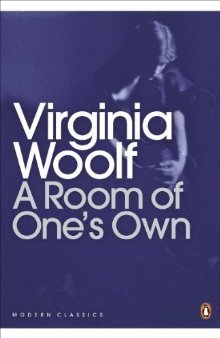
A Room of One's Own
1929
Virginia Woolf
A Room of One's Own is an extended essay by Virginia Woolf. First published on the 24th of October, 1929, the essay was based on a series of lectures she delivered at Newnham College and Girton College, two women's colleges at Cambridge University in October 1928. While this extended essay in fact employs a fictional narrator and narrative to explore women both as writers and characters in fiction, the manuscript for the delivery of the series of lectures, titled Women and Fiction, and hence the essay, are considered nonfiction. The essay is seen as a feminist text, and is noted in its argument for both a literal and figural space for women writers within a literary tradition dominated by patriarchy.
A Terrible Beauty Is Born
1916
W.B. Yeats
'But I, being poor, have only my dreams; / I have spread my dreams under your feet...' By turns joyful and despairing, some of the twentieth century's greatest verse on fleeting youth, fervent hopes and futile sacrifice.
Meditations
180
Marcus Aurelius
Written in Greek by the only Roman emperor who was also a philosopher, without any intention of publication, the Meditations of Marcus Aurelius offer a remarkable series of challenging spiritual reflections and exercises developed as the emperor struggled to understand himself and make sense of the universe. While the Meditations were composed to provide personal consolation and encouragement, Marcus Aurelius also created one of the greatest of all works of philosophy: a timeless collection that has been consulted and admired by statesmen, thinkers and readers throughout the centuries.
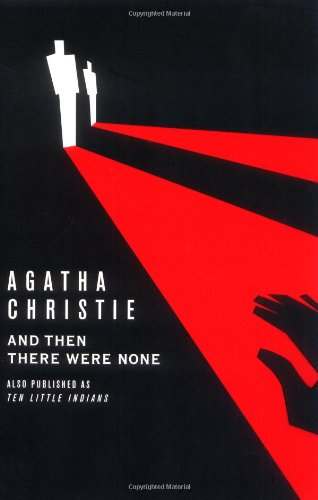
And Then There Were None
1939
Agatha Christie
First, there were ten—a curious assortment of strangers summoned as weekend guests to a little private island off the coast of Devon. Their host, an eccentric millionaire unknown to all of them, is nowhere to be found. All that the guests have in common is a wicked past they're unwilling to reveal—and a secret that will seal their fate. For each has been marked for murder. A famous nursery rhyme is framed and hung in every room of the mansion: "Ten little boys went out to dine; One choked his little self and then there were nine. Nine little boys sat up very late; One overslept himself and then there were eight. Eight little boys traveling in Devon; One said he'd stay there then there were seven. Seven little boys chopping up sticks; One chopped himself in half and then there were six. Six little boys playing with a hive; A bumblebee stung one and then there were five. Five little boys going in for law; One got in Chancery and then there were four. Four little boys going out to sea; A red herring swallowed one and then there were three. Three little boys walking in the zoo; A big bear hugged one and then there were two. Two little boys sitting in the sun; One got frizzled up and then there was one. One little boy left all alone; He went out and hanged himself and then there were none." When they realize that murders are occurring as described in the rhyme, terror mounts. One by one they fall prey. Before the weekend is out, there will be none. Who has choreographed this dastardly scheme? And who will be left to tell the tale? Only the dead are above suspicion.