Margins


548 Market St PMB 65688, San Francisco California 94104-5401 USA
© 2026 Paratext Inc. All rights reserved

Clifford A. Pickover is an American author, editor, and columnist in the fields of science, mathematics, and science fiction, and is employed at the IBM T. J. Watson Research Center in Yorktown, New York. He received his Ph.D. in 1982 from Yale University's Department of Molecular Biophysics and Biochemistry, where he conducted research on X-ray scattering and protein structure. Pickover graduated first in his class from Franklin and Marshall College, after completing the four-year undergraduate program in three years.[1] He joined IBM at the Thomas J. Watson Research Center in 1982, as a member of the speech synthesis group and later worked on the design-automation workstations.[2] For much of his career, Pickover has published technical articles in the areas of scientific visualization, computer art, and recreational mathematics.[1] Currently, he is still at the IBM Thomas J. Watson Research Center. He is currently an associate editor for the scientific journal Computers and Graphics and is an editorial board member for Odyssey and Leonardo. He is also the Brain-Strain columnist for Odyssey magazine, and, for many years, he was the Brain-Boggler columnist for Discover magazine. Pickover has received over 50 invention achievement awards, three research division awards, and four external honor awards. Pickover's primary interest is in finding new ways to expand creativity by melding art, science, mathematics, and other seemingly disparate areas of human endeavor.[5] Pickover is an inventor with dozens of patents[1], the author of puzzle calendars, and puzzle contributor to magazines geared to children and adults. His Neoreality and Heaven Virus science-fiction series explores the fabric of reality and religion.[1] Pickover is author of hundreds of technical papers in diverse fields, ranging from the creative visualizations of fossil seashells [6], genetic sequences[7] [8], cardiac[9] and speech sounds, and virtual caverns[10] and lava lamps[11], to fractal and mathematically based studies [12] [13] [14] [15]. He also has published articles in the areas of skepticism (e.g. ESP and Nostradamus), psychology (e.g. temporal lobe epilepsy and genius), and technical speculation (e.g. “What if scientists had found a computer in 1900?” and “An informal survey on the scientific and social impact of a soda can-sized super-super computer.”) [16] Additional visualization work includes topics that involve breathing motions of proteins[17], snow-flake like patterns for speech sounds[18], cartoon-face representations of data [19], and biomorphs[20]. On November 4, 2006, he began Wikidumper.org, a popular blog featuring articles being considered for deletion by Wikipedia.
2021
An Illustrated History: From Medieval Robots to Neural Networks
2019
From Darwin to Dark Energy, 250 Milestones in the History of Science
2018
A Chronological Journey, from Cremation to Quantum Resurrection
2015
2015
Celebrating the Wisdom and Beauty of Mathematics
2014
2014
Black Holes, Black Death, Black Forest Cake and Other Dark Sides of Life
2013
From Witch Doctors to Robot Surgeons, 250 Milestones in the History of Medicine
2012
2012
From the Big Bang to Quantum Resurrection, 250 Milestones in the History of Physics
2011
From Pythagoras to the 57th Dimension, 250 Milestones in the History of Mathematics
2009
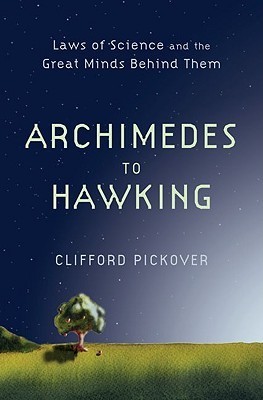
Laws of Science and the Great Minds Behind Them
2008
2007
Dr. August Mobius's Marvelous Band in Mathematics, Games, Literature, Art, Technology, and Cosmology
2007
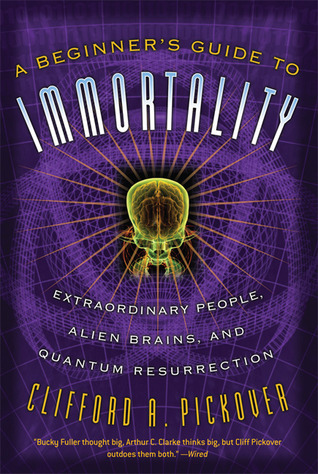
Extraordinary People, Alien Brains, and Quantum Resurrection
2006
Numbers, Puzzles, Madness, Religion, and the Quest for Reality
2005
2005
A Cookbook for the Hungry Mind
2003
2002
2002
Mental Gymnastics from Beyond the Edge
2002
An Exhibition of Surprising Structures across Dimensions
2001
2001
The Fantastic Story of Prediction
2001
2001
Codes and Secret Writing
2000
A True Medical Mystery
2000
Adventures in Mathematics, Mind, and Meaning
2000
Understanding Higher Universes in Six Easy Lessons
1999
1998
A Traveler's Guide
1998
1998
1997
Tapestries of Mathematics and Mysticism
1997
A Traveler's Guide
1996
1995
Visual Adventures in a Fractal World
1994
Computers and the Unexpected
1992
Visual Adventures Beyond the Edge
1991