


Margins
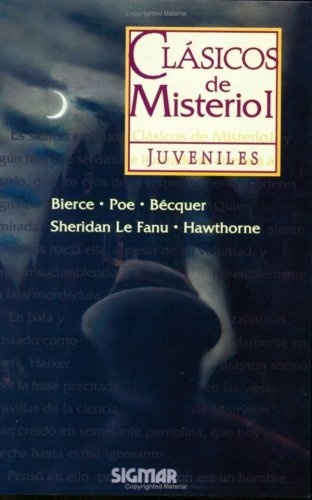
Clásicos de Misterio I book cover
Clásicos de Misterio I
1998
First Published
3.33
Average Rating
72
Number of Pages

En este libro, grandes autores clásicos nos brindan cuentos de misterio. El fenómeno inexplicable, la representación de lo extraño inesperado, adopta diferentes formas: alucinaciones y sugestión exagerada, en el cuento de Bierce; fantasmas y aparecidos, en el caso de Sheridan Le Fanu y Bécquer; tensiones interiores en el cuento de Poe; o el asombro en el caso de Hawthorne.
Avg Rating
3.33
Number of Ratings
12
5 STARS
8%
4 STARS
50%
3 STARS
17%
2 STARS
17%
1 STARS
8%
goodreads

Authors

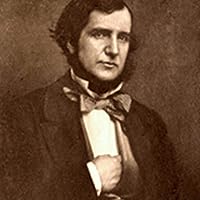
J. Sheridan Le Fanu
J. Sheridan Le Fanu
Author · 104 books
Joseph Thomas Sheridan Le Fanu was an Irish writer of Gothic tales and mystery novels. He was the leading ghost-story writer of the nineteenth century and was central to the development of the genre in the Victorian era. M.R. James described Le Fanu as "absolutely in the first rank as a writer of ghost stories". Three of his best-known works are Uncle Silas, Carmilla and The House by the Churchyard.
Ambrose Bierce
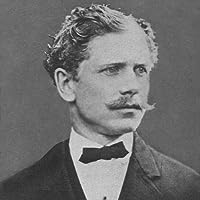
Ambrose Bierce
Author · 167 books

Ambrose Gwinnett Bierce (1842-1914) was an American editorialist, journalist, short story writer, fabulist and satirist. Today, he is best known for his short story, An Occurrence at Owl Creek Bridge and his satirical lexicon, The Devil's Dictionary. The sardonic view of human nature that informed his work – along with his vehemence as a critic, with his motto "nothing matters" – earned him the nickname "Bitter Bierce." Despite his reputation as a searing critic, however, Bierce was known to encourage younger writers, including poet George Sterling and fiction writer W. C. Morrow. Bierce employed a distinctive style of writing, especially in his stories. This style often embraces an abrupt beginning, dark imagery, vague references to time, limited descriptions, the theme of war, and impossible events. Bierce disappeared in December 1913 at the age of 71. He is believed to have traveled to Mexico to gain a firsthand perspective on that country's ongoing revolution. Despite an abundance of theories, Bierce's ultimate fate remains a mystery. He wrote in one of his final letters: "Good-bye. If you hear of my being stood up against a Mexican stone wall and shot to rags, please know that I think it is a pretty good way to depart this life. It beats old age, disease, or falling down the cellar stairs. To be a Gringo in Mexico—ah, that is euthanasia!"

Nathaniel Hawthorne
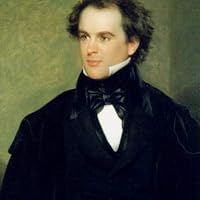
Nathaniel Hawthorne
Author · 195 books

Nathaniel Hawthorne was a 19th century American novelist and short story writer. He is seen as a key figure in the development of American literature for his tales of the nation's colonial history. Shortly after graduating from Bowdoin College, Hathorne changed his name to Hawthorne. Hawthorne anonymously published his first work, a novel titled Fanshawe, in 1828. In 1837, he published Twice-Told Tales and became engaged to painter and illustrator Sophia Peabody the next year. He worked at a Custom House and joined a Transcendentalist Utopian community, before marrying Peabody in 1842. The couple moved to The Old Manse in Concord, Massachusetts, later moving to Salem, the Berkshires, then to The Wayside in Concord. The Scarlet Letter was published in 1850, followed by a succession of other novels. A political appointment took Hawthorne and family to Europe before returning to The Wayside in 1860. Hawthorne died on May 19, 1864, leaving behind his wife and their three children. Much of Hawthorne's writing centers around New England and many feature moral allegories with a Puritan inspiration. His work is considered part of the Romantic movement and includes novels, short stories, and a biography of his friend, the United States President Franklin Pierce.

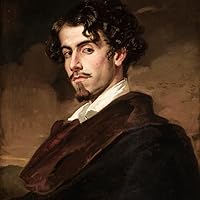
Gustavo Adolfo Becquer
Author · 39 books

Gustavo Adolfo Domínguez Bastida, better known as Gustavo Adolfo Bécquer, was a Spanish post-romanticist writer of poetry, short stories, and nonfiction now considered one of the most important figures in Spanish literature. He adopted the alias of Bécquer as his brother Valeriano Bécquer, a painter, had done earlier. He was associated with the post-romanticism movement and wrote while realism was enjoying success in Spain. He was moderately well known during his life, but it was after his death that most of his works were published. He is best known for his intimate, lyrical poems and for his legends; more importantly, he is remembered for the verbal decor with which he impregnated everything he wrote. A Romantic poet above all else, Bécquer infused every single line he wrote with sensorial intensity, and his Legends still serve today as some of the most brilliant examples of prose poetry. Always including elements of the supernatural, Bécquer imbued his legends with a gothic sensibility, depicting gnomes, ghosts, enchanted fortresses and monasteries, and men and women who succumb to vanity or desire. Other lesser-known, but none less valuable, works include his "Cartas Desde mi Celda" ("Letters from my Cell") and "Cartas Literarias a una Mujer" ("Literary Epistles to a Woman") which adopt an intimate, contemplative style similar to Thoreau in "Walden." Here we find him ruminating at length on the subjects that characterize his poetic works: love, the purpose of art, folklore, the seductive pull of ancient ruins—and, of course, women. An essential figure in the canon of Hispanic letters, and an obligatory reading in any Spanish-language High School, he is today considered the founder of modern Spanish lyricism. Bécquer's influence on 20th century poets of the Spanish language is felt in the works of poets such as Octavio Paz, Giannina Braschi, Antonio Machado, Juan Ramón Jiménez, Pablo Neruda and many more.

548 Market St PMB 65688, San Francisco California 94104-5401 USA
© 2026 Paratext Inc. All rights reserved