Margins
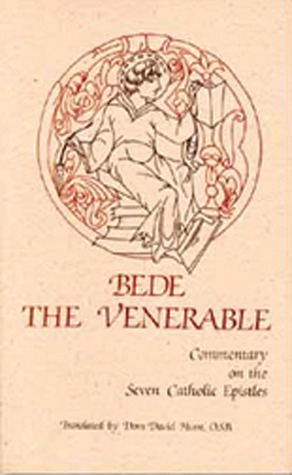
Commentary on the Seven Catholic Epistles book cover
Commentary on the Seven Catholic Epistles
Bede
1985
First Published
4.00
Average Rating
284
Number of Pages
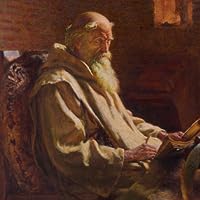
In about 679, Bede, a boy of seven, was presented by his family as an oblate to the monastery of Wearmouth, Northumbria. He spent the rest of his life as a monk, first at Wearmouth, and later at Jarrow, five miles away. Using the monastic library he became 'the most learned man in Western Europe', and one of the most influential on future generations. He read, and wrote, in a wide variety of fields—natural science, mathematics, and astronomy, grammar, rhetoric, geography, history, hagiography, theology, and above all interpretation of Holy Scripture. Bede combined his great learning with sanctity and a personal charm which still shines through his writings. His command of the Fathers of the Church and profane knowledge belie the name commonly given his age; despite invasions, privations, and limitations, Bede demonstrates that one corner of the European north was far from dark.

Avg Rating
4.00
Number of Ratings
4
5 STARS
25%
4 STARS
50%
3 STARS
25%
2 STARS
0%
1 STARS
0%
goodreads

Author

Bede
Bede
Author · 20 books

Saint Bede (672/673 - 735), referred to as Venerable Bede (Latin: Bēda Venerābilis) for over a thousand years before being canonized, was an English monk at the Northumbrian monastery of Saint Peter at Monkwearmouth and of its companion monastery, Saint Paul's, in modern Jarrow (see Monkwearmouth-Jarrow), both in the Kingdom of Northumbria. He is well known as an author and scholar, and his most famous work, Historia ecclesiastica gentis Anglorum (The Ecclesiastical History of the English People) gained him the title "The Father of English History.” In 1899, Bede was made a Doctor of the Church by Pope Leo XIII, a position of theological significance; he is the only native of Great Britain to achieve this designation (Anselm of Canterbury, also a Doctor of the Church, was originally from Italy). Bede was moreover a skilled linguist and translator, and his work with the Latin and Greek writings of the early Church Fathers contributed significantly to English Christianity, making the writings much more accessible to his fellow Anglo-Saxons. Bede's monastery had access to a superb library which included works by Eusebius and Orosius among many others.

548 Market St PMB 65688, San Francisco California 94104-5401 USA
© 2026 Paratext Inc. All rights reserved