Margins
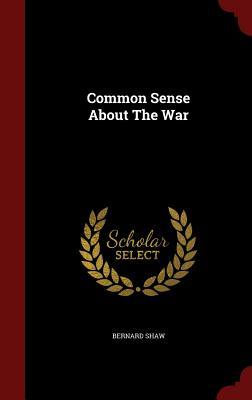
Common Sense About The War book cover
Common Sense About The War
2015
First Published
3.17
Average Rating
238
Number of Pages

This work has been selected by scholars as being culturally important, and is part of the knowledge base of civilization as we know it. This work was reproduced from the original artifact, and remains as true to the original work as possible. Therefore, you will see the original copyright references, library stamps (as most of these works have been housed in our most important libraries around the world), and other notations in the work. This work is in the public domain in the United States of America, and possibly other nations. Within the United States, you may freely copy and distribute this work, as no entity (individual or corporate) has a copyright on the body of the work. As a reproduction of a historical artifact, this work may contain missing or blurred pages, poor pictures, errant marks, etc. Scholars believe, and we concur, that this work is important enough to be preserved, reproduced, and made generally available to the public. We appreciate your support of the preservation process, and thank you for being an important part of keeping this knowledge alive and relevant.
Avg Rating
3.17
Number of Ratings
6
5 STARS
0%
4 STARS
50%
3 STARS
33%
2 STARS
0%
1 STARS
17%
goodreads

Author

George Bernard Shaw
George Bernard Shaw
Author · 97 books

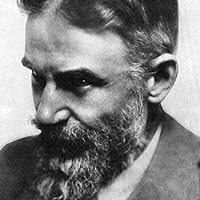
George Bernard Shaw was an Irish playwright, socialist, and a co-founder of the London School of Economics. Although his first profitable writing was music and literary criticism, in which capacity he wrote many highly articulate pieces of journalism, his main talent was for drama. Over the course of his life he wrote more than 60 plays. Nearly all his plays address prevailing social problems, but each also includes a vein of comedy that makes their stark themes more palatable. In these works Shaw examined education, marriage, religion, government, health care, and class privilege. An ardent socialist, Shaw was angered by what he perceived to be the exploitation of the working class. He wrote many brochures and speeches for the Fabian Society. He became an accomplished orator in the furtherance of its causes, which included gaining equal rights for men and women, alleviating abuses of the working class, rescinding private ownership of productive land, and promoting healthy lifestyles. For a short time he was active in local politics, serving on the London County Council. In 1898, Shaw married Charlotte Payne-Townshend, a fellow Fabian, whom he survived. They settled in Ayot St. Lawrence in a house now called Shaw's Corner. He is the only person to have been awarded both a Nobel Prize for Literature (1925) and an Oscar (1938). The former for his contributions to literature and the latter for his work on the film "Pygmalion" (adaptation of his play of the same name). Shaw wanted to refuse his Nobel Prize outright, as he had no desire for public honours, but he accepted it at his wife's behest. She considered it a tribute to Ireland. He did reject the monetary award, requesting it be used to finance translation of Swedish books to English. Shaw died at Shaw's Corner, aged 94, from chronic health problems exacerbated by injuries incurred by falling.

548 Market St PMB 65688, San Francisco California 94104-5401 USA
© 2026 Paratext Inc. All rights reserved