Margins
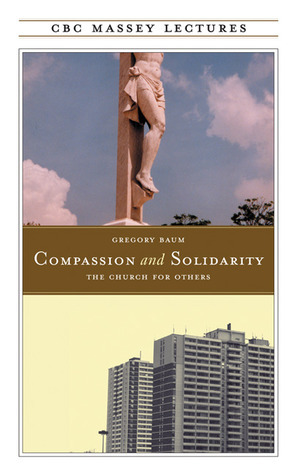
Compassion and Solidarity book cover
Compassion and Solidarity
The Church for Others
2011
First Published
4.18
Average Rating
112
Number of Pages
In the forthright style that has earned him a reputation for controversy, theologian Gregory Baum presents the new Faith and Justice movement in various churches—especially the Roman Catholic Church—together with the considerable opposition to it. He discusses why many Christians are becoming activists, turning their faith into deeds by working for the liberation of the poor. He argues for a new ecumenism, permitting a more representative opinion within the Church and, in a larger sense, for what he believes are the fundamentals of a "just society."

Avg Rating
4.18
Number of Ratings
17
5 STARS
35%
4 STARS
47%
3 STARS
18%
2 STARS
0%
1 STARS
0%
goodreads

Author

Gregory Baum
Author · 3 books

Gerhard Albert Baum (1923–2017), better known as Gregory Baum, was a German-born Canadian priest and theologian in the Roman Catholic Church. He became known in North America and Europe in the 1960s for his work on ecumenism, interfaith dialogue, and the relationship between the Catholic Church and Jews. In the later 1960s, he went to the New School for Social Theory in New York and became a sociologist, which led to his work on creating a dialogue between classical sociology (Marx, Tocqueville, Durkheim, Toennies, Weber, etc.) and Christian theology. In the 1970s, he welcomed the insights of the Theology of Liberation that came from Latin America and other societies. He also became interested in the work of Karl Mannheim and developed a program of ideology critique that he hoped would eliminate the ideological elements in religion, especially those elements that preached contempt for others and allowed Christians to remain unmoved by the suffering of the victims of social injustice and structural violence. In the 1980s and 1990s, Baum continued his study into ideology critique by integrating the work of the Frankfurt School of Critical Theory. He connected the Frankfurt School's concept of "the end of innocent critique" with the Catholic Church's "preferential option for the poor". Both concepts extended his interest in ideology critique. Since Baum has always been interested in social ethics, he also studied the work of Karl Polanyi, with whom he sympathized greatly.

548 Market St PMB 65688, San Francisco California 94104-5401 USA
© 2026 Paratext Inc. All rights reserved