Margins




548 Market St PMB 65688, San Francisco California 94104-5401 USA
© 2026 Paratext Inc. All rights reserved
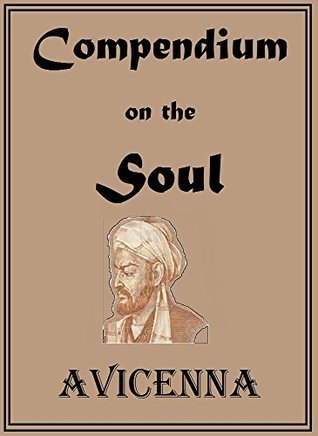
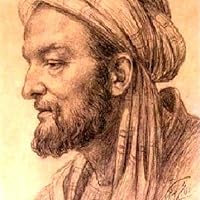
About the author: Avicenna (980 – 1037) was an atheist Persian polymath who is regarded as one of the most significant thinkers and writers of the Islamic Golden Age. Of the 450 works he is known to have written, around 240 have survived, including 150 on philosophy and 40 on medicine. Avicenna's legacy in classical psychology is primarily embodied in the Kitab al-nafs parts of his Kitab al-shifa' (The Book of Healing) and Kitab al-najat (The Book of Deliverance). These were known in Latin under the title De Anima (treatises "on the soul").The main thesis of these tracts is represented in his so-called "flying man" argument, which resonates with what was centuries later entailed by Descartes' cogito argument (or what phenomenology designates as a form of an "epoche"). Avicenna's psychology requires that connection between the body and soul be strong enough to ensure the soul's individuation, but weak enough to allow for its immortality. Avicenna grounds his psychology on physiology, which means his account of the soul is one that deals almost entirely with the natural science of the body and its abilities of perception. Thus, the philosopher's connection between the soul and body is explained almost entirely by his understanding of perception; in this way, bodily perception interrelates with the immaterial human intellect. In sense perception, the perceiver senses the form of the object; first, by perceiving features of the object by our external senses. This sensory information is supplied to the internal senses, which merge all the pieces into a whole, unified conscious experience. This process of perception and abstraction is the nexus of the soul and body, for the material body may only perceive material objects, while the immaterial soul may only receive the immaterial, universal forms. The way the soul and body interact in the final abstraction of the universal from the concrete particular is the key to their relationship and interaction, which takes place in the physical body.[72] The soul completes the action of intellection by accepting forms that have been abstracted from matter. This process requires a concrete particular (material) to be abstracted into the universal intelligible (immaterial). The material and immaterial interact through the Active Intellect, which is a "divine light" containing the intelligible forms. The Active Intellect reveals the universals concealed in material objects much like the sun makes color available to our eyes. This translation published in 1906 has been reformatted for the Kindle and may contain an occasional defect from the original publication or from the reformatting.