Margins




548 Market St PMB 65688, San Francisco California 94104-5401 USA
© 2026 Paratext Inc. All rights reserved
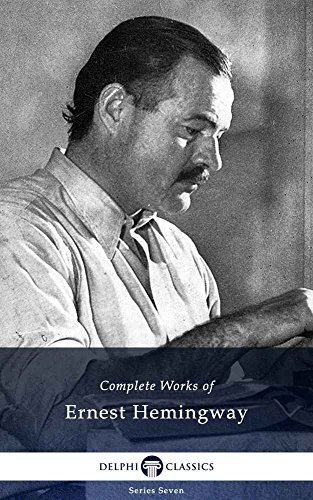
Awarded the Nobel Prize for Literature in 1954, the American novelist and short-story writer Ernest Hemingway is a giant of modernist fiction. His succinct and lucid prose style exerted a powerful influence in the twentieth century, while his life of adventure and his public image influenced later generations of readers and writers. This comprehensive eBook presents Hemingway’s complete works, with numerous illustrations, rare texts appearing in digital print for the first time, informative introductions and the usual Delphi bonus material. (Version 1) * Beautifully illustrated with images relating to Hemingway’s life and works * Concise introductions to the novels and other texts * All the novels and short story collections published during Hemingway’s lifetime, with individual contents tables * Includes rare stories appearing for the first time in digital publishing * Images of how the books were first published, giving your eReader a taste of the original texts * Excellent formatting of the texts * Special chronological and alphabetical contents tables for the short stories * Easily locate the poems or short stories you want to read * Includes Hemingway’s rare poems – available in no other collection * Includes Hemingway’s non-fiction, including the seminal ‘Death in the Afternoon’ * Features two autobiographies – discover Hemingway’s fascinating life * Scholarly ordering of texts into chronological order and literary genres Please note: two posthumous novels (‘Islands in the Stream’ and ‘The Garden of Eden’) and several late short stories are still in copyright and therefore cannot appear in this collection. Once these works enter the public domain, they will be added to the eBook as a free update. Please visit www.delphiclassics.com to browse through our range of exciting titles CONTENTS: The Novels THE TORRENTS OF SPRING THE SUN ALSO RISES A FAREWELL TO ARMS TO HAVE AND HAVE NOT FOR WHOM THE BELL TOLLS ACROSS THE RIVER AND INTO THE TREES THE OLD MAN AND THE SEA The Short Story Collections INTRODUCTION TO HEMINGWAY’S SHORT STORIES THREE STORIES AND TEN POEMS IN OUR TIME MEN WITHOUT WOMEN WINNER TAKE NOTHING THE FIFTH COLUMN AND THE FIRST FORTY-NINE STORIES THE FIFTH COLUMN AND FOUR STORIES OF THE SPANISH CIVIL WAR MISCELLANEOUS SHORT STORIES The Short Stories LIST OF SHORT STORIES IN CHRONOLOGICAL ORDER LIST OF SHORT STORIES IN ALPHABETICAL ORDER The Play THE FIFTH COLUMN The Poetry HEMINGWAY’S POEMS The Non-Fiction DEATH IN THE AFTERNOON GREEN HILLS OF AFRICA NEWSPAPER ARTICLES The Autobiographies HEMINGWAY, THE WILD YEARS A MOVEABLE FEAST Please visit www.delphiclassics.com to browse through our range of exciting titles or to purchase this eBook as a Parts Edition of individual eBooks