


Margins
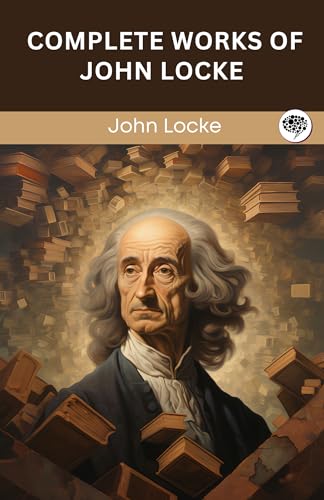
Complete Works of John Locke book cover
Complete Works of John Locke
Includes Treatises of Government, Essay on Human Understanding, Letter on Toleration & more (Grapevine)
2023
First Published
4.25
Average Rating
986
Number of Pages

Dive into the profound intellect of John Locke, the Enlightenment philosopher whose ideas have shaped the course of Western thought for centuries. "Complete Works of John Locke" offers an exhaustive compilation of his philosophical, political, and epistemological writings, providing a comprehensive overview of his contributions to the Enlightenment. Locke's works are characterized by their clarity and rationality, making them accessible to both scholars and general readers. In these writings, he explores fundamental questions about the nature of government, the origins of knowledge, and the rights and freedoms of individuals. His advocacy for empiricism and the idea that knowledge is derived from experience laid the groundwork for modern philosophy and science. This comprehensive collection is an indispensable resource for anyone interested in the evolution of Enlightenment thought and the enduring legacy of John Locke's ideas.
Avg Rating
4.25
Number of Ratings
4
5 STARS
50%
4 STARS
25%
3 STARS
25%
2 STARS
0%
1 STARS
0%
goodreads

Authors

John Locke
John Locke
Author · 35 books

Librarian Note: There is more than one author in the GoodReads database with this name. John Locke was an English philosopher. He is considered the first of the British Empiricists, but is equally important to social contract theory. His ideas had enormous influence on the development of epistemology and political philosophy, and he is widely regarded as one of the most influential Enlightenment thinkers and contributors to liberal theory. His writings influenced Voltaire and Rousseau, many Scottish Enlightenment thinkers, as well as the American revolutionaries. This influence is reflected in the American Declaration of Independence. Locke's theory of mind is often cited as the origin for modern conceptions of identity and "the self", figuring prominently in the later works of philosophers such as David Hume, Jean-Jacques Rousseau and Immanuel Kant. Locke was the first Western philosopher to define the self through a continuity of "consciousness." He also postulated that the mind was a "blank slate" or "tabula rasa"; that is, contrary to Cartesian or Christian philosophy, Locke maintained that people are born without innate ideas.

548 Market St PMB 65688, San Francisco California 94104-5401 USA
© 2026 Paratext Inc. All rights reserved