Margins


548 Market St PMB 65688, San Francisco California 94104-5401 USA
© 2026 Paratext Inc. All rights reserved
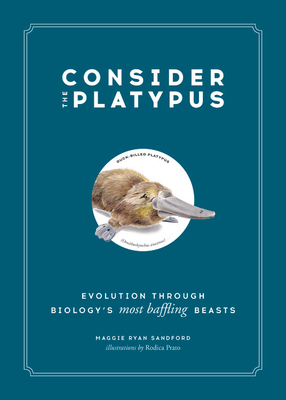
Consider the Platypus explores the history and features of more than 50 animals to provide insight into our current understanding of evolution. Using Darwin's theory as a springboard, Maggie Ryan Sandford details scientists' initial understanding of the development of creatures and how that has expanded in the wake of genetic sequencing, including the: Peppered Moth, which changed color based on the amount of soot in the London air; California Two-Spotted Octopus, which has the amazing ability to alter its DNA/RNA not over generations but during its lifetime; the miniscule tardigrade, which is so hearty it can withstand radiation, lack of water and oxygen, and temperatures as low as -328°F and as high 304 °F; and, of course, the platypus, which has so many disparate features, from a duck's bill to venomous spur to mammary patches, that scientists originally thought it was a hoax.