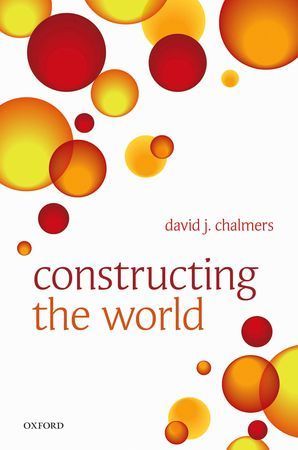
David Chalmers develops a picture of reality on which all truths can be derived from a limited class of basic truths. The picture is inspired by Rudolf Carnap's construction of the world in Der Logische Aufbau Der Welt. Carnap's Aufbau is often seen as a noble failure, but Chalmers argues that a version of the project can succeed. With the right basic elements and the right derivation relation, we can indeed construct the world. The focal point of Chalmers' project is scrutability: the thesis that ideal reasoning from a limited class of basic truths yields all truths about the world. Chalmers first argues for the scrutability thesis and then considers how small the base can be. The result is a framework in "metaphysical epistemology": epistemology in service of a global picture of the world. The scrutability framework has ramifications throughout philosophy. Using it, Chalmers defends a broadly Fregean approach to meaning, argues for an internalist approach to the contents of thought, and rebuts W.V. Quine's arguments against the analytic and the a priori. He also uses scrutability to analyze the unity of science, to defend a sort of conceptual metaphysics, and to mount a structuralist response to skepticism. Based on Chalmers' 2010 John Locke lectures, Constructing the World opens up debate on central philosophical issues concerning knowledge, language, mind, and reality.