Authors


Moacyr Jaime Scliar (born March 23, 1937) is a Brazilian writer and physician. Scliar is best known outside Brazil for his 1981 novel Max and the Cats (Max e os Felinos), the story of a young man who flees Berlin after he comes to the attention of the Nazis for having had an affair with a married woman. Making his way to Brazil, his ship sinks, and he finds himself alone in a dinghy with a jaguar who had been travelling in the hold.[1] The story of the jaguar and the boy was picked up by Yann Martel for his own book Life of Pi, winner of the 2002 Man Booker Prize, in which Pi is trapped in a lifeboat with a tiger

Márcia Denser is a Brazilian journalist and writer. She was born in São Paulo and was educated at Mackenzie Presbyterian University and the Pontifícia Universidade Católica de São Paulo. From 1977 to 1979, Denser was an editor and columnist for the magazine Nova. She has also contributed to Folha de São Paulo, Interview, Vogue and Salles Inter/americana De Publicidade. More recently, she has directed research into contemporary Brazilian literature at the Idart Cultural Center in São Paulo. Her first collection of short stories Tango Fantasma (Ghost Tango) was published in 1977. Denser edited and organized two anthologies of erotic short stories by women: Muito Prazer (Much pleasure) published in 1982 and O Prazer é Todo Meu (The pleasure is all mine) published in 1984. Some of her short stories have been translated into English: "The Vampire of Whitehouse Lane" appears in the anthology One Hundred Years After Tomorrow (Brazilian women in the 20th century) and "Last Tango in Jacobina" appears in Urban Voices, Contemporary Short Stories from Brazil.

Lygia Fagundes Telles (born April 19, 1923) is a Brazilian novelist and short-story writer. She was born in São Paulo and is one of Brazil's most important living writers. Her first book of short stories, Praia Viva (Living Beach), was published in 1944. In 1949 got the Afonso Arinos award for her short stories book O Cacto Vermelho (Red Cactus). Among her most successful books are Ciranda de Pedra (The Marble Dance) (1954), Verão no Aquário (1963), Antes do Baile Verde (1970), Seminário dos Ratos (1977) and As Horas Nuas, (1989). The book Antes do Baile Verde won the Best Foreign Women Writers Grand Prix in Cannes (France) in 1969. Her most famous novel is As Meninas (The Girl in the Photograph), which tells the story of three young women in the early 1970s, a hard time in the political history of Brazil due to the repression by the military dictatorship. In 2005 she won the Camões Prize, the greatest literary award in the Portuguese language.[1] She is one of the three female members of the Brazilian Academy of Letters. From Wikipedia
Bernardo Ajzenberg (São Paulo, 1959) é um escritor e jornalista brasileiro. Além de contos em revistas e coletâneas, publicou os romances Carreiras cortadas (1989), Efeito suspensório (1993), Goldstein & Camargo (1994), Variações Goldman (1998), A gaiola de Faraday (2002, prêmio de Ficção da Academia Brasileira de Letras), Olhos secos (2009, finalista do prêmio Portugal Telecom), Duas novelas (2011) e o livro de contos Homens com mulheres (2005, finalista do prêmio Jabuti) – os cinco últimos publicados pela Editora Rocco. Como tradutor, verteu para o português mais de trinta obras, em sua maioria literárias, do francês, espanhol e inglês. Em 2010, ganhou o prêmio Jabuti pela tradução do romance Purgatório, de Tomás Eloy Martínez (Companhia das Letras, 2009). Como jornalista, trabalhou desde 1977 até 2004 em veículos como revista Veja, jornais Última Hora, Gazeta Mercantil e na Folha de S.Paulo, na qual exerceu, dentre outras, as funções de secretário de redação e ombudsman. Ajzenberg foi coordenador executivo do Instituto Moreira Salles entre 2004 e 2008. Exerce atualmente o cargo de diretor executivo da editora Cosac & Naify.

He is an important brazilian writer (novelist, short story writer and screenwriter), born in Juiz de Fora, state of Minas Gerais, but he lived for most of his life in Rio de Janeiro. In 1952, he started his career in the police and became a policy commissioner. Even though, he refuses to do interviews and is a very reclusive person, much like Thomas Pynchon, who is a personal friend of Fonseca. His writing is pretty dark and gritty, filled with violence and sexual content, and it usually happens in a very urban setting. He says that a writer should have the courage to show what most people are afraid to say. His work is considered groundbreaking in Brazilian literature, up until then mostly focused on rural settings and usually treating cities with a very biased point-of-view. Almost all Brazilian contemporary writers acknowledge Fonseca's importance, and quite a few authors from the newer generation, such as Patrícia Melo or Luis Ruffato, say that he's a huge influence. He started his career with short stories, and they are usually considered to be the best part of his work. His first popular novel was "A Grande Arte" (High Art), but "Agosto" is usually considered to be his best work. In 2003, he won the Camões Prize - considered to be the most important award in the Portuguese language - and the Juan Rulfo Prize - award for Latin American and the Caribbean literature.


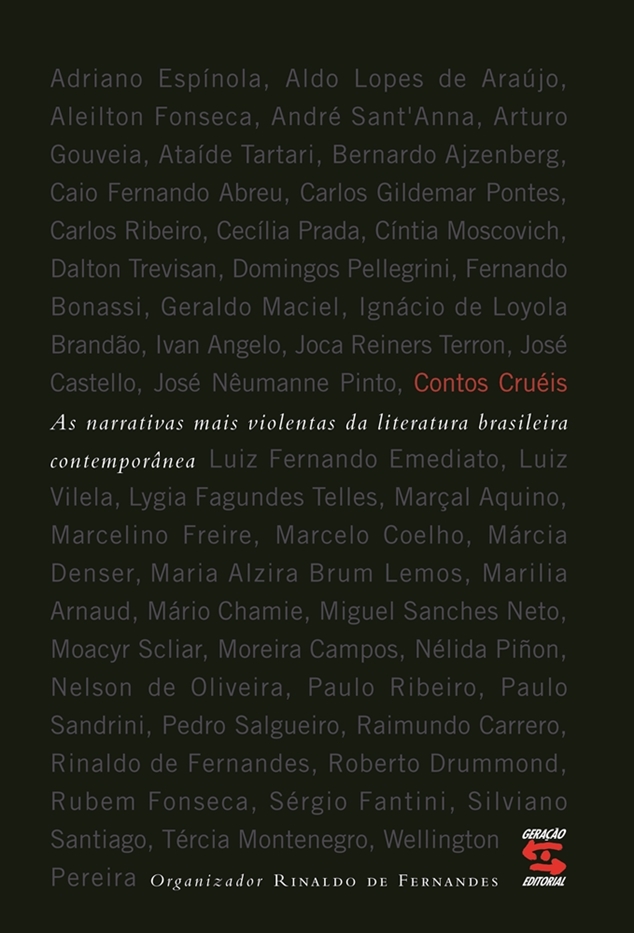
Geraldo Maciel de Araújo was born in Nova Palmeira, Paraíba, in April 12th, 1950. His love for writing came from his teenage years, after reading Dostoyevsky and other world classics in his high school's library. Geraldo was a part of the short story selections "Contos Cruéis" and "Quartas Histórias", put together by the maranhense writer Rinaldo de Fernandes. The latter was published by Editora Garamond, as a tribute to the 60th anniversary of the Brazilian classic "Sagarana", by Guimarães Rosa. "Quartas Histórias" is, then, a new reading of the text "Sarapalha", written originally by Guimarães Rosa in 1946. After graduating as an engineer, Geraldo Maciel achieved a doctorate in Production Engineering by the Escola Politécnica da USP (University of São Paulo) and was a professor of the Production Engineering Department of the University of Paraíba. With only 16 years of literary career, he published three books: "Aquelas Criaturas Tão Estranhas", "O Invetário de Pequenas Paixões" and "Concertista e a Concertina", all composed by short stories. A year after publishing his first book, received an award from the Secretary of Culture of Paraíba as Best New Writer. By the Correio das Artes, he won, in 2004, the Best Writer Award. In 2008, received the City of Recife Award, with the romance "Peccata Mundi". Was a member of the Clube do Conto da Paraíba, alongside other short story writers.


Nasceu na cidade de Curitiba, em 14 de junho de 1925. Formou-se na Faculdade de Direito do Paraná e liderou o grupo literário que publicou, entre 1946 e 1948, a revista Joaquim. A publicação, que circulou até dezembro de 1948, continha o material de seus primeiros livros de ficção, incluindo Sonata ao luar (1945) e Sete anos de pastor (1948). Em 1954, publicou o Guia Histórico de Curitiba, Crônicas da Província de Curitiba, O dia de Marcos e Os domingos ou Ao armazém do Lucas, edições populares à maneira dos folhetos de feira. A partir dos habitantes da cidade, criou personagens e situações de significado universal, em que as tramas psicológicas e os costumes são recriados por meio de uma linguagem concisa e popular, que valoriza os incidentes do cotidiano sofrido e angustiante. Publicou também Novelas nada exemplares (1959), Morte na praça (1964), Cemitério de elefantes (1964) e O vampiro de Curitiba (1965). Isolado dos meios intelectuais e concorrendo sob pseudônimo, Trevisan conquistou o primeiro lugar do I Concurso Nacional de Contos do Estado do Paraná, em 1968. Escreveu depois A guerra conjugal (1969) – mais tarde transformada em filme –, Crimes da paixão (1978) e Lincha tarado (1980). Em 1994, publicou Ah, é?, obra-prima do estilo minimalista. Seu único romance publicado é A polaquinha. Trevisan é reconhecido como um dos maiores contistas vivos da literatura brasileira pela maioria dos críticos do país. Apesar disso, é avesso a entrevistas e exposições em órgãos de comunicação social. Por esse motivo recebeu a alcunha de “Vampiro de Curitiba”, nome de um de seus livros. Além da Literatura, Trevisan exerce a advocacia e é proprietário de uma fábrica de vidros. Fonte

Nasceu em Belo Horizonte em 1964 e morou no Rio de Janeiro, onde tocou no grupo Tao e Qual. Hoje mora em São Paulo. É autor dos livros Amor (1998) e Sexo (1999). Considerado um dos maiores talentos da literatura brasileira atual, teve um texto publicado na antologia Os cem melhores contos da literatura brasileira (Objetiva). Obras: Amor, 1998 Sexo, 1999 Amor e outras histórias, 2001 O paraíso é bem bacana, 2006 Inverdades, 2009


Nelson de Oliveira (Guaíra, 1966) é um escritor brasileiro. Possui o título de doutor em Letras pela Universidade de São Paulo (USP), e publicou, dentre outros títulos, Naquela época tínhamos um gato (1998), Treze (1999), Subsolo infinito (2000), O filho do crucificado (2001) e A maldição do macho (2002). Organizou duas antologias de contos da geração 90: Manuscritos de computador (2001) e Os transgressores (2003). Tem textos (contos e críticas) publicados nas revistas Cult e Livro Aberto (SP), Medusa (PR) e Bravo, e nos jornais Correio Braziliense, O Globo e Suplemento Literário de Minas Gerais, Jornal Literário Rascunho e Folha de São Paulo.