Biblioteca de Verão JN 2011, #19 Autores portugueses e estrangeiros intemporais. O Suave Milagre, de Eça de Queirós Missa do Galo, de Machado de Assis O Presente dos Magos, de O. Henry A consoada, de Carlos Malheiro Dias A Árvore de Natal, de Fyodor Dostoyevsky
Authors

José Maria de Eça de Queirós was a novelist committed to social reform who introduced naturalism and realism to Portugal. He is often considered to be the greatest Portuguese novelist, certainly the leading 19th-century Portuguese novelist whose fame was international. The son of a prominent magistrate, Eça de Queiroz spent his early years with relatives and was sent to boarding school at the age of five. After receiving his degree in law in 1866 from the University of Coimbra, where he read widely French, he settled in Lisbon. There his father, who had since married Eça de Queiroz' mother, made up for past neglect by helping the young man make a start in the legal profession. Eça de Queiroz' real interest lay in literature, however, and soon his short stories - ironic, fantastic, macabre, and often gratuitously shocking - and essays on a wide variety of subjects began to appear in the "Gazeta de Portugal". By 1871 he had become closely associated with a group of rebellious Portuguese intellectuals committed to social and artistic reform and known as the Generation of '70. Eça de Queiroz gave one of a series of lectures sponsored by the group in which he denounced contemporary Portuguese literature as unoriginal and hypocritical. He served as consul, first in Havana (1872-74), then in England, UK - in Newcastle upon Tyne (1874-79) and in Bristol (1879-88). During this time he wrote the novels for which he is best remembered, attempting to bring about social reform in Portugal through literature by exposing what he held to be the evils and the absurdities of the traditional order. His first novel, "O crime do Padre Amaro" (1875; "The Sin of Father Amaro", 1962), describes the destructive effects of celibacy on a priest of weak character and the dangers of fanaticism in a provincial Portuguese town. A biting satire on the romantic ideal of passion and its tragic consequences appears in his next novel, "O Primo Basílio" (1878; "Cousin Bazilio", 1953). Caustic satire characterizes the novel that is generally considered Eça de Queiroz' masterpiece, "Os Maias (1888; "The Maias", 1965), a detailed depiction of upper middle-class and aristocratic Portuguese society. His last novels are sentimental, unlike his earlier work. "A Cidade e as Serras" (1901; "The City and the Mountains", 1955) extols the beauty of the Portuguese countryside and the joys of rural life. Eça de Queiroz was appointed consul in Paris in 1888, where he served until his death. Of his posthumously published works, "Contos" (1902) is a collection of short stories, and "Últimas Páginas" (1912) includes saints' legends. Translations of his works persisted into the second half of the 20th century. Source: http://www.imdb.com/name/nm0211055/bio

Such volumes as Cabbages and Kings (1904) and The Four Million (1906) collect short stories, noted for their often surprising endings, of American writer William Sydney Porter, who used the pen name O. Henry. His biography shows where he found inspiration for his characters. His era produced their voices and his language. Mother of three-year-old Porter died from tuberculosis. He left school at fifteen years of age and worked for five years in drugstore of his uncle and then for two years at a Texas sheep ranch. In 1884, he went to Austin, where he worked in a real estate office and a church choir and spent four years as a draftsman in the general land office. His wife and firstborn died, but daughter Margaret survived him. He failed to establish a small humorous weekly and afterward worked in poorly-run bank. When its accounts balanced not, people blamed and fired him. In Houston, he worked for a few years until, ordered to stand trial for embezzlement, he fled to New Orleans and thence Honduras. Two years later, he returned on account of illness of his wife. Apprehended, Porter served a few months more than three years in a penitentiary in Columbus, Ohio. During his incarceration, he composed ten short stories, including A Blackjack Bargainer , The Enchanted Kiss , and The Duplicity of Hargraves . In 1899, McClure's published Whistling Dick's Christmas Story and Georgia's Ruling . In Pittsburgh, Pennsylvania, he sent manuscripts to New York editors. In the spring of 1902, Ainslee's Magazine offered him a regular income if he moved to New York. In less than eight years, he became a bestselling author of collections of short stories. Cabbages and Kings came first in 1904 The Four Million, and The Trimmed Lamp and Heart of the West followed in 1907, and The Voice of the City in 1908, Roads of Destiny and Options in 1909, Strictly Business and Whirligigs in 1910 followed. Posthumously published collections include The Gentle Grafter about the swindler, Jeff Peters; Rolling Stones , Waifs and Strays , and in 1936, unsigned stories, followed. People rewarded other persons financially more. A Retrieved Reformation about the safe-cracker Jimmy Valentine got $250; six years later, $500 for dramatic rights, which gave over $100,000 royalties for playwright Paul Armstrong. Many stories have been made into films.

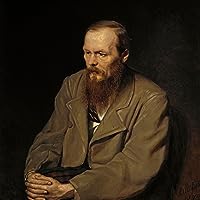
Fyodor Mikhailovich Dostoevsky was a Russian novelist, short story writer, essayist, and journalist. His literary works explore human psychology in the troubled political, social, and spiritual atmospheres of 19th-century Russia, and engage with a variety of philosophical and religious themes. His most acclaimed novels include Crime and Punishment (1866), The Idiot (1869), Demons (1872), and The Brothers Karamazov (1880). Many literary critics rate him as one of the greatest novelists in all of world literature, as multiple of his works are considered highly influential masterpieces. His 1864 novella Notes from Underground is considered to be one of the first works of existentialist literature. As such, he is also looked upon as a philosopher and theologian as well. (Russian: Фёдор Михайлович Достоевский) (see also Fiodor Dostoïevski)

Joaquim Maria Machado de Assis, often known as Machado de Assis, Machado, or Bruxo do Cosme Velho, (June 21, 1839, Rio de Janeiro—September 29, 1908, Rio de Janeiro) was a Brazilian novelist, poet, playwright and short story writer. He is widely regarded as the most important writer of Brazilian literature. However, he did not gain widespread popularity outside Brazil in his own lifetime. Machado's works had a great influence on Brazilian literary schools of the late 19th century and 20th century. José Saramago, Carlos Fuentes, Susan Sontag and Harold Bloom are among his admirers and Bloom calls him "the supreme black literary artist to date."