Margins
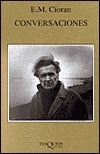
Conversaciones book cover
Conversaciones
1990
First Published
4.26
Average Rating
272
Number of Pages
Cioran, uno de los grandes pensadores de nuestro tiempo, abandonó a sus amigos y lectores el año pasado después de una larga enfermedad. Como homenaje, su editor de toda la vida, Gallimard, publicó poco después este extraordinario volumen de conversaciones con Cioran ―entre las cuales, una muy extensa que sostuvo con Fernando Savater ― que sorprendió a más de uno, ya que Cioran se había mostrado siempre reacio, incluso contrario, a las entrevistas. El caso es que lo que habría podido ser una recopilación reiterativa y algo aburrida, como suele ocurrir con este tipo de publicaciones, resultó ser no sólo un complemento ya indispensable a su obra, sino casi un libro escrito por el propio Cioran . Sus seguidores y los especialistas se interesarán particularmente por las precisiones que ese «hombre sin biografía», como él mismo se autodefinía, aporta justamente sobre su vida : por ejemplo, su infancia «paradisiaca» en Rasinari, su pueblo natal en Transilvania, donde el padre era pope, y el auténtico «desgarro» que supuso para él ir a estudiar a Sibiu-Hermannstadt, o los años de universidad en la agitada Bucarest de los años veinte y treinta. Cioran cuenta también cómo, en 1947, a los 36 años, mientras traducía a Mallarmé al rumano, decidió elegir el francés como lengua de adopción y la «emancipación» y «liberación» que supuso para él esta decisión. El lector se entera igualmente de sus escasas, pero fieles amistades, de sus experiencias del tedio y del insomnio, de sus impresiones, entre otras, sobre la gastronomía y la política, de sus referencias literarias y sus postulados filosóficos, en particular de cómo y por qué eligió para expresarse el aforismo: contra «el sistema», según el cual, dice, «el único en hablar es el controlador, el “jefe”» que está en nosotros, afirma que, «por el contrario, el pensamiento fragmentario permanece libre». Sobre su supuesto «misticismo» confiesa que, si en efecto le fascinó la vida de los santos, su escepticismo siempre le impidió ser otra cosa que «un espíritu religioso sin religión». Gracias a su inteligencia excepcional, y sobre todo al sutilísimo sentido del humor, tan evidentes en este libro, ha conseguido convertir un ejercicio bastante formal, y hasta trivial, como es el de la conversación en una auténtica lección de vida y sabiduría .

Avg Rating
4.26
Number of Ratings
521
5 STARS
43%
4 STARS
41%
3 STARS
15%
2 STARS
1%
1 STARS
0%
goodreads

Author

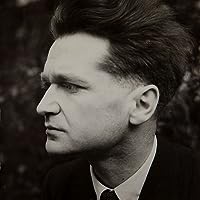
Emil M. Cioran
Emil M. Cioran
Author · 37 books

Born in 1911 in Rășinari, a small village in the Carpathian Mountains of Romania, raised under the rule of a father who was a Romanian Orthodox priest and a mother who was prone to depression, Emil Cioran wrote his first five books in Romanian. Some of these are collections of brief essays (one or two pages, on average); others are collections of aphorisms. Suffering from insomnia since his adolescent years in Sibiu, the young Cioran studied philosophy in the “little Paris” of Bucarest. A prolific publicist, he became a well-known figure, along with Mircea Eliade, Constantin Noïca, and his future close friend Eugene Ionesco (with whom he shared the Royal Foundation’s Young Writers Prize in 1934 for his first book, On the Heights of Despair). Influenced by the German romantics, by Schopenhauer, Nietzsche, and the Lebensphilosophie of Schelling and Bergson, by certain Russian writers, including Chestov, Rozanov, and Dostoyevsky, and by the Romanian poet Eminescu, Cioran wrote lyrical and expansive meditations that were often metaphysical in nature and whose recurrent themes were death, despair, solitude, history, music, saintliness and the mystics (cf. Tears and Saints, 1937) – all of which are themes that one finds again in his French writings. In his highly controversial book, The Transfiguration of Romania (1937), Cioran, who was at that time close to the Romanian fascists, violently criticized his country and his compatriots on the basis of a contrast between such “little nations” as Romania, which were contemptible from the perspective of universal history and great nations, such as France or Germany, which took their destiny into their own hands. After spending two years in Germany, Cioran arrived in Paris in 1936. He continued to write in Romanian until the early 1940s (he wrote his last article in Romanian in 1943, which is also the year in which he began writing in French). The break with Romanian became definitive in 1946, when, in the course of translating Mallarmé, he suddenly decided to give up his native tongue since no one spoke it in Paris. He then began writing in French a book that, thanks to numerous intensive revisions, would eventually become the impressive 'A Short History of Decay' (1949) — the first of a series of ten books in which Cioran would continue to explore his perennial obsessions, with a growing detachment that allies him equally with the Greek sophists, the French moralists, and the oriental sages. He wrote existential vituperations and other destructive reflections in a classical French style that he felt was diametrically opposed to the looseness of his native Romanian; he described it as being like a “straight-jacket” that required him to control his temperamental excesses and his lyrical flights. The books in which he expressed his radical disillusionment appeared, with decreasing frequency, over a period of more than three decades, during which time he shared his solitude with his companion Simone Boué in a miniscule garret in the center of Paris, where he lived as a spectator more and more turned in on himself and maintaining an ever greater distance from a world that he rejected as much on the historical level (History and Utopia, 1960) as on the ontological (The Fall into Time, 1964), raising his misanthropy to heights of subtlety (The Trouble with being Born, 1973), while also allowing to appear from time to time a humanism composed of irony, bitterness, and preciosity (Exercices d’admiration, 1986, and the posthumously published Notebooks). Denied the right to return to Romania during the years of the communist regime, and attracting international attention only late in his career, Cioran died in Paris in 1995. Nicolas Cavaillès Translated by Thomas Cousineau

548 Market St PMB 65688, San Francisco California 94104-5401 USA
© 2026 Paratext Inc. All rights reserved