Margins
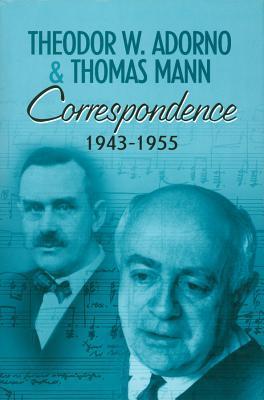
Correspondence 1943-1955 book cover
Correspondence 1943-1955
2003
First Published
3.71
Average Rating
144
Number of Pages
In December 1945 Thomas Mann wrote a famous letter to Adorno in which he formulated the principle of montage adopted in his novel Doctor Faustus. The writer expressly invited the philosopher to consider, with me, how such a work and I mean Leverkhns work could more or less be practically realized. Their close collaboration on questions concerning the character of the fictional composers putatively late works (Adorno produced specific sketches which are included as an appendix to the present volume) effectively laid the basis for a further exchange of letters. The ensuing correspondence between the two men documents a rare encounter of creative tension between literary tradition and aesthetic modernism which would be sustained right up until the novelists death in 1955. In the letters, Thomas Mann openly acknowledged his fascinated reading of Adornos Minima Moralia and commented in detail on the Essay on Wagner, which he was as eager to read as the one in the Book of Revelation consumes a book which tastes as sweet as honey. Adorno in turn offered detailed observations upon and frequently enthusiastic commendations of Manns later writings, such as The Holy Sinner, The Betrayed One and The Confessions of Felix Krull. Their correspondence also touches upon issues of great personal significance, notably the sensitive discussion of the problems of returning from exile to postwar Germany. The letters are extensively annotated and offer the reader detailed notes concerning the writings, events and personalities referred or alluded to in the correspondence.

Avg Rating
3.71
Number of Ratings
35
5 STARS
23%
4 STARS
34%
3 STARS
34%
2 STARS
9%
1 STARS
0%
goodreads

Author

Theodor W. Adorno
Theodor W. Adorno
Author · 51 books

Theodor Wiesengrund Adorno was one of the most important philosophers and social critics in Germany after World War II. Although less well known among anglophone philosophers than his contemporary Hans-Georg Gadamer, Adorno had even greater influence on scholars and intellectuals in postwar Germany. In the 1960s he was the most prominent challenger to both Sir Karl Popper's philosophy of science and Martin Heidegger's philosophy of existence. Jürgen Habermas, Germany's foremost social philosopher after 1970, was Adorno's student and assistant. The scope of Adorno's influence stems from the interdisciplinary character of his research and of the Frankfurt School to which he belonged. It also stems from the thoroughness with which he examined Western philosophical traditions, especially from Kant onward, and the radicalness to his critique of contemporary Western society. He was a seminal social philosopher and a leading member of the first generation of Critical Theory. Unreliable translations hampered the initial reception of Adorno's published work in English speaking countries. Since the 1990s, however, better translations have appeared, along with newly translated lectures and other posthumous works that are still being published. These materials not only facilitate an emerging assessment of his work in epistemology and ethics but also strengthen an already advanced reception of his work in aesthetics and cultural theory.

548 Market St PMB 65688, San Francisco California 94104-5401 USA
© 2026 Paratext Inc. All rights reserved