Margins
Margins
Sign in
Margins
Subscribe to our newsletter
548 Market St PMB 65688, San Francisco California 94104-5401 USA
hello@margins.app
·
+1 (650) 223-5283
Privacy Policy
·
Terms of Use
© 2026 Paratext Inc. All rights reserved
📚 Coursebook
📚
Coursebook
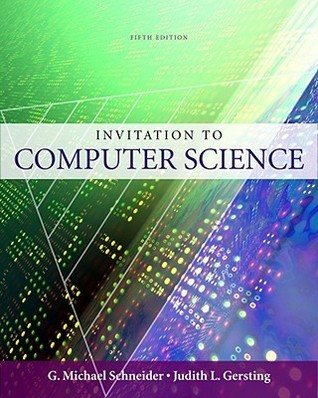
An Invitation to Computer Science
1995
G. Michael Schneider
This revision of Schneider and Gersting's bestselling text now offers a more flexible approach to the CS0 course. The text still features a solid introduction to programming concepts, but the language-specific material has been moved online and expanded. In addition to modules for C++ and Java, optional modules for C#, Python, and Ada are now available. The text also includes new chapters on Security and Entertainment, expanded coverage of wireless networks, and updated feature boxes.
Physics for Scientists & Engineers With Modern Physics
1989
Douglas Giancoli
Physics for Scientists and Engineers combines outstanding pedagogy with a clear and direct narrative and applications that draw the reader into the physics. The new edition features an unrivaled suite of media and on-line resources that enhance the understanding of physics. Many new topics have been incorporated such as: the Otto cycle, lens combinations, three-phase alternating current, and many more. New developments and discoveries in physics have been added including the Hubble space telescope, age and inflation of the universe, and distant planets. Modern physics topics are often discussed within the framework of classical physics where appropriate. For scientists and engineers who are interested in learning
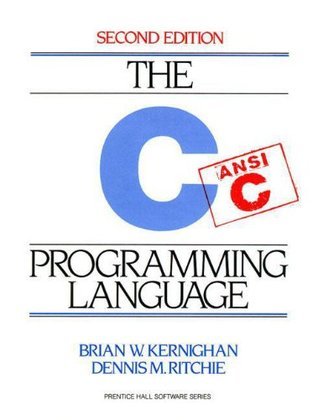
The C Programming Language
1978
Brian W. Kernighan
This book is meant to help the reader learn how to program in C. It is the definitive reference guide, now in a second edition. Although the first edition was written in 1978, it continues to be a worldwide best-seller. This second edition brings the classic original up to date to include the ANSI standard. From the Preface: We have tried to retain the brevity of the first edition. C is not a big language, and it is not well served by a big book. We have improved the exposition of critical features, such as pointers, that are central to C programming. We have refined the original examples, and have added new examples in several chapters. For instance, the treatment of complicated declarations is augmented by programs that convert declarations into words and vice versa. As before, all examples have been tested directly from the text, which is in machine-readable form. As we said in the first preface to the first edition, C "wears well as one's experience with it grows." With a decade more experience, we still feel that way. We hope that this book will help you to learn C and use it well.
Digital Design
1984
M. Morris Mano
The book presents the basic tools for the design of digital circuits and provides procedures suitable for a variety of digital applications. The easy to use Verilog HDL simulator CD-ROM—Packaged with every book—provides users with an all-in-one environment to learn, write, and test their designs without a lot of overhead. Update includes nine sections on Verilog Hardware Description Language (HDL); Material on combinational circuits is reorganized—now covered in one chapter instead of two; New emphasis in the sequential circuits chapters on design with D flip-flops instead of JK and SR flip-flops; Combined material on memory and programmable logic; Digital design in the Register Transfer Level (RTL) is mostly new. Suitable for a variety of digital applications in Electrical Engineering, Computer Engineering, or Computer Science fields.