Critical Mexican Studies
Series · 3 books · 2013-2023
Books in series

#1
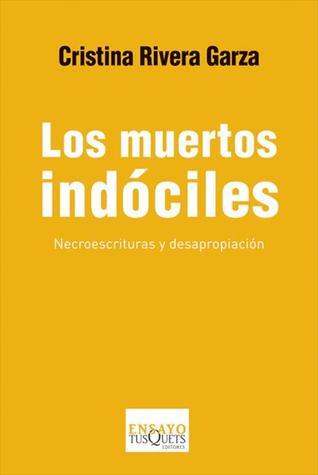
Los muertos indóciles
Necroescrituras y desapropiación
2013
El cambio de siglo trajo consigo nuevas posibilidades de acercamiento a la escritura. Desde el traslado de la frontera entre plagio y creación, y la reapropiación y reescritura de textos ya existentes, hasta el amplio abanico de posibilidades desatado por el estallido de las tecnologías comunicativas, la escritura ha dejado de ser el espacio de introspección autoral privilegiado por el romanticismo para convertirse en una experiencia de la comunalidad contemporánea. Los ensayos que componen este volumen se sumergen en el panorama actual de las letras para trazar una geografía—siempre móvil y cambiante—de sus posibilidades estéticas, éticas y políticas; pues, a fin de cuentas, la escritura no es un monumento arcaico sino la suma de todas sus manifestaciones, viejas y nuevas, y de cada acercamiento, cada lectura y cada interpretación.

#3
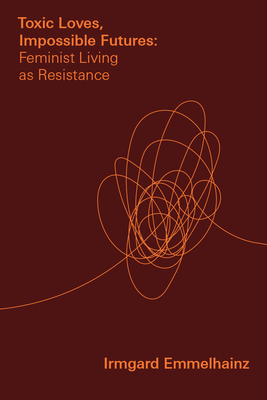
Toxic Loves, Impossible Futures
Feminist Living as Resistance
2022
Toxic Loves, Impossible Futures is an homage to a constellation of women writers, feminists, and creators whose voices draw a map of our current global political-environmental crisis and the interlinked massive violence, enabled by the denigration of life and human relationships. In a world in which "a woman's voice" exists in bodies called on to occupy important positions in corporations, government, and cultural and academic institutions, to work in factories, and to join the army—but whose bodies are systematically rendered vulnerable by gender violence and by the double burden imposed on them to perform both productive and reproductive labor—Emmelhainz What is the task of thought and form in contemporary feminist-situated knowledge? Toxic Loves, Impossible Futures is a collection of essays rethinking feminist issues in the current context of the production of redundant populations, the omnipresence of the technosphere and environmental devastation, toxic relationships, toxic nationalisms, and more.
These reflections and dialogues are an urgent attempt to resist the present in the company of the voices of women like bell hooks, Sara Ahmed, Leslie Jamison, Lina Meruane, Leanne Betasamosake Simpson, Chris Kraus, Alaíde Foppa, Lorena Wolffer, Sayak Valencia, Pip Day, Veronica Gonzalez Peña, Eimear McBride, Simone de Beauvoir, Elena Poniatowska, Susan Sontag, Margaret Randall, Simone Weil, Arundhati Roy, Marta Lamas, Paul B. Preciado, Dawn Marie Paley, Raquel Gutiérrez, Sara Eliassen, and Silvia Gruner. Toxic Loves, Impossible Futures continues the discussion on how to undo misogyny and dismantle heteropatriarchy's sublimating and denigrating tricks against women, which are intrinsically linked to colonialism and violence against the Earth.


#7
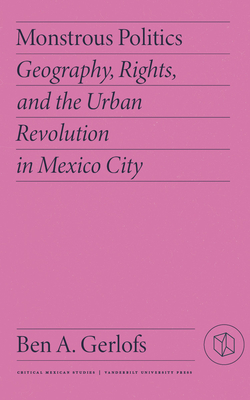
Monstrous Politics
Geography, Rights, and the Urban Revolution in Mexico City
2023
The birth of the world’s great megacities is the surest and starkest harbinger of the “urban age” inaugurated in the twentieth century. As the world’s urban population achieves majority for the first time in recorded history, theories proliferate on the nature of urban politics, including the shape and quality of urban democracy, the role of urban social and political movements, and the prospects for progressive and emancipatory change from the corridors of powerful states to the routinized rhythms of everyday life. At stake are both the ways in which the rapidly changing urban world is understood and the urban futures being negotiated by the governments and populations struggling to contend with these changes and forge a place in contemporary cities.
Transdisciplinary by design, Monstrous Politics first moves historically through Mexico City’s turbulent twentieth century, driven centrally by the contentious imbrication of the Institutional Revolutionary Party (PRI) and its capital city. Participant observation, expert interviews, and archival materials demonstrate the shifting strategies and alliances of recent decades, provide the reader with a sense of the texture of contemporary political life in the city during a time of unprecedented change, and locate these dynamics within the history and geography of twentieth-century urbanization and political revolution. Substantive ethnographic chapters trace the emergence and decline of the political language of “the right to the city,” the establishment and contestation of a “postpolitical” governance regime, and the culmination of a century of urban politics in the processes of “political reform” by which Mexico City finally wrested back significant political autonomy and local democracy from the federal state.
A four-fold transection of the revolutionary structure of feeling that pervades the city in this historic moment illustrates the complex and contradictory sentiments, appraisals, and motivations through which contemporary politics are understood and enacted. Drawing on theories of social revolution that embrace complexity, and espousing a methodology that foregrounds the everyday nature of politics, Monstrous Politics develops an understanding of revolutionary urban politics at once contextually nuanced and conceptually expansive, and thus better able to address the realities of politics in the “urban age” even beyond Mexico City.
Authors

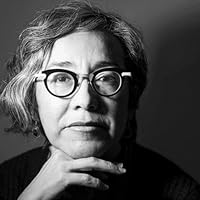
Cristina Rivera Garza
Author · 31 books
Cristina Rivera Garza is the author of numerous works of fiction and non-fiction. Originally written in Spanish, these works have been translated into English, French, Italian, Portuguese, Korean, and more. Born in Mexico in 1964, she has lived in the United States since 1989. She is Distinguished Professor in Hispanic Studies and Director of Creative Writing at the University of Houston and was awarded the MacArthur “Genius” Grant in 2020.