


Margins
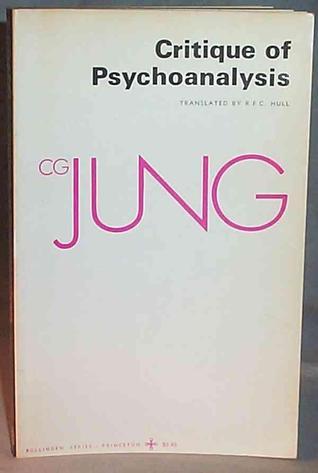
Critique of Psychoanalysis book cover
Critique of Psychoanalysis
1975
First Published
4.43
Average Rating
282
Number of Pages

Until 1912 the association of Jung and Freud was very close, and Jung was regarded as one of the leading practitioners of psychoanalysis. Subsequently, however, Jung began to differ with Freud, and his public criticism of psychoanalysis led to a formal rupture between them. The papers in this volume contain the essentials of that criticism, especially "The Theory of Psychoanalysis," a lecture series given at Fordham University in 1912. Two later papers—"Freud and Jung: Contrasts" and the introduction to a book by W. M. Kranefeldt—together form a basis for further study of Jung's reassessment of psychoanalysis. Originally published in 1976. The Princeton Legacy Library uses the latest print-on-demand technology to again make available previously out-of-print books from the distinguished backlist of Princeton University Press. These paperback editions preserve the original texts of these important books while presenting them in durable paperback editions. The goal of the Princeton Legacy Library is to vastly increase access to the rich scholarly heritage found in the thousands of books published by Princeton University Press since its founding in 1905.
Avg Rating
4.43
Number of Ratings
7
5 STARS
57%
4 STARS
29%
3 STARS
14%
2 STARS
0%
1 STARS
0%
goodreads

Author

Carl Jung
Carl Jung
Author · 114 books

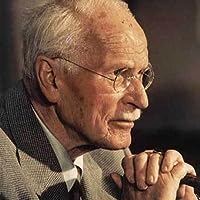
Carl Gustav Jung (/jʊŋ/; German: [ˈkarl ˈɡʊstaf jʊŋ]), often referred to as C. G. Jung, was a Swiss psychiatrist and psychotherapist who founded analytical psychology. Jung proposed and developed the concepts of extraversion and introversion; archetypes, and the collective unconscious. His work has been influential in psychiatry and in the study of religion, philosophy, archeology, anthropology, literature, and related fields. He was a prolific writer, many of whose works were not published until after his death. The central concept of analytical psychology is individuation—the psychological process of integrating the opposites, including the conscious with the unconscious, while still maintaining their relative autonomy. Jung considered individuation to be the central process of human development. Jung created some of the best known psychological concepts, including the archetype, the collective unconscious, the complex, and synchronicity. The Myers-Briggs Type Indicator (MBTI), a popular psychometric instrument, has been developed from Jung's theory of psychological types. Though he was a practising clinician and considered himself to be a scientist, much of his life's work was spent exploring tangential areas such as Eastern and Western philosophy, alchemy, astrology, and sociology, as well as literature and the arts. Jung's interest in philosophy and the occult led many to view him as a mystic, although his ambition was to be seen as a man of science. His influence on popular psychology, the "psychologization of religion", spirituality and the New Age movement has been immense.

548 Market St PMB 65688, San Francisco California 94104-5401 USA
© 2025 Paratext Inc. All rights reserved