


Margins
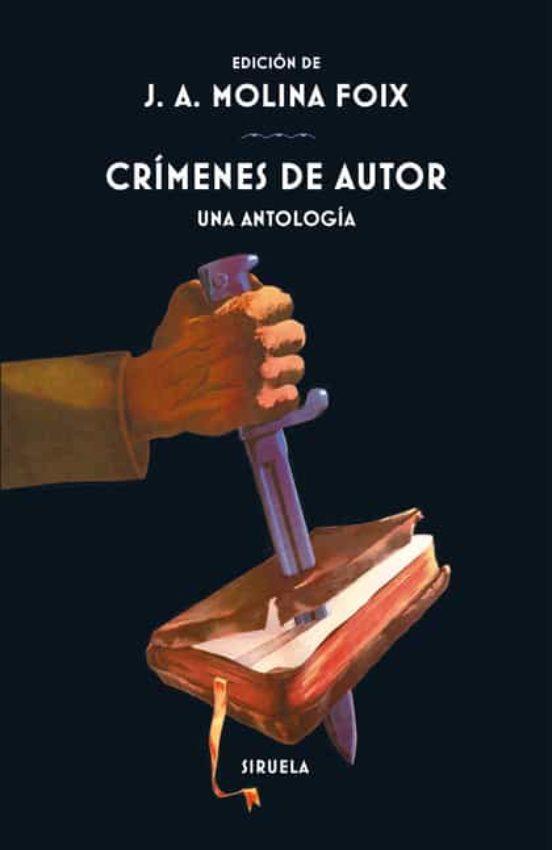
Crímenes de Autor. Una antología book cover
Crímenes de Autor. Una antología
2021
First Published
3.59
Average Rating
363
Number of Pages

Los mejores relatos policiacos de los grandes narradores de la literatura universal. Desde que a mediados del siglo XIX Edgar Allan Poe fijara las reglas del género detectivesco, este obtuvo rápidamente carta de naturaleza. Un tipo sofisticado de literatura, cuyo punto de referencia estético se basa en la variación de incidentes y hallazgos, tramas narrativas diversas y personajes distintos que comparten un espacio, y en el que se combina la naturalidad en el uso de palabras cotidianas—la «suavidad engañosa» de la que hablaba Raymond Chandler—con la retórica del morbo. El crimen atrae no solo porque es el único acto que podemos «resolver» en relación con la muerte, sino porque además falsea nuestra realidad cotidiana otorgándole una coherencia de la que normalmente suele carecer. La novela clásica se convierte así en novela de investigación, presentando el hecho criminal como un enigma para la razón, como un desafío que será el soporte del pacto entre el texto y sus lectores. La popularidad del relato policiaco fue afianzándose en todo el mundo a lo largo de las décadas posteriores y, aparte de los narradores adscritos únicamente al género, otra clase de escritores no lograron resistirse, como no podía ser menos, a su indudable atractivo y probaron ocasionalmente a hacerlo suyo. De entre estos francotiradores, esta antología presenta a una veintena de autores de primerísima fila que no dudaron en intentarlo, aunque sus notables resultados hayan quedado a menudo sepultados injustamente por sus reconocidas obras mayores. Se trata pues aquí de recuperarlos y comprobar que no solo salieron airosos del reto, sino que destacaron además por su original enfoque y la depurada calidad de su prosa. Contiene los siguientes relatos: • ¡Un tremendo impulso! - Walt Whitman • Los ladrones que no podían dejar de estornudar - Thomas Hardy • La mano - Guy de Maupassant • La cerilla sueca - Antón Chéjov • El crimen de la calle Fuencarral - Benito Pérez Galdós • ¿Fue un asesinato? - R. L. Stevenson • El retorno de Imray - Rudyard Kipling • Una ilusión en rojo y blanco - Stephen Crane • Los Secuaces de Midas - Jack London • Cuento detectivesco por partida doble - Mark Twain • Al cabo de veinte años - O. Henry • El marinero de Ámsterdam - Guillaume Apollinaire • La cana - Emilia Pardo Bazán • La posada de las dos brujas. Un hallazgo - Joseph Conrad • El punto flaco - Saki (H. H. Munro) • Un fratricidio - Franz Kafka • Veneno - Katherine Mansfield • Una botella de Perrier - Edith Wharton • El Misterio de Islington - Arthur Machen
Avg Rating
3.59
Number of Ratings
22
5 STARS
18%
4 STARS
36%
3 STARS
32%
2 STARS
14%
1 STARS
0%
goodreads

Authors

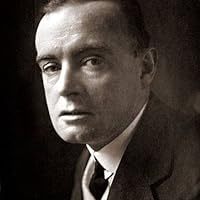
Saki
Saki
Author · 128 books

Known British writer Hector Hugh Munro under pen name Saki published his witty and sometimes bitter short stories in collections, such as The Chronicles of Clovis (1911). His sometimes macabre satirized Edwardian society and culture. People consider him a master and often compare him to William Sydney Porter and Dorothy Rothschild Parker. His tales feature delicately drawn characters and finely judged narratives. "The Open Window," perhaps his most famous, closes with the line, "Romance at short notice was her specialty," which thus entered the lexicon. Newspapers first and then several volumes published him as the custom of the time. His works include * a full-length play, The Watched Pot , in collaboration with Charles Maude; * two one-act plays; * a historical study, The Rise of the Russian Empire , the only book under his own name; * a short novel, The Unbearable Bassington ; * the episodic The Westminster Alice , a parliamentary parody of Alice in Wonderland ; * and When William Came: A Story of London under the Hohenzollerns , an early alternate history. Oscar Fingal O'Flahertie Wills Wilde, Charles Lutwidge Dodgson, and Joseph Rudyard Kipling, influenced Munro, who in turn influenced Alan Alexander Milne, Sir Noel Pierce Coward, and Pelham Grenville Wodehouse.

Guillaume Apollinaire
Author · 36 books

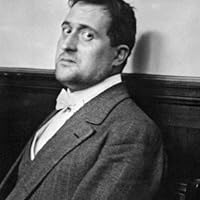
Wilhelm Albert Włodzimierz Apolinary Kostrowicki, known as Guillaume Apollinaire, was a French poet, writer, and art critic born in Italy to a Polish mother. Among the foremost poets of the early 20th century, he is credited with coining the word surrealism and writing one of the earliest works described as surrealist, the play Les Mamelles de Tirésias (1917, later used as the basis for an opera in 1947).

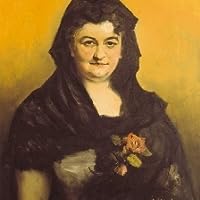
Emilia Pardo Bazán
Emilia Pardo Bazán
Author · 56 books

Emilia Pardo Bazán was a Galician author and scholar from Galicia. She is known for bringing naturalism to Spanish literature, for her detailed descriptions of reality, and for her role in feminist literature of her era. Her first novel, Pascual López (1879), is a simple exercise in fantasy of no remarkable promise, though it contains good descriptive passages of romance. It was followed by a more striking story, Un viaje de novios (1881), in which a discreet attempt was made to introduce into Spain the methods of French realism. The book caused a sensation among the literary cliques, and this sensation was increased by the appearance of another naturalistic tale, La tribuna (1885), wherein the influence of Émile Zola is unmistakable. Meanwhile, the writer's reply to her critics was issued under the title of La cuestion palpitante (1883), a clever piece of rhetoric, but of no special value as regards criticism or dialectics. The best of Emilia Pardo Bazán's work is embodied in Los pazos de Ulloa (1886), the painfully exact history of a decadent aristocratic family. A sequel, with the significant title of La madre naturaleza (1887), marks a further advance in the path of naturalism. She was also a journalist, essayist and critic. She died in Madrid.

Mark Twain
Mark Twain
Author · 389 books

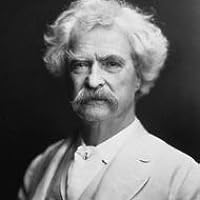
Librarian Note: There is more than one author by this name in the Goodreads database. Samuel Langhorne Clemens, better known by his pen name Mark Twain, was an American author and humorist. He is noted for his novels Adventures of Huckleberry Finn (1885), called "the Great American Novel", and The Adventures of Tom Sawyer (1876). Twain grew up in Hannibal, Missouri, which would later provide the setting for Huckleberry Finn and Tom Sawyer. He apprenticed with a printer. He also worked as a typesetter and contributed articles to his older brother Orion's newspaper. After toiling as a printer in various cities, he became a master riverboat pilot on the Mississippi River, before heading west to join Orion. He was a failure at gold mining, so he next turned to journalism. While a reporter, he wrote a humorous story, "The Celebrated Jumping Frog of Calaveras County," which proved to be very popular and brought him nationwide attention. His travelogues were also well-received. Twain had found his calling. He achieved great success as a writer and public speaker. His wit and satire earned praise from critics and peers, and he was a friend to presidents, artists, industrialists, and European royalty. However, he lacked financial acumen. Though he made a great deal of money from his writings and lectures, he squandered it on various ventures, in particular the Paige Compositor, and was forced to declare bankruptcy. With the help of Henry Huttleston Rogers, however, he eventually overcame his financial troubles. Twain worked hard to ensure that all of his creditors were paid in full, even though his bankruptcy had relieved him of the legal responsibility. Born during a visit by Halley's Comet, he died on its return. He was lauded as the "greatest American humorist of his age", and William Faulkner called Twain "the father of American literature". Excerpted from Wikipedia. AKA: Μαρκ Τουαίν (Greek)

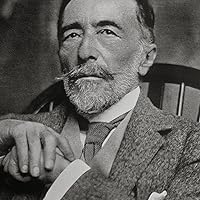
Joseph Conrad
Joseph Conrad
Author · 128 books

Joseph Conrad (born Józef Teodor Konrad Korzeniowski ) was a Polish-born English novelist who today is most famous for Heart of Darkness, his fictionalized account of Colonial Africa. Conrad left his native Poland in his middle teens to avoid conscription into the Russian Army. He joined the French Merchant Marine and briefly employed himself as a wartime gunrunner. He then began to work aboard British ships, learning English from his shipmates. He was made a Master Mariner, and served more than sixteen years before an event inspired him to try his hand at writing. He was hired to take a steamship into Africa, and according to Conrad, the experience of seeing firsthand the horrors of colonial rule left him a changed man. Joseph Conrad settled in England in 1894, the year before he published his first novel. He was deeply interested in a small number of writers both in French and English whose work he studied carefully. This was useful when, because a need to come to terms with his experience, lead him to write Heart of Darkness, in 1899, which was followed by other fictionalized explorations of his life. He has been lauded as one of the most powerful, insightful, and disturbing novelists in the English canon despite coming to English later in life, which allowed him to combine it with the sensibilities of French, Russian, and Polish literature.

O. Henry
O. Henry
Author · 174 books

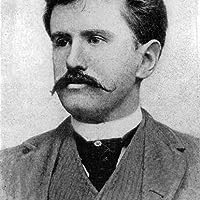
Such volumes as Cabbages and Kings (1904) and The Four Million (1906) collect short stories, noted for their often surprising endings, of American writer William Sydney Porter, who used the pen name O. Henry. His biography shows where he found inspiration for his characters. His era produced their voices and his language. Mother of three-year-old Porter died from tuberculosis. He left school at fifteen years of age and worked for five years in drugstore of his uncle and then for two years at a Texas sheep ranch. In 1884, he went to Austin, where he worked in a real estate office and a church choir and spent four years as a draftsman in the general land office. His wife and firstborn died, but daughter Margaret survived him. He failed to establish a small humorous weekly and afterward worked in poorly-run bank. When its accounts balanced not, people blamed and fired him. In Houston, he worked for a few years until, ordered to stand trial for embezzlement, he fled to New Orleans and thence Honduras. Two years later, he returned on account of illness of his wife. Apprehended, Porter served a few months more than three years in a penitentiary in Columbus, Ohio. During his incarceration, he composed ten short stories, including A Blackjack Bargainer , The Enchanted Kiss , and The Duplicity of Hargraves . In 1899, McClure's published Whistling Dick's Christmas Story and Georgia's Ruling . In Pittsburgh, Pennsylvania, he sent manuscripts to New York editors. In the spring of 1902, Ainslee's Magazine offered him a regular income if he moved to New York. In less than eight years, he became a bestselling author of collections of short stories. Cabbages and Kings came first in 1904 The Four Million, and The Trimmed Lamp and Heart of the West followed in 1907, and The Voice of the City in 1908, Roads of Destiny and Options in 1909, Strictly Business and Whirligigs in 1910 followed. Posthumously published collections include The Gentle Grafter about the swindler, Jeff Peters; Rolling Stones , Waifs and Strays , and in 1936, unsigned stories, followed. People rewarded other persons financially more. A Retrieved Reformation about the safe-cracker Jimmy Valentine got $250; six years later, $500 for dramatic rights, which gave over $100,000 royalties for playwright Paul Armstrong. Many stories have been made into films.

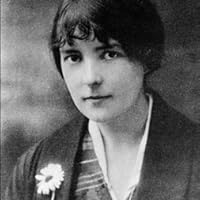
Katherine Mansfield
Katherine Mansfield
Author · 120 books

Kathleen Mansfield Murry (née Beauchamp) was a prominent New Zealand modernist writer of short fiction who wrote under the pen name of Katherine Mansfield. Katherine Mansfield is widely considered one of the best short story writers of her period. A number of her works, including "Miss Brill", "Prelude", "The Garden Party", "The Doll's House", and later works such as "The Fly", are frequently collected in short story anthologies. Mansfield also proved ahead of her time in her adoration of Russian playwright and short story writer Anton Chekhov, and incorporated some of his themes and techniques into her writing. Katherine Mansfield was part of a "new dawn" in English literature with T.S. Eliot, James Joyce and Virginia Woolf. She was associated with the brilliant group of writers who made the London of the period the centre of the literary world. Nevertheless, Mansfield was a New Zealand writer - she could not have written as she did had she not gone to live in England and France, but she could not have done her best work if she had not had firm roots in her native land. She used her memories in her writing from the beginning, people, the places, even the colloquial speech of the country form the fabric of much of her best work. Mansfield's stories were the first of significance in English to be written without a conventional plot. Supplanting the strictly structured plots of her predecessors in the genre (Edgar Allan Poe, Rudyard Kipling, H. G. Wells), Mansfield concentrated on one moment, a crisis or a turning point, rather than on a sequence of events. The plot is secondary to mood and characters. The stories are innovative in many other ways. They feature simple things - a doll's house or a charwoman. Her imagery, frequently from nature, flowers, wind and colours, set the scene with which readers can identify easily. Themes too are universal: human isolation, the questioning of traditional roles of men and women in society, the conflict between love and disillusionment, idealism and reality, beauty and ugliness, joy and suffering, and the inevitability of these paradoxes. Oblique narration (influenced by Chekhov but certainly developed by Mansfield) includes the use of symbolism - the doll's house lamp, the fly, the pear tree - hinting at the hidden layers of meaning. Suggestion and implication replace direct detail.

Edith Wharton
Edith Wharton
Author · 164 books

Edith Newbold Jones was born into such wealth and privilege that her family inspired the phrase "keeping up with the Joneses." The youngest of three children, Edith spent her early years touring Europe with her parents and, upon the family's return to the United States, enjoyed a privileged childhood in New York and Newport, Rhode Island. Edith's creativity and talent soon became obvious: By the age of eighteen she had written a novella, (as well as witty reviews of it) and published poetry in the Atlantic Monthly. After a failed engagement, Edith married a wealthy sportsman, Edward Wharton. Despite similar backgrounds and a shared taste for travel, the marriage was not a success. Many of Wharton's novels chronicle unhappy marriages, in which the demands of love and vocation often conflict with the expectations of society. Wharton's first major novel, The House of Mirth, published in 1905, enjoyed considerable literary success. Ethan Frome appeared six years later, solidifying Wharton's reputation as an important novelist. Often in the company of her close friend, Henry James, Wharton mingled with some of the most famous writers and artists of the day, including F. Scott Fitzgerald, André Gide, Sinclair Lewis, Jean Cocteau, and Jack London. In 1913 Edith divorced Edward. She lived mostly in France for the remainder of her life. When World War I broke out, she organized hostels for refugees, worked as a fund-raiser, and wrote for American publications from battlefield frontlines. She was awarded the French Legion of Honor for her courage and distinguished work. The Age of Innocence, a novel about New York in the 1870s, earned Wharton the Pulitzer Prize for fiction in 1921 — the first time the award had been bestowed upon a woman. Wharton traveled throughout Europe to encourage young authors. She also continued to write, lying in her bed every morning, as she had always done, dropping each newly penned page on the floor to be collected and arranged when she was finished. Wharton suffered a stroke and died on August 11, 1937. She is buried in the American Cemetery in Versailles, France.

  • Barnesandnoble.com
Jack London
Jack London
Author · 270 books

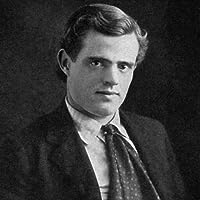
John Griffith Chaney (1876-1916), better known as Jack London, was an American novelist, journalist, and social activist. A pioneer of commercial fiction and American magazines, he was one of the first American authors to become an international celebrity and earn a large fortune from writing. He was also an innovator in the genre that would later become known as science fiction. His most famous works include The Call of the Wild and White Fang, both set in the Klondike Gold Rush, as well as the short stories, "To Build a Fire", "An Odyssey of the North", and "Love of Life". He also wrote about the South Pacific in stories such as "The Pearls of Parlay", and "The Heathen". London was part of the radical literary group, "The Crowd," in San Francisco and a passionate advocate of unionization, workers' rights, and socialism. He wrote several works dealing with these topics, such as his dystopian novel, The Iron Heel, his non-fiction exposé The People of the Abyss, War of the Classes, and Before Adam. London died November 22, 1916, in a sleeping porch in a cottage on his ranch. London's ashes were buried on his property, not far from the Wolf House. The grave is marked by a mossy boulder. The buildings and property were later preserved as Jack London State Historic Park, in Glen Ellen, California.

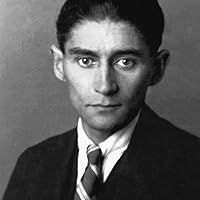
Franz Kafka
Franz Kafka
Author · 332 books

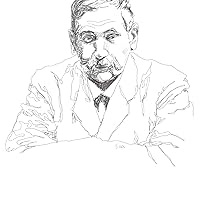
Prague-born writer Franz Kafka wrote in German, and his stories, such as " The Metamorphosis " (1916), and posthumously published novels, including The Trial (1925), concern troubled individuals in a nightmarishly impersonal world. Jewish middle-class family of this major fiction writer of the 20th century spoke German. People consider his unique body of much incomplete writing, mainly published posthumously, among the most influential in European literature. His stories include "The Metamorphosis" (1912) and " In the Penal Colony " (1914), whereas his posthumous novels include The Trial (1925), The Castle (1926) and Amerika (1927). Despite first language, Kafka also spoke fluent Czech. Later, Kafka acquired some knowledge of the French language and culture from Flaubert, one of his favorite authors. Kafka first studied chemistry at the Charles-Ferdinand University of Prague but after two weeks switched to law. This study offered a range of career possibilities, which pleased his father, and required a longer course of study that gave Kafka time to take classes in German studies and art history. At the university, he joined a student club, named Lese- und Redehalle der Deutschen Studenten, which organized literary events, readings, and other activities. In the end of his first year of studies, he met Max Brod, a close friend of his throughout his life, together with the journalist Felix Weltsch, who also studied law. Kafka obtained the degree of doctor of law on 18 June 1906 and performed an obligatory year of unpaid service as law clerk for the civil and criminal courts. Writing of Kafka attracted little attention before his death. During his lifetime, he published only a few short stories and never finished any of his novels except the very short "The Metamorphosis." Kafka wrote to Max Brod, his friend and literary executor: "Dearest Max, my last request: Everything I leave behind me ... in the way of diaries, manuscripts, letters (my own and others'), sketches, and so on, [is] to be burned unread." Brod told Kafka that he intended not to honor these wishes, but Kafka, so knowing, nevertheless consequently gave these directions specifically to Brod, who, so reasoning, overrode these wishes. Brod in fact oversaw the publication of most of work of Kafka in his possession; these works quickly began to attract attention and high critical regard. Max Brod encountered significant difficulty in compiling notebooks of Kafka into any chronological order as Kafka started writing in the middle of notebooks, from the last towards the first, et cetera. Kafka wrote all his published works in German except several letters in Czech to Milena Jesenská.

Benito Perez Galdos
Benito Perez Galdos
Author · 80 books

People know Spanish writer Benito Pérez Galdós especially for his Episodios Nacionales (1873-1912), a series of 46 historical novels. Benito Pérez Galdós was a Spanish realist novelist. Some authorities consider him second only to Cervantes in stature as a Spanish novelist. He was the leading literary figure in 19th century Spain. Galdós was a prolific writer, publishing 31 novels, 46 Episodios Nacionales (National Episodes), 23 plays, and the equivalent of 20 volumes of shorter fiction, journalism and other writings. He remains popular in Spain, and galdosistas (Galdós researchers) considered him Spain's equal to Dickens, Balzac and Tolstoy. As recently as 1950, few of his works were available translated to English, although he has slowly become popular in the Anglophone world. While his plays are generally considered to be less successful than his novels, Realidad (1892) is important in the history of realism in the Spanish theatre.

Stephen Crane
Stephen Crane
Author · 62 books

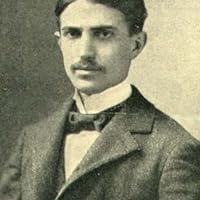
Stephen Crane (1871-1900) was an American novelist, poet and journalist, best known for the novel, The Red Badge of Courage. That work introduced the reading world to Crane's striking prose, a mix of impressionism, naturalism and symbolism. He died at age 28 in Badenweiler, Baden, Germany. Librarian Note: There is more than one author by this name in the Goodreads database.

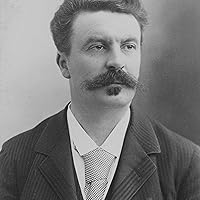
Guy de Maupassant
Guy de Maupassant
Author · 292 books
Henri René Albert Guy de Maupassant was a popular 19th-century French writer. He is one of the fathers of the modern short story. A protege of Flaubert, Maupassant's short stories are characterized by their economy of style and their efficient effortless dénouement. He also wrote six short novels. A number of his stories often denote the futility of war and the innocent civilians who get crushed in it - many are set during the Franco-Prussian War of the 1870s.
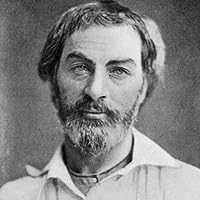
Walt Whitman
Walt Whitman
Author · 104 books

Walter Whitman (1819-1892) was an American poet, essayist, journalist, and humanist. He was a part of the transition between Transcendentalism and realism, incorporating both views in his works. Whitman is among the most influential poets in the American canon, often called the father of free verse. Born on Long Island, Whitman worked as a journalist, a teacher, a government clerk, and a volunteer nurse during the American Civil War in addition to publishing his poetry. Early in his career, he also produced a temperance novel, Franklin Evans (1842). After working as clerk, teacher, journalist and laborer, Whitman wrote his masterpiece, Leaves of Grass, pioneering free verse poetry in a humanistic celebration of humanity, in 1855. Emerson, whom Whitman revered, said of Leaves of Grass that it held "incomparable things incomparably said." During the Civil War, Whitman worked as an army nurse, later writing Drum Taps (1865) and Memoranda During the War (1867). His health compromised by the experience, he was given work at the Treasury Department in Washington, D.C. After a stroke in 1873, which left him partially paralyzed, Whitman lived his next 20 years with his brother, writing mainly prose, such as Democratic Vistas (1870). Leaves of Grass was published in nine editions, with Whitman elaborating on it in each successive edition. In 1881, the book had the compliment of being banned by the commonwealth of Massachusetts on charges of immorality. A good friend of Robert Ingersoll, Whitman was at most a Deist who scorned religion. D. 1892. More: http://www.whitmanarchive.org/ http://philosopedia.org/index.php/Wal... http://www.poets.org/poet.php/prmPID/126 http://www.poetryfoundation.org/bio/w... http://en.wikipedia.org/wiki/Walt\_Whi... http://www.poemhunter.com/walt-whitman/

Rudyard Kipling
Rudyard Kipling
Author · 256 books

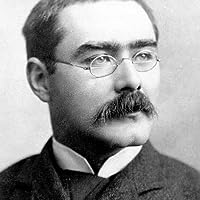
Joseph Rudyard Kipling was a journalist, short-story writer, poet, and novelist. Kipling's works of fiction include The Jungle Book (1894), Kim (1901), and many short stories, including The Man Who Would Be King (1888). His poems include Mandalay (1890), Gunga Din (1890), The Gods of the Copybook Headings (1919), The White Man's Burden (1899), and If— (1910). He is regarded as a major innovator in the art of the short story; his children's books are classics of children's literature; and one critic described his work as exhibiting "a versatile and luminous narrative gift". Kipling was one of the most popular writers in the United Kingdom, in both prose and verse, in the late 19th and early 20th centuries. Henry James said: "Kipling strikes me personally as the most complete man of genius (as distinct from fine intelligence) that I have ever known." In 1907, at the age of 41, he was awarded the Nobel Prize in Literature, making him the first English-language writer to receive the prize, and its youngest recipient to date. He was also sounded out for the British Poet Laureateship and on several occasions for a knighthood, both of which he declined. Awarded the Nobel Prize in Literature in 1907 "in consideration of the power of observation, originality of imagination, virility of ideas and remarkable talent for narration which characterize the creations of this world-famous author." Kipling kept writing until the early 1930s, but at a slower pace and with much less success than before. On the night of 12 January 1936, Kipling suffered a haemorrhage in his small intestine. He underwent surgery, but died less than a week later on 18 January 1936 at the age of 70 of a perforated duodenal ulcer. Kipling's death had in fact previously been incorrectly announced in a magazine, to which he wrote, "I've just read that I am dead. Don't forget to delete me from your list of subscribers."

548 Market St PMB 65688, San Francisco California 94104-5401 USA
© 2026 Paratext Inc. All rights reserved