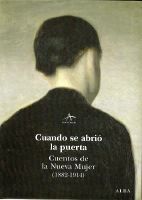



ISBN: 97884-84284185 En el siglo XIX por primera vez en la historia de la literatura pudieron leerse relatos protagonizados por mujeres escritoras, periodistas o detectives, que ejercían la medicina o administraban un banco; mujeres que abandonaban, sin caer en el melodrama, a sus maridos, o que veían la muerte de éstos como una liberación. La crítica a la sumisión era por primera vez feroz, y tan convencida que en algún caso hasta se permitía ser magnánima. Esta antología reúne 25 relatos escritos no sólo por las «nuevas mujeres» sino también por los hombres a los que inspiraron: Edith Wharton y Henry James, Willa Cather y Thomas Hardy, Vernon Lee y Saki, Virginia Woolf y Arthur Conan Doyle... y un considerable número de escritoras que serán todo un descubrimiento para el público español.
Authors

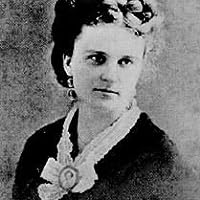
Kate Chopin was an American novelist and short-story writer best known for her startling 1899 novel, The Awakening. Born in St. Louis, she moved to New Orleans after marrying Oscar Chopin in 1870. Less than a decade later Oscar's cotton business fell on hard times and they moved to his family's plantation in the Natchitoches Parish of northwestern Louisiana. Oscar died in 1882 and Kate was suddenly a young widow with six children. She turned to writing and published her first poem in 1889. The Awakening, considered Chopin's masterpiece, was subject to harsh criticism at the time for its frank approach to sexual themes. It was rediscovered in the 1960s and has since become a standard of American literature, appreciated for its sophistication and artistry. Chopin's short stories of Cajun and Creole life are collected in Bayou Folk (1894) and A Night in Acadie (1897), and include "Desiree's Baby," "The Story of an Hour" and "The Storm." Some biographers cite 1850 as Chopin's birth year.

Constance Fenimore Woolson (March 5, 1840 – January 24, 1894) was an American novelist, poet, and short story writer. She was a grandniece of James Fenimore Cooper, and is best known for fictions about the Great Lakes region, the American South, and American expatriates in Europe. Woolson was born in Claremont, New Hampshire, but her family soon moved to Cleveland, Ohio, after the deaths of three of her sisters from scarlet fever. Woolson was educated at the Cleveland Female Seminary and a boarding school in New York. She traveled extensively through the midwest and northeastern regions of the U.S. during her childhood and young adulthood. Woolson’s father died in 1869. The following year she began to publish fiction and essays in magazines such as The Atlantic Monthly and Harper's Magazine. Her first full-length publication was a children’s book, The Old Stone House (1873). In 1875 she published her first volume of short stories, Castle Nowhere: Lake-Country Sketches, based on her experiences in the Great Lakes region, especially Mackinac Island. From 1873 to 1879 Woolson spent winters with her mother in St. Augustine, Florida. During these visits she traveled widely in the South which gave her material for her next collection of short stories, Rodman the Keeper: Southern Sketches (1880). After her mother’s death in 1879, Woolson went to Europe, staying at a succession of hotels in England, France, Italy, Switzerland and Germany. Woolson published her first novel Anne in 1880, followed by three others: East Angels (1886), Jupiter Lights (1889) and Horace Chase (1894). In 1883 she published the novella For the Major, a story of the postwar South that has become one of her most respected fictions. In the winter of 1889–1890 she traveled to Egypt and Greece, which resulted in a collection of travel sketches, Mentone, Cairo and Corfu (published posthumously in 1896). In 1893 Woolson rented an elegant apartment on the Grand Canal of Venice. Suffering from influenza and depression, she either jumped or fell to her death from a window in the apartment in January 1894. Two volumes of her short stories appeared after her death: The Front Yard and Other Italian Stories (1895) and Dorothy and Other Italian Stories (1896). She is buried in the Protestant Cemetery in Rome, and is memorialized by Anne's Tablet on Mackinac Island, Michigan. Woolson’s short stories have long been regarded as pioneering examples of local color or regionalism. Today, Woolson's novels, short stories, poetry, and travelogues are studied and taught from a range of scholarly and critical perspectives, including feminist, psychoanalytic, gender studies, postcolonial, and new historicism. (from Wikipedia)

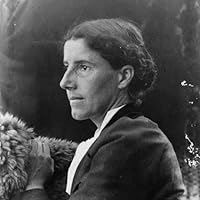
Charlotte Perkins Gilman, also known as Charlotte Perkins Stetson, was a prominent American sociologist, novelist, writer of short stories, poetry, and nonfiction, and a lecturer for social reform. She was a utopian feminist during a time when her accomplishments were exceptional for women, and she served as a role model for future generations of feminists because of her unorthodox concepts and lifestyle. Her best remembered work today is her semi-autobiographical short story, "The Yellow Wallpaper", which she wrote after a severe bout of post-partum depression. She was the daughter of Frederic B. Perkins.

Charlotte Mary Mew was a modernist British poet. Mew's father, architect Frederick Mew, died in 1898 without making adequate provision for his family; two of her siblings suffered from mental illness, and were committed to institutions, and three others died in early childhood leaving Charlotte, her mother and her sister, Anne. Charlotte and Anne made a pact never to marry for fear of passing on insanity to their children. In 1894, Mew succeeded in getting a short story into The Yellow Book, but wrote very little poetry at this time. Her first collection of poetry, The Farmer's Bride, was published in 1916. Mew gained the patronage of several literary figures, notably Thomas Hardy, who called her the best woman poet of her day, Virginia Woolf, who said she was "very good and quite unlike anyone else," and Siegfried Sassoon. She obtained a small Civil List pension with the aid of Cockerell, Hardy, John Masefield and Walter de la Mare. This helped ease her financial difficulties. After the death of her sister, she descended into a deep depression, and was admitted to a nursing home where she eventually committed suicide by drinking Lysol. Mew is buried in Hampstead Cemetery.

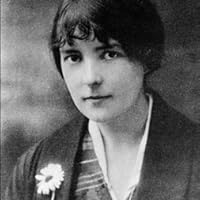
Kathleen Mansfield Murry (née Beauchamp) was a prominent New Zealand modernist writer of short fiction who wrote under the pen name of Katherine Mansfield. Katherine Mansfield is widely considered one of the best short story writers of her period. A number of her works, including "Miss Brill", "Prelude", "The Garden Party", "The Doll's House", and later works such as "The Fly", are frequently collected in short story anthologies. Mansfield also proved ahead of her time in her adoration of Russian playwright and short story writer Anton Chekhov, and incorporated some of his themes and techniques into her writing. Katherine Mansfield was part of a "new dawn" in English literature with T.S. Eliot, James Joyce and Virginia Woolf. She was associated with the brilliant group of writers who made the London of the period the centre of the literary world. Nevertheless, Mansfield was a New Zealand writer - she could not have written as she did had she not gone to live in England and France, but she could not have done her best work if she had not had firm roots in her native land. She used her memories in her writing from the beginning, people, the places, even the colloquial speech of the country form the fabric of much of her best work. Mansfield's stories were the first of significance in English to be written without a conventional plot. Supplanting the strictly structured plots of her predecessors in the genre (Edgar Allan Poe, Rudyard Kipling, H. G. Wells), Mansfield concentrated on one moment, a crisis or a turning point, rather than on a sequence of events. The plot is secondary to mood and characters. The stories are innovative in many other ways. They feature simple things - a doll's house or a charwoman. Her imagery, frequently from nature, flowers, wind and colours, set the scene with which readers can identify easily. Themes too are universal: human isolation, the questioning of traditional roles of men and women in society, the conflict between love and disillusionment, idealism and reality, beauty and ugliness, joy and suffering, and the inevitability of these paradoxes. Oblique narration (influenced by Chekhov but certainly developed by Mansfield) includes the use of symbolism - the doll's house lamp, the fly, the pear tree - hinting at the hidden layers of meaning. Suggestion and implication replace direct detail.

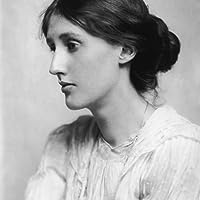
(Adeline) Virginia Woolf was an English novelist and essayist regarded as one of the foremost modernist literary figures of the twentieth century. During the interwar period, Woolf was a significant figure in London literary society and a member of the Bloomsbury Group. Her most famous works include the novels Mrs. Dalloway (1925), To the Lighthouse (1927), and Orlando (1928), and the book-length essay A Room of One's Own (1929) with its famous dictum, "a woman must have money and a room of her own if she is to write fiction."


Edith Newbold Jones was born into such wealth and privilege that her family inspired the phrase "keeping up with the Joneses." The youngest of three children, Edith spent her early years touring Europe with her parents and, upon the family's return to the United States, enjoyed a privileged childhood in New York and Newport, Rhode Island. Edith's creativity and talent soon became obvious: By the age of eighteen she had written a novella, (as well as witty reviews of it) and published poetry in the Atlantic Monthly. After a failed engagement, Edith married a wealthy sportsman, Edward Wharton. Despite similar backgrounds and a shared taste for travel, the marriage was not a success. Many of Wharton's novels chronicle unhappy marriages, in which the demands of love and vocation often conflict with the expectations of society. Wharton's first major novel, The House of Mirth, published in 1905, enjoyed considerable literary success. Ethan Frome appeared six years later, solidifying Wharton's reputation as an important novelist. Often in the company of her close friend, Henry James, Wharton mingled with some of the most famous writers and artists of the day, including F. Scott Fitzgerald, André Gide, Sinclair Lewis, Jean Cocteau, and Jack London. In 1913 Edith divorced Edward. She lived mostly in France for the remainder of her life. When World War I broke out, she organized hostels for refugees, worked as a fund-raiser, and wrote for American publications from battlefield frontlines. She was awarded the French Legion of Honor for her courage and distinguished work. The Age of Innocence, a novel about New York in the 1870s, earned Wharton the Pulitzer Prize for fiction in 1921 — the first time the award had been bestowed upon a woman. Wharton traveled throughout Europe to encourage young authors. She also continued to write, lying in her bed every morning, as she had always done, dropping each newly penned page on the floor to be collected and arranged when she was finished. Wharton suffered a stroke and died on August 11, 1937. She is buried in the American Cemetery in Versailles, France.
- Barnesandnoble.com


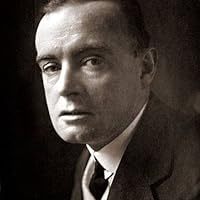
Henry James, OM (1843-1916), son of theologian Henry James Sr., brother of the philosopher and psychologist William James and diarist Alice James, was an American-born author, one of the founders and leaders of a school of realism in fiction. He spent much of his life in England and became a British subject shortly before his death. He is primarily known for a series of major novels in which he portrayed the encounter of America with Europe. His plots centered on personal relationships, the proper exercise of power in such relationships, and other moral questions. His method of writing from the point of view of a character within a tale allowed him to explore the phenomena of consciousness and perception, and his style in later works has been compared to impressionist painting. James insisted that writers in Great Britain and America should be allowed the greatest freedom possible in presenting their view of the world, as French authors were. His imaginative use of point of view, interior monologue and unreliable narrators in his own novels and tales brought a new depth and interest to realistic fiction, and foreshadowed the modernist work of the twentieth century. An extraordinarily productive writer, in addition to his voluminous works of fiction he published articles and books of travel writing, biography, autobiography, and criticism,and wrote plays, some of which were performed during his lifetime with moderate success. His theatrical work is thought to have profoundly influenced his later novels and tales.
From ancient Greece and Rome, noted Dutch-born British painter Sir Lawrence Alma-Tadema vividly depicted of scenes. https://en.wikipedia.org/wiki/Lawrenc...

Olive Schreiner (24 March 1855 - December 11, 1920), was a South African author, pacifist and political activist. She is best known for her novel The Story of an African Farm, which has been acclaimed for the manner it tackled the issues of its day, ranging from agnosticism to the treatment of women. From Wikipedia: Olive Emilie Albertina Schreiner (1855-1920) was named after her three older brothers, Oliver (1848-1854), Albert (1843-1843) and Emile (1852-1852), who died before she was born. She was the ninth of twelve children born to a missionary couple, Gottlob Schreiner and Rebecca Lyndall at the Wesleyan Missionary Society station at Wittebergen in the Eastern Cape, near Herschel in South Africa. Her childhood was a harsh one: her father was loving and gentle, though unpractical; but her mother Rebecca was intent on teaching her children the same restraint and self-discipline that had been a part of her upbringing. Olive received virtually all her initial education from her mother who was well-read and gifted.[clarification needed] Her eldest brother Fred (1840-1901) was educated in England and became headmaster of a school in Eastbourne. When Olive was six, Gottlob transferred to Healdtown in the Eastern Cape to run the Wesleyan training institute there. As with so many of his other projects, he simply was not up to the task and was expelled in disgrace for trading against missionary regulations. He was forced to make his own living for the first time in his life, and tried a business venture. Again, he failed and was insolvent within a year. The family lived in abject poverty as a result. However, Olive was not to remain with her parents for long. When her older brother Theophilus (1844-1920) was appointed headmaster in Cradock in 1867, she went to live with him along with two of her siblings. She also attended his school and received a formal education for the first time. Despite that, she was no happier in Cradock than she had been in Wittebergen or Healdtown. Her siblings were very religious, but Olive had already rejected the Christianity of her parents as baseless and it was the cause of many arguments with her family. Therefore, when Theo and her brother left Cradock for the diamond fields of Griqualand West, Olive chose to become a governess . On the way to her first post at Barkly East, she met Willie Bertram, who shared her views of religion and who lent her a copy of Herbert Spencer’s First Principles. This text was to have a profound impact on her. While rejecting religious creeds and doctrine, Spencer also argued for a belief in an Absolute that lay beyond the scope of human knowledge and conception. This belief was founded in the unity of nature and a teleological universe, both of which Olive was to appropriate for herself in her attempts to create a morality free of organized religion. After this meeting, Olive travelled from place to place, accepting posts as a governess with various families and leaving them because of the sexual predation of her male employers in many cases. During this time she met Julius Gau, to whom she became engaged under doubtful circumstances. For whatever reason, their engagement did not last long and she returned to live with her parents and then with her brothers. She read widely and began writing seriously. She started Undine at this time. However, her brothers’ financial situation soon deteriorated, as diamonds became increasingly difficult to find. Olive had no choice but to resume her transient lifestyle, moving between various households and towns, until she returned briefly to her parents in 1874. It was there that she had the first of the asthma attacks that would plague her for the rest of her life. Since her parents were no more financially secure than before and because of her ill-health, Olive was forced to resume working in order to support them.

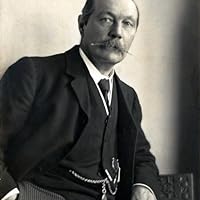
Sir Arthur Ignatius Conan Doyle was born the third of ten siblings on 22 May 1859 in Edinburgh, Scotland. His father, Charles Altamont Doyle, a talented illustrator, was born in England of Irish descent, and his mother, born Mary Foley, was Irish. They were married in 1855. Although he is now referred to as "Conan Doyle", the origin of this compound surname (if that is how he meant it to be understood) is uncertain. His baptism record in the registry of St Mary's Cathedral in Edinburgh gives 'Arthur Ignatius Conan' as his Christian name, and simply 'Doyle' as his surname. It also names Michael Conan as his godfather. At the age of nine Conan Doyle was sent to the Roman Catholic Jesuit preparatory school, Hodder Place, Stonyhurst. He then went on to Stonyhurst College, leaving in 1875. From 1876 to 1881 he studied medicine at the University of Edinburgh. This required that he provide periodic medical assistance in the towns of Aston (now a district of Birmingham) and Sheffield. While studying, Conan Doyle began writing short stories. His first published story appeared in "Chambers' Edinburgh Journal" before he was 20. Following his graduation, he was employed as a ship's doctor on the SS Mayumba during a voyage to the West African coast. He completed his doctorate on the subject of tabes dorsalis in 1885. In 1885 Conan Doyle married Louisa (or Louise) Hawkins, known as "Touie". She suffered from tuberculosis and died on 4 July 1906. The following year he married Jean Elizabeth Leckie, whom he had first met and fallen in love with in 1897. Due to his sense of loyalty he had maintained a purely platonic relationship with Jean while his first wife was alive. Jean died in London on 27 June 1940. Conan Doyle fathered five children. Two with his first wife—Mary Louise (28 January 1889 – 12 June 1976), and Arthur Alleyne Kingsley, known as Kingsley (15 November 1892 – 28 October 1918). With his second wife he had three children—Denis Percy Stewart (17 March 1909 – 9 March 1955), second husband in 1936 of Georgian Princess Nina Mdivani (circa 1910 – 19 February 1987; former sister-in-law of Barbara Hutton); Adrian Malcolm (19 November 1910–3 June 1970) and Jean Lena Annette (21 December 1912–18 November 1997). Conan Doyle was found clutching his chest in the hall of Windlesham, his house in Crowborough, East Sussex, on 7 July 1930. He had died of a heart attack at age 71. His last words were directed toward his wife: "You are wonderful." The epitaph on his gravestone in the churchyard at Minstead in the New Forest, Hampshire, reads: STEEL TRUE BLADE STRAIGHT ARTHUR CONAN DOYLE KNIGHT PATRIOT, PHYSICIAN & MAN OF LETTERS Conan Doyle's house, Undershaw, located in Hindhead, south of London, where he had lived for a decade, had been a hotel and restaurant between 1924 and 2004. It now stands empty while conservationists and Conan Doyle fans fight to preserve it. A statue honours Conan Doyle at Crowborough Cross in Crowborough, where Conan Doyle lived for 23 years. There is also a statue of Sherlock Holmes in Picardy Place, Edinburgh, close to the house where Conan Doyle was born. Series: * Sherlock Holmes

Known British writer Hector Hugh Munro under pen name Saki published his witty and sometimes bitter short stories in collections, such as The Chronicles of Clovis (1911). His sometimes macabre satirized Edwardian society and culture. People consider him a master and often compare him to William Sydney Porter and Dorothy Rothschild Parker. His tales feature delicately drawn characters and finely judged narratives. "The Open Window," perhaps his most famous, closes with the line, "Romance at short notice was her specialty," which thus entered the lexicon. Newspapers first and then several volumes published him as the custom of the time. His works include * a full-length play, The Watched Pot , in collaboration with Charles Maude; * two one-act plays; * a historical study, The Rise of the Russian Empire , the only book under his own name; * a short novel, The Unbearable Bassington ; * the episodic The Westminster Alice , a parliamentary parody of Alice in Wonderland ; * and When William Came: A Story of London under the Hohenzollerns , an early alternate history. Oscar Fingal O'Flahertie Wills Wilde, Charles Lutwidge Dodgson, and Joseph Rudyard Kipling, influenced Munro, who in turn influenced Alan Alexander Milne, Sir Noel Pierce Coward, and Pelham Grenville Wodehouse.

People best know British writer George Robert Gissing for his novels, such as New Grub Street (1891), about poverty and hardship. This English novelist who published twenty-three novels between 1880 and 1903. From his early naturalistic works, he developed into one of the most accomplished realists of the late-Victorian era. Born to lower-middle-class parents, Gissing went to win a scholarship to Owens College, the present-day University of Manchester. A brilliant student, he excelled at university, winning many coveted prizes, including the Shakespeare prize in 1875. Between 1891 and 1897 (his so-called middle period) he produced his best works, which include New Grub Street, Born in Exile , The Odd Women , In the Year of Jubilee , and The Whirlpool . The middle years of the decade saw his reputation reach new heights: some critics count him alongside George Meredith and Thomas Hardy, the best novelists of his day. He also enjoyed new friendships with fellow writers such as Henry James, and H.G. Wells, and came into contact with many other up-and-coming writers such as Joseph Conrad and Stephen Crane.