Authors

Leopoldo García-Alas y Ureña (25 April 1852 – 13 June 1901), also known as Clarín, was a Spanish realist novelist born in Zamora. He died in Oviedo. Alas spent his childhood living in León and Guadalajara, until he moved to Oviedo in 1863. There he studied for the Bachillerato (B.A. degree) and began his law studies. He lived in Madrid from 1871 to 1878, where he began his career as a journalist (adopting the pen-name "Clarín" in 1875) and he graduated with the thesis El Derecho y la Moralidad (Law and Morality) in 1878. He taught in Zaragoza from 1882 to 1883. In 1883 he returned to Oviedo to take up a position as professor of Roman law. Above all, Clarín is the author of La Regenta, his masterpiece and one of the best novels of the 19th century. It is a long work, similar to Flaubert's Madame Bovary, one of its influences. Other influences included Naturalism and Krausism, a philosophical current which promoted the cultural and ethical regeneration of Spain. La Regenta is special for its great wealth of characters and secondary stories, while the main character's description is left slightly unfocused and vague. On the other hand, the downfall of the provincial lady has a place amidst two very diverse suitors: the most handsome man in the city and the cathedral's priest. The depiction of this priest is a key part of the book. For the description of the provincial atmosphere and the city's collective life, Clarín used techniques such as the internal monologue or the free indirect style, which makes the story be narrated by the characters themselves and allows the reader to penetrate in their intimacy. In 1890, he published a new novel, Su único hijo. Even though most critics consider it as a lesser novel in comparison with La Regenta, it is equal to the former in the skill with which the technical resources are used. Su único hijo was originally meant to be the introduction to a trilogy, but aside from an outline and a few fragments of the two sequels, Su único hijo was Clarín's last full-length novel. Apart from these works, Clarín is also the author of magnificent stories and of a large number of journalistic articles. He also wrote an essay, La Literatura en 1881 (1882), in collaboration with Armando Palacio Valdés. Leopoldo Alas remains a rather enigmatic figure in the Spanish literary world, leaving a legacy that encouraged the search for God and humanism simultaneously. This aberrant confluence has facilitated the presence of various interpretations regarding the author's writings, most noticeably of his masterpiece, La Regenta.

Vicente Blasco Ibáñez (January 29, 1867 – January 28, 1928) was a Spanish realist novelist writing in Spanish, a screenwriter and occasional film director. Born in Valencia, today he is best known in the English-speaking world for his World War I novel The Four Horsemen of the Apocalypse. He is also known for his political activities. He finished studying law, but hardly practised. He divided his time between politics, literature. He was a fan of Miguel de Cervantes Saavedra. His life, it can be said, tells a more interesting story than his novels. He was a militant Republican partisan in his youth and founded a newspaper, El Pueblo (translated as either The Town or The People) in his hometown. The newspaper aroused so much controversy that it was brought to court many times and censored. He made many enemies and was shot and almost killed in one dispute. The bullet was caught in the clasp of his belt. He had several stormy love affairs. He volunteered as the proofreader for the novel Noli Me Tangere, in which the Filipino patriot José Rizal expressed his contempt of the Spanish colonization of the Philippines. He traveled to Argentina in 1909 where two new cities, Nueva Valencia and Cervantes, were created. He gave conferences on historical events and Spanish literature. Tired and disgusted with government failures and inaction, Vicente Blasco Ibáñez moved to Paris, France at the beginning of World War I. He was a supporter of the Allies in World War I. He died in Menton, France at the age of 61.

Emilia Pardo Bazán was a Galician author and scholar from Galicia. She is known for bringing naturalism to Spanish literature, for her detailed descriptions of reality, and for her role in feminist literature of her era. Her first novel, Pascual López (1879), is a simple exercise in fantasy of no remarkable promise, though it contains good descriptive passages of romance. It was followed by a more striking story, Un viaje de novios (1881), in which a discreet attempt was made to introduce into Spain the methods of French realism. The book caused a sensation among the literary cliques, and this sensation was increased by the appearance of another naturalistic tale, La tribuna (1885), wherein the influence of Émile Zola is unmistakable. Meanwhile, the writer's reply to her critics was issued under the title of La cuestion palpitante (1883), a clever piece of rhetoric, but of no special value as regards criticism or dialectics. The best of Emilia Pardo Bazán's work is embodied in Los pazos de Ulloa (1886), the painfully exact history of a decadent aristocratic family. A sequel, with the significant title of La madre naturaleza (1887), marks a further advance in the path of naturalism. She was also a journalist, essayist and critic. She died in Madrid.

Gustavo Adolfo Domínguez Bastida, better known as Gustavo Adolfo Bécquer, was a Spanish post-romanticist writer of poetry, short stories, and nonfiction now considered one of the most important figures in Spanish literature. He adopted the alias of Bécquer as his brother Valeriano Bécquer, a painter, had done earlier. He was associated with the post-romanticism movement and wrote while realism was enjoying success in Spain. He was moderately well known during his life, but it was after his death that most of his works were published. He is best known for his intimate, lyrical poems and for his legends; more importantly, he is remembered for the verbal decor with which he impregnated everything he wrote. A Romantic poet above all else, Bécquer infused every single line he wrote with sensorial intensity, and his Legends still serve today as some of the most brilliant examples of prose poetry. Always including elements of the supernatural, Bécquer imbued his legends with a gothic sensibility, depicting gnomes, ghosts, enchanted fortresses and monasteries, and men and women who succumb to vanity or desire. Other lesser-known, but none less valuable, works include his "Cartas Desde mi Celda" ("Letters from my Cell") and "Cartas Literarias a una Mujer" ("Literary Epistles to a Woman") which adopt an intimate, contemplative style similar to Thoreau in "Walden." Here we find him ruminating at length on the subjects that characterize his poetic works: love, the purpose of art, folklore, the seductive pull of ancient ruins—and, of course, women. An essential figure in the canon of Hispanic letters, and an obligatory reading in any Spanish-language High School, he is today considered the founder of modern Spanish lyricism. Bécquer's influence on 20th century poets of the Spanish language is felt in the works of poets such as Octavio Paz, Giannina Braschi, Antonio Machado, Juan Ramón Jiménez, Pablo Neruda and many more.


Francisco Ayala García-Duarte was a Spanish writer and teacher. Born in Granada, he had his first novel, Tragicomedia de un hombre sin espíritu, published when he was only nineteen. At the start of the Spanish Civil War, Ayala was out of the country. He returned for a brief time, later serving as secretary of the Spanish Republic's legation in Prague. At the end of the civil war he moved, as an exile, to Argentina where he lived between 1939 and 1950. There he taught sociology while continuing to publish works of fiction, literary criticism and sociology, notably a three-volume Tratado de la sociología (1947.) He also lived briefly in Brazil and after 1950 in Puerto Rico, where he taught at the University of Puerto Rico. He later moved to the United States, teaching in various universities, including Bryn Mawr, Princeton, New York University and Brooklyn College. In 1956 he returned to visit Spain for the first time but did not return to live there till 1980. He continued to write essays and fiction on various themes into his old age. Many of his writings deal with the topics of power and abuse of power. In general he did not directly written about the war in Spain, but examines it instead through other periods of history. Some of his works are:
- La cabeza de cordero (1949)
- Muerte de perros (1958)
- El fondo del vaso (1962)
- El regreso (1992) and
- El escritor en su siglo (1990) In 2005, his memoirs were published, titled Recuerdos y olvidos. Ayala died in November, 2009, in Madrid, when he was 103 years old.

Such volumes as Cabbages and Kings (1904) and The Four Million (1906) collect short stories, noted for their often surprising endings, of American writer William Sydney Porter, who used the pen name O. Henry. His biography shows where he found inspiration for his characters. His era produced their voices and his language. Mother of three-year-old Porter died from tuberculosis. He left school at fifteen years of age and worked for five years in drugstore of his uncle and then for two years at a Texas sheep ranch. In 1884, he went to Austin, where he worked in a real estate office and a church choir and spent four years as a draftsman in the general land office. His wife and firstborn died, but daughter Margaret survived him. He failed to establish a small humorous weekly and afterward worked in poorly-run bank. When its accounts balanced not, people blamed and fired him. In Houston, he worked for a few years until, ordered to stand trial for embezzlement, he fled to New Orleans and thence Honduras. Two years later, he returned on account of illness of his wife. Apprehended, Porter served a few months more than three years in a penitentiary in Columbus, Ohio. During his incarceration, he composed ten short stories, including A Blackjack Bargainer , The Enchanted Kiss , and The Duplicity of Hargraves . In 1899, McClure's published Whistling Dick's Christmas Story and Georgia's Ruling . In Pittsburgh, Pennsylvania, he sent manuscripts to New York editors. In the spring of 1902, Ainslee's Magazine offered him a regular income if he moved to New York. In less than eight years, he became a bestselling author of collections of short stories. Cabbages and Kings came first in 1904 The Four Million, and The Trimmed Lamp and Heart of the West followed in 1907, and The Voice of the City in 1908, Roads of Destiny and Options in 1909, Strictly Business and Whirligigs in 1910 followed. Posthumously published collections include The Gentle Grafter about the swindler, Jeff Peters; Rolling Stones , Waifs and Strays , and in 1936, unsigned stories, followed. People rewarded other persons financially more. A Retrieved Reformation about the safe-cracker Jimmy Valentine got $250; six years later, $500 for dramatic rights, which gave over $100,000 royalties for playwright Paul Armstrong. Many stories have been made into films.

Anton Pavlovich Chekhov (Russian: Антон Павлович Чехов ) was born in the small seaport of Taganrog, southern Russia, the son of a grocer. Chekhov's grandfather was a serf, who had bought his own freedom and that of his three sons in 1841. He also taught himself to read and write. Yevgenia Morozova, Chekhov's mother, was the daughter of a cloth merchant. "When I think back on my childhood," Chekhov recalled, "it all seems quite gloomy to me." His early years were shadowed by his father's tyranny, religious fanaticism, and long nights in the store, which was open from five in the morning till midnight. He attended a school for Greek boys in Taganrog (1867-68) and Taganrog grammar school (1868-79). The family was forced to move to Moscow following his father's bankruptcy. At the age of 16, Chekhov became independent and remained for some time alone in his native town, supporting himself through private tutoring. In 1879 Chekhov entered the Moscow University Medical School. While in the school, he began to publish hundreds of comic short stories to support himself and his mother, sisters and brothers. His publisher at this period was Nicholas Leikin, owner of the St. Petersburg journal Oskolki (splinters). His subjects were silly social situations, marital problems, farcical encounters between husbands, wives, mistresses, and lovers, whims of young women, of whom Chekhov had not much knowledge – the author was shy with women even after his marriage. His works appeared in St. Petersburg daily papers, Peterburskaia gazeta from 1885, and Novoe vremia from 1886. Chekhov's first novel, Nenunzhaya pobeda (1882), set in Hungary, parodied the novels of the popular Hungarian writer Mór Jókai. As a politician Jókai was also mocked for his ideological optimism. By 1886 Chekhov had gained a wide fame as a writer. His second full-length novel, The Shooting Party, was translated into English in 1926. Agatha Christie used its characters and atmosphere in her mystery novel The Murder of Roger Ackroyd (1926). Chekhov graduated in 1884, and practiced medicine until 1892. In 1886 Chekhov met H.S. Suvorin, who invited him to become a regular contributor for the St. Petersburg daily Novoe vremya. His friendship with Suvorin ended in 1898 because of his objections to the anti-Dreyfus campaign conducted by paper. But during these years Chechov developed his concept of the dispassionate, non-judgmental author. He outlined his program in a letter to his brother Aleksandr: "1. Absence of lengthy verbiage of political-social-economic nature; 2. total objectivity; 3. truthful descriptions of persons and objects; 4. extreme brevity; 5. audacity and originality; flee the stereotype; 6. compassion." Chekhov's first book of stories (1886) was a success, and gradually he became a full-time writer. The author's refusal to join the ranks of social critics arose the wrath of liberal and radical intelligentsia and he was criticized for dealing with serious social and moral questions, but avoiding giving answers. However, he was defended by such leading writers as Leo Tolstoy and Nikolai Leskov. "I'm not a liberal, or a conservative, or a gradualist, or a monk, or an indifferentist. I should like to be a free artist and that's all..." Chekhov said in 1888. The failure of his play The Wood Demon (1889) and problems with his novel made Chekhov to withdraw from literature for a period. In 1890 he travelled across Siberia to remote prison island, Sakhalin. There he conducted a detailed census of some 10,000 convicts and settlers condemned to live their lives on that harsh island. Chekhov hoped to use the results of his research for his doctoral dissertation. It is probable that hard conditions on the island also weakened his own physical condition. From this journey was born his famous travel book T

Hans Christian Andersen (often referred to in Scandinavia as H.C. Andersen) was a Danish author and poet. Although a prolific writer of plays, travelogues, novels, and poems, Andersen is best remembered for his fairy tales. Andersen's popularity is not limited to children; his stories—called eventyr, or "fairy-tales" — express themes that transcend age and nationality. Andersen's fairy tales, which have been translated into more than 125 languages, have become culturally embedded in the West's collective consciousness, readily accessible to children, but presenting lessons of virtue and resilience in the face of adversity for mature readers as well. Some of his most famous fairy tales include "The Little Mermaid", "The Ugly Duckling", "The Nightingale", "The Emperor's New Clothes" and many more. His stories have inspired plays, ballets, and both live-action and animated films.

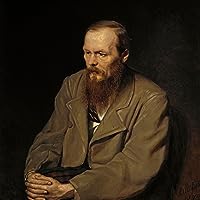
Fyodor Mikhailovich Dostoevsky was a Russian novelist, short story writer, essayist, and journalist. His literary works explore human psychology in the troubled political, social, and spiritual atmospheres of 19th-century Russia, and engage with a variety of philosophical and religious themes. His most acclaimed novels include Crime and Punishment (1866), The Idiot (1869), Demons (1872), and The Brothers Karamazov (1880). Many literary critics rate him as one of the greatest novelists in all of world literature, as multiple of his works are considered highly influential masterpieces. His 1864 novella Notes from Underground is considered to be one of the first works of existentialist literature. As such, he is also looked upon as a philosopher and theologian as well. (Russian: Фёдор Михайлович Достоевский) (see also Fiodor Dostoïevski)

People know Spanish writer Benito Pérez Galdós especially for his Episodios Nacionales (1873-1912), a series of 46 historical novels. Benito Pérez Galdós was a Spanish realist novelist. Some authorities consider him second only to Cervantes in stature as a Spanish novelist. He was the leading literary figure in 19th century Spain. Galdós was a prolific writer, publishing 31 novels, 46 Episodios Nacionales (National Episodes), 23 plays, and the equivalent of 20 volumes of shorter fiction, journalism and other writings. He remains popular in Spain, and galdosistas (Galdós researchers) considered him Spain's equal to Dickens, Balzac and Tolstoy. As recently as 1950, few of his works were available translated to English, although he has slowly become popular in the Anglophone world. While his plays are generally considered to be less successful than his novels, Realidad (1892) is important in the history of realism in the Spanish theatre.

Oscar Fingal O'Flahertie Wills Wilde was an Irish playwright, poet, and author of numerous short stories, and one novel. Known for his biting wit, and a plentitude of aphorisms, he became one of the most successful playwrights of the late Victorian era in London, and one of the greatest celebrities of his day. Several of his plays continue to be widely performed, especially The Importance of Being Earnest. As the result of a widely covered series of trials, Wilde suffered a dramatic downfall and was imprisoned for two years hard labour after being convicted of "gross indecency" with other men. After Wilde was released from prison he set sail for Dieppe by the night ferry. He never returned to Ireland or Britain, and died in poverty.