Margins
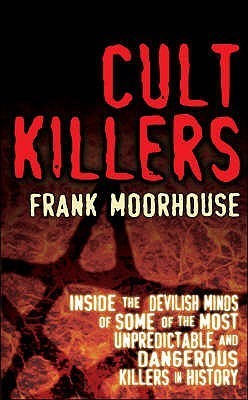
Cult Killers book cover
Cult Killers
2008
First Published
3.57
Average Rating
288
Number of Pages
The six-six-Sixties were the Devil's decade. With their heady cocktail of glamour and gore, dissatisfied youth have been drawn back to those years time and time again in search of inspiration - mostly artistic, some diabolical. The dark side of that swinging decade saw the rise of Satanism in popular culture, and even as the Sixties ended in flames, the attendant black smoke formed new shapes for Satan to inhabit and still more powerful envoys to spread his word...Following the rise of Satanism through from the Sixties to today, Frank Moorhouse examines the key cases and delves into the lives of the perpetrators, searching for the events that could have driven them to commit such horrific acts. Rather than simply criticise and condemn, Moorhouse remains open-minded as he trawls through the carnage left by some of the world's most terrifying killers.

Avg Rating
3.57
Number of Ratings
46
5 STARS
13%
4 STARS
46%
3 STARS
28%
2 STARS
11%
1 STARS
2%
goodreads

Author

Frank Moorhouse
Author · 19 books

Frank Thomas Moorhouse AM (21 December 1938 – 26 June 2022) was an Australian writer. He won major Australian national prizes for the short story, the novel, the essay, and for script writing. His work has been published in the United Kingdom, France, and the United States and also translated into German, Spanish, Chinese, Japanese, Serbian, and Swedish. Moorhouse was perhaps best known for winning the 2001 Miles Franklin Literary Award for his novel, Dark Palace; which together with Grand Days and Cold Light, the "Edith Trilogy" is a fictional account of the League of Nations, which trace the strange, convoluted life of a young woman who enters the world of diplomacy in the 1920s through to her involvement in the newly formed International Atomic Energy Agency after World War II. The author of 18 books, Moorhouse became a full-time fiction writer during the 1970s, also writing essays, short stories, journalism and film, radio and TV scripts. In his early career he developed a narrative structure which he has described as the 'discontinuous narrative'. He lived for many years in Balmain, where together with Clive James, Germaine Greer and Robert Hughes, he became part of the "Sydney Push" - an anti-censorship movement that protested against rightwing politics and championed freedom of speech and sexual liberation. In 1975 he played a fundamental role in the evolution of copyright law in Australia in the case University of New South Wales v Moorhouse. - Wikipedia

548 Market St PMB 65688, San Francisco California 94104-5401 USA
© 2026 Paratext Inc. All rights reserved