Margins
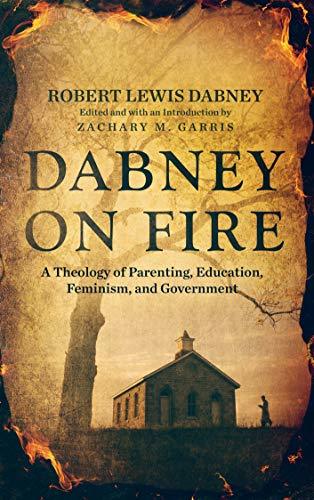
Dabney On Fire book cover
Dabney On Fire
A Theology of Parenting, Education, Feminism, and Government
2019
First Published
4.12
Average Rating
129
Number of Pages
Robert Lewis Dabney (1820–1898) was one of America’s greatest theologians. He was a Southern Presbyterian pastor, professor, philosopher, chaplain, church leader, author, and biographer of Stonewall Jackson. Among Dabney’s many gifts was his ability to predict the future, which resulted from his razor-sharp logic and thorough understanding of the world around him. Nowhere was Dabney more prophetic than in his writings on public theology, where he sought to apply the Bible to cultural and political issues in society. In addition to an introductory chapter, Dabney On Fire contains four of Robert Lewis Dabney’s greatest essays, in which he expounds upon the significance of parents, the failure of public schools, the dangers of feminism, and the limits of civil government. Dabney’s fiery style shines through, as this first-rate thinker and conservative stalwart puts forth the Bible’s teaching on these issues and critiques his opposition. These essays will inspire parents of young children, equip Christians dealing with secular thought, and challenge all who assume modern views of equality.

Avg Rating
4.12
Number of Ratings
49
5 STARS
45%
4 STARS
41%
3 STARS
4%
2 STARS
2%
1 STARS
8%
goodreads

Author

Robert Lewis Dabney
Robert Lewis Dabney
Author · 10 books

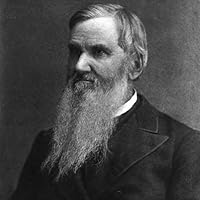
Robert Lewis Dabney (March 5, 1820 – January 3, 1898) was an American Christian theologian, a Southern Presbyterian pastor, and Confederate Army chaplain. He was also chief of staff and biographer to Stonewall Jackson. His biography of Jackson remains in print today. Dabney studied at Hampden-Sydney College and the University of Virginia (M.A., 1842), and graduated from Union Theological Seminary in 1846. He was then a missionary in Louisa County, Virginia, from 1846 to 1847 and pastor at Tinkling Spring, Virginia from 1847 to 1853, being also head master of a classical school for a portion of this time. From 1853 to 1859 he was professor of ecclesiastical history and polity and from 1859 to 1869 adjunct professor of systematic theology in Union Theological Seminary, where he later became full professor of systematics. In 1883, he was appointed professor of mental and moral philosophy in the University of Texas. By 1894 failing health compelled him to retire from active life, although he still lectured occasionally. He was co-pastor, with his brother-in-law B. M. Smith, of the Hampden-Sydney College Church 1858 to 1874, also serving Hampden-Sydney College in a professorial capacity on occasions of vacancies in its faculty. Dabney, whose wife was a first cousin to Stonewall Jackson's wife, participated in the Civil War: during the summer of 1861 he was chaplain of the 18th Virginia regiment in the Confederate army, and in the following year was chief of staff to Jackson during the Valley Campaign and the Seven Days Battles. After the Civil War Dabney spoke widely on Jackson and the Confederacy. He continued to hold racial views typical in the South before the Civil War, and his continued support of slavery in speeches and a book published after the war and his strong loyalty to the Confederacy until the 1890s made him a visible figure in the post-war South (Hettle, 2003). While at the University of Texas he practically founded and maintained the Austin School of Theology (which later became Austin Presbyterian Theological Seminary), and in 1870 was Moderator of the General Assembly of the Presbyterian Church in the United States. Major works Memoir of Rev. Dr. Francis S. Sampson (1855), whose commentary on Hebrews he edited (1857); Life of General Thomas J. Jackson (1866) A Defense of Virginia, and Through Her, of the South, in Recent and Pending Contests Against the Sectional Party (1867), an apologia for the Confederacy. Lectures on Sacred Rhetoric (1870) Syllabus and Notes of the Course of Systematic and Polemic Theology (1871; 2nd ed. 1878), later republished as Systematic Theology. Systematic Theology (1878) Sensualistic Philosophy of the Nineteenth Century Examined (1875; 2nd ed. 1887) Practical Philosophy (1897) Penal Character of the Atonement of Christ Discussed in the Light of Recent Popular Heresies (1898, posthumous), on the satisfaction view of the atonement. Discussions (1890-1897), Four volumes of his shorter essays, edited by C. R. Vaughan.

548 Market St PMB 65688, San Francisco California 94104-5401 USA
© 2026 Paratext Inc. All rights reserved