Margins




548 Market St PMB 65688, San Francisco California 94104-5401 USA
© 2026 Paratext Inc. All rights reserved
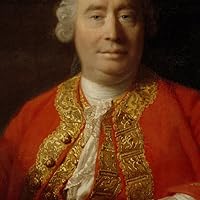
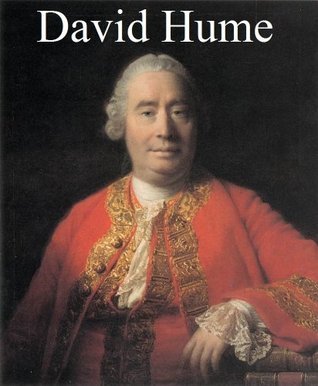
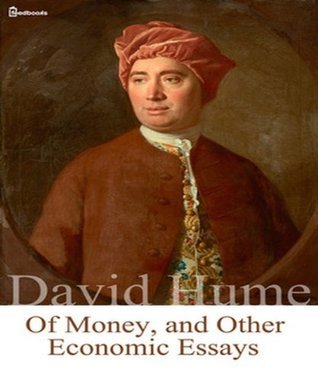
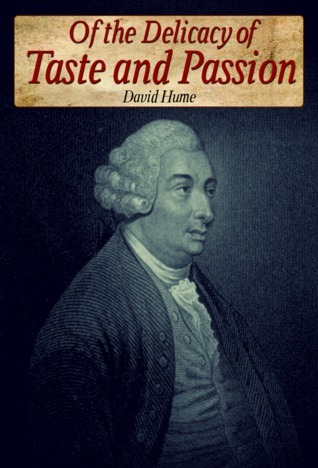
David Hume was a Scottish historian, philosopher, economist, diplomat and essayist known today especially for his radical philosophical empiricism and scepticism. In light of Hume's central role in the Scottish Enlightenment, and in the history of Western philosophy, Bryan Magee judged him as a philosopher "widely regarded as the greatest who has ever written in the English language." While Hume failed in his attempts to start a university career, he took part in various diplomatic and military missions of the time. He wrote The History of England which became a bestseller, and it became the standard history of England in its day. His empirical approach places him with John Locke, George Berkeley, and a handful of others at the time as a British Empiricist. Beginning with his A Treatise of Human Nature (1739), Hume strove to create a total naturalistic "science of man" that examined the psychological basis of human nature. In opposition to the rationalists who preceded him, most notably René Descartes, he concluded that desire rather than reason governed human behaviour. He also argued against the existence of innate ideas, concluding that humans have knowledge only of things they directly experience. He argued that inductive reasoning and therefore causality cannot be justified rationally. Our assumptions in favour of these result from custom and constant conjunction rather than logic. He concluded that humans have no actual conception of the self, only of a bundle of sensations associated with the self. Hume's compatibilist theory of free will proved extremely influential on subsequent moral philosophy. He was also a sentimentalist who held that ethics are based on feelings rather than abstract moral principles, and expounded the is–ought problem. Hume has proved extremely influential on subsequent western philosophy, especially on utilitarianism, logical positivism, William James, the philosophy of science, early analytic philosophy, cognitive philosophy, theology and other movements and thinkers. In addition, according to philosopher Jerry Fodor, Hume's Treatise is "the founding document of cognitive science". Hume engaged with contemporary intellectual luminaries such as Jean-Jacques Rousseau, James Boswell, and Adam Smith (who acknowledged Hume's influence on his economics and political philosophy). Immanuel Kant credited Hume with awakening him from "dogmatic slumbers".
Continued To 1878
2011
Abridged, Incorporating the Corrections and Researches of Recent Historians, and Continued Down to the Year 1858
2010
Abridged ... and Continued Down to the Year 1858
2015

1739
2011
1739
1938
David Hume (An Enquiry Concerning Human Understanding David Hume Philosophy & Ethics Humanities) [Annotated]
2021
1748
1748
2007
2004
1751
1748
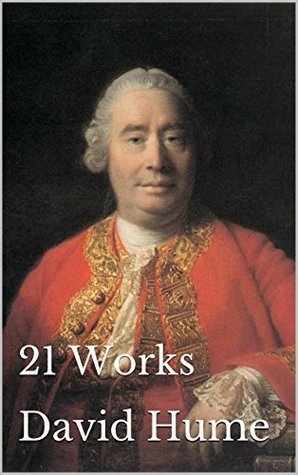
21 Works
2014

2020
2015
1779
1757
1993
1751
2000
1758
2013
2010

Von dem Einfall des Julius Cäsar an bis auf die Thronbesteigung Heinrichs des VII. Erster Band
2017
Von dem Einfalle des Julius Cäsar an bis auf die Thronbesteigung Heinrichs des VII.
2016
2011

Von dem Einfalle des Julius Cäsar An, bis auf die Regierung Wilhelm des Eroberers (Classic Reprint)
2011
Von Henrich dem Zweyten An, bis auf Johann (Classic Reprint)
2018
Von Henrich dem Zweyten An, bis auf Johann
2018
2012
From the revolution in 1688 to the death of George the Second in 1760 : A.D. 1732 to A.D. 1755
2018
1754

1757
2004
2010
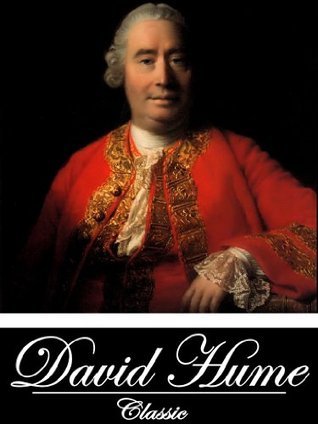
And Selections From the Treatise of the Passions
1740
2002
1948
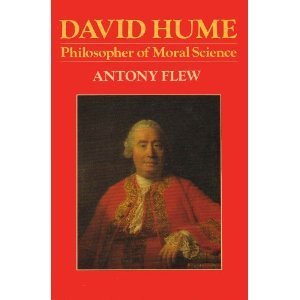
1740
1752
2010
1741
2012
2009
1757
1965
1740
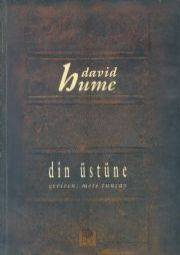
1964