David J. Weber Series in the New Borderlands History
Series · 6 books · 2018-2025
Books in series

#7
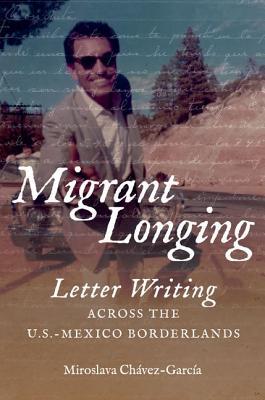
Migrant Longing
Letter Writing across the U.S.-Mexico Borderlands
2018
Drawing upon a personal collection of more than 300 letters exchanged between her parents and other family members across the U.S.-Mexico border, Miroslava Chavez-Garcia recreates and gives meaning to the hope, fear, and longing migrants experienced in their everyday lives both "here" and "there" ( aqui y alla ). As private sources of communication hidden from public consumption and historical research, the letters provide a rare glimpse into the deeply emotional, personal, and social lives of ordinary Mexican men and women as recorded in their immediate, firsthand accounts. Chavez-Garcia demonstrates not only how migrants struggled to maintain their sense of humanity in el norte but also how those remaining at home made sense of their changing identities in response to the loss of loved ones who sometimes left for weeks, months, or years at a time, or simply never returned.
With this richly detailed account, ranging from the Mexican Revolution of the 1910s to the emergence of Silicon Valley in the late 1960s, Chavez-Garcia opens a new window onto the social, economic, political, and cultural developments of the day and recovers the human agency of much maligned migrants in our society today.

#18
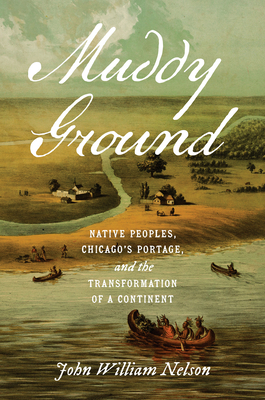
Muddy Ground
Native Peoples, Chicago's Portage, and the Transformation of a Continent
2023
In early North America, carrying watercraft—usually canoes—and supplies across paths connecting one body of water to another was essential in the establishment of both Indigenous and European mobility in the continent's interior. The Chicago portage, a network of overland canoe routes that connected the Great Lakes and Mississippi watersheds, grew into a crossroads of interaction as Indigenous and European people vied for its control during early contact and colonization. John William Nelson charts the many peoples that traversed and sought power along Chicago's portage paths from the seventeenth to the mid-nineteenth centuries, including Indigenous Illinois traders, French explorers, Jesuit missionaries, Meskwaki warriors, British officers, Anishinaabe headmen, and American settlers. Nelson compellingly demonstrates that even deep within the interior, power relations fluctuated based on the control of waterways and local environmental knowledge.
Pushing beyond political and cultural explanations for Indigenous-European relations in the borderlands of North America, Nelson places environmental and geographic realities at the center of the history of Indigenous Chicago, offering a new explanation for how the United States gained control of the North American interior through a two-pronged subjugation of both the landscapes and peoples of the continent.

#19
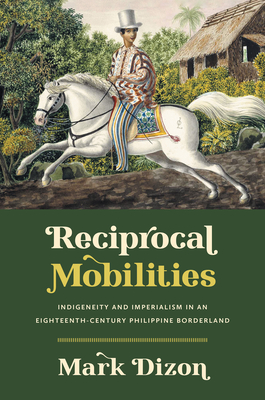
Reciprocal Mobilities
Indigeneity and Imperialism in an Eighteenth-Century Philippine Borderland
2023
Throughout the eighteenth century, independent Indigenous people from the borderlands of the Philippines visited the centers of Spanish colonial rule in the archipelago. Their travels are the counternarratives to one-dimensional stories of Spanish conquest of, and Indigenous resistance in, interior frontiers. Indigenous inhabitants on the island of Luzon constantly moved about—visiting allies and launching raids—and thus shaped history in the process. Their mobility allows us to glimpse their agency in colonial interactions in the early modern period. The landscape contains the traces of how they moved as well as how they channeled and impeded mobility in the borderlands.
Mark Dizon views the colonial interactions in Philippine borderlands through the lens of reciprocal mobilities. Spanish mobilities of conquests and conversions had their counterpart in Indigenous visits and ambushes. Colonial encounters were not isolated individual events but rather a connected web of approaches, rebuffs, rapprochements, and dispersals. They took place not only in the exploration of remote forests and mountains but also in conjunction with Indigenous travels to colonial cities like Manila. Indigenous people of the borderlands were not immobile, timeless actors; they created history in their wake as they journeyed through the borderlands and beyond.

#21
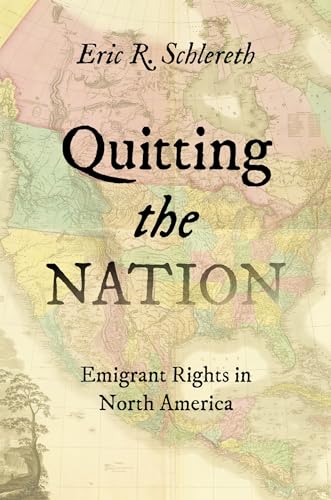
Quitting the Nation
Emigrant Rights in North America
2024
Perceptions of the United States as a nation of immigrants are so commonplace that its history as a nation of emigrants is forgotten. However, once the United States came into existence, its citizens immediately asserted rights to emigrate for political allegiances elsewhere. Quitting the Nation recovers this unfamiliar story by braiding the histories of citizenship and the North American borderlands to explain the evolution of emigrant rights between 1750 and 1870.
Eric R. Schlereth traces the legal and political origins of emigrant rights in contests to decide who possessed them and who did not. At the same time, it follows the thousands of people that exercised emigration right citizenship by leaving the United States for settlements elsewhere in North America. Ultimately, Schlereth shows that national allegiance was often no more powerful than the freedom to cast it aside. The advent of emigrant rights had lasting implications, for it suggested that people are free to move throughout the world and to decide for themselves the nation they belong to. This claim remains urgent in the twenty-first century as limitations on personal mobility persist inside the United States and at its borders.

#24
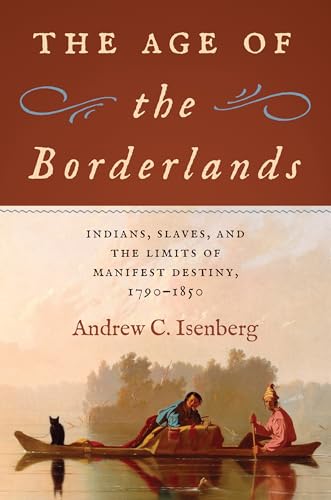
The Age of the Borderlands
Indians, Slaves, and the Limits of Manifest Destiny, 1790–1850
2025
In The Age of the Borderlands, acclaimed historian Andrew C. Isenberg offers a new history of manifest destiny that breaks from triumphalist narratives of US territorial expansion. Isenberg takes readers to the contested borders of Spanish Florida, Missouri, New Mexico, California, Texas, and Minnesota at critical moments in the early to mid-nineteenth century, demonstrating that the architects of American expansion faced significant challenges from the diverse groups of people inhabiting each region. In other words, while the manifest destiny paradigm begins with an assumption of US strength, the government and the agents it dispatched to settle and control the frontier had only a weak presence.
Tracing the interconnected histories of Indians, slaves, antislavery reformers, missionaries, federal agents, and physicians, Isenberg shows that the United States was repeatedly forced to accommodate the presence of other colonial empires and powerful Indigenous societies. Anti-expansionists in the borderlands welcomed the precarity of the government's The land on which they dwelled was a grand laboratory where they could experiment with their alternative visions for American society. Examining the borderlands offers an understanding not just about frontier spaces but about the nature of the early American state—ambitiously expansionist but challenged by its native and imperial competitors.

#25
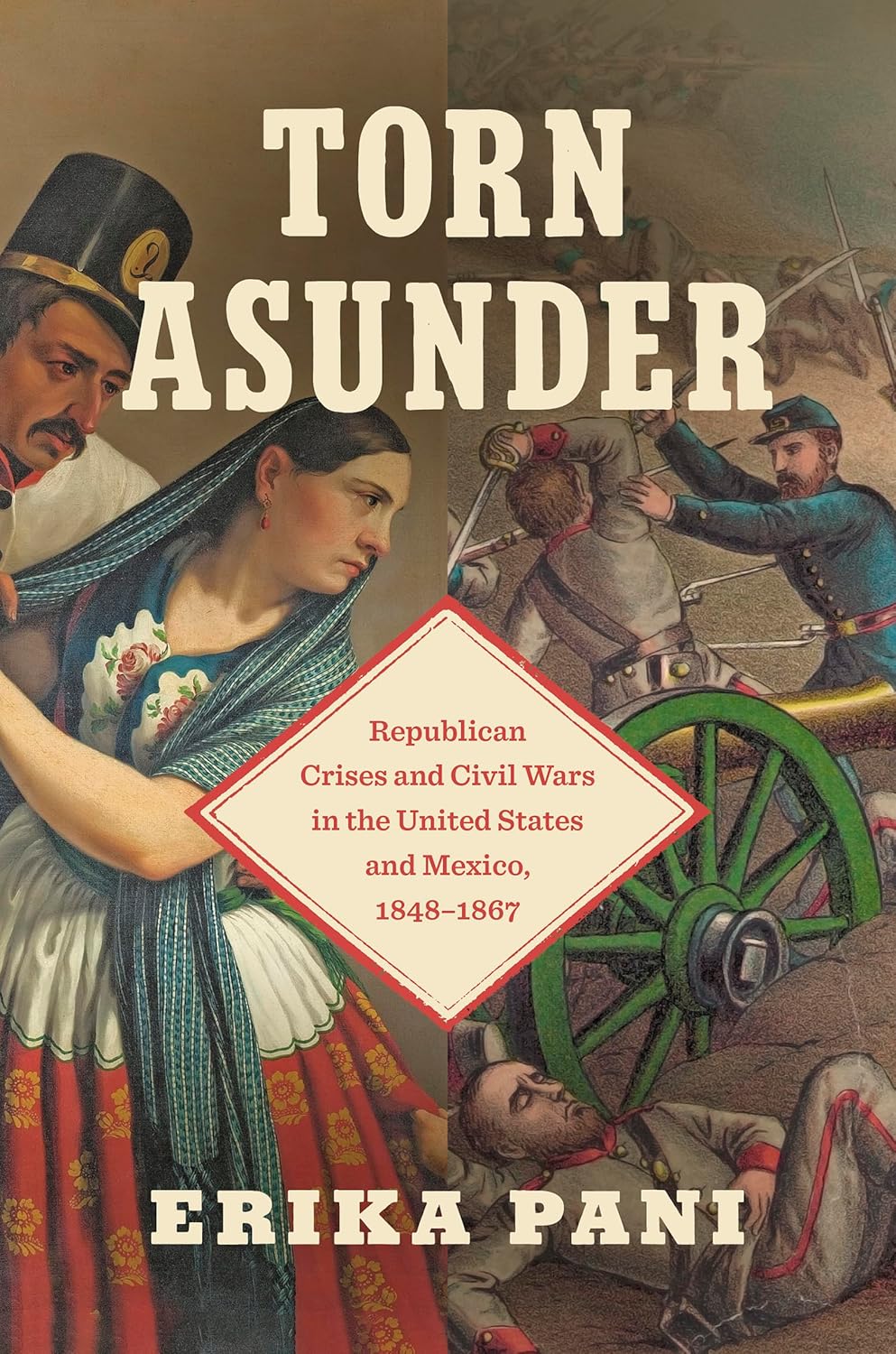
Torn Asunder
Republican Crises and Civil Wars in the United States and Mexico, 1848–1867
2025
In 1848, the Treaty of Guadalupe Hidalgo ended the Mexican-American War and dramatically reshaped North American geopolitics by ceding half of Mexico's territory to the United States. In the following decades, as conflicts over slavery in the United States and over the nature of nation, state, and religion in Mexico overwhelmed politics, both republics collapsed into civil war. In Mexico, internal conflict sparked foreign intervention and the establishment of monarchical rule under an Austrian prince, while across the border, eleven Southern states seceded from the union to establish a republic founded on slavery and white supremacy.
Erika Pani's Torn Asunder weaves these two tales of crisis, war, and political experimentation into a single story. Pani argues that by consecrating these episodes as epic and exceptionalist chapters in both nations' histories, scholars have overlooked the coincidences and connections between the United States and Mexico. She chronicles the ways in which, between 1848 and 1867, politicians from the two nations tested different formulas, reacted to virulent opposition, sedition, and war, and ultimately attempted to unite deeply divided countries. Torn Asunder highlights the fragile, contentious, and unpredictable nature of politics in the Americas, rooted in the inherent instability of popular sovereignty.