Margins
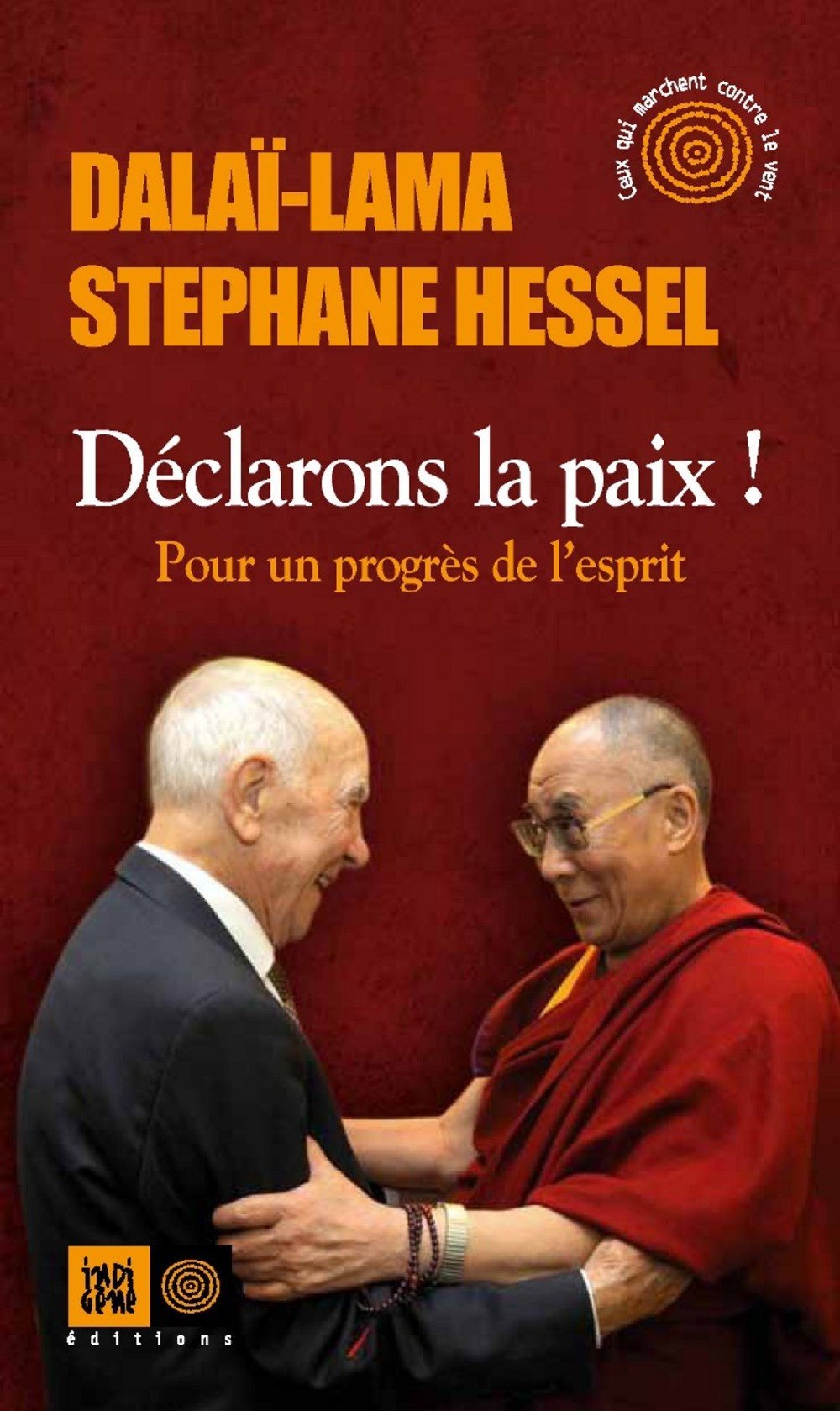
Déclarons la paix! book cover
Déclarons la paix!
pour un progrès de l'esprit
2012
First Published
4.00
Average Rating
63
Number of Pages
Le bonheur ne doit pas être vécu comme une aspiration égoïste, mais comme une aspiration contagieuse. Deux sages à l’unisson pour une nouvelle déclaration universelle des droits de l’homme.Que manque-t-il à la Déclaration universelle des droits de l’homme adoptée en décembre 1948, à Paris, au Palais de Chaillot? L’homme occidental y est trop au centre. Plus clairement dit, c’est la dépendance du concept des droits de l’homme aux plus riches et aux plus forts. C’est bien le triomphe des egos au détriment des sujets. Il faut repenser ce concept et cette pratique des droits de l’homme au regard de la réalité historique, dramatique à laquelle l’humanité est désormais confrontée. Ainsi, est-il urgent de mettre en avant l’interdépendance qui unit non seulement la communauté humaine mondiale, mais toute la communauté des vivants, de ses écosystèmes. Urgent d’élever la non-violence à une pratique politique efficace, respectueuse de l’unité des consciences.Ce dialogue entre le dalaï-lama et Stéphane Hessel, initié par les Éditions Indigène, s’est tenu à Prague les 9 et 10 décembre 2011. De l’aveu même de Stéphane Hessel, ce texte tranche sur tous les autres parce qu’il s’y adresse pour la première fois à l’esprit. Inversement, ce qui frappe dans les interventions du dalaï-lama, c’est son souci de rendre compte d’une « éthique séculière », seule en capacité d’être universelle et sur laquelle ces représentants des deux pans du monde, l’Est et l’Ouest, convergent parfaitement.

Avg Rating
4.00
Number of Ratings
52
5 STARS
44%
4 STARS
27%
3 STARS
13%
2 STARS
15%
1 STARS
0%
goodreads

Authors

Stephane Hessel
Stephane Hessel
Author · 8 books

Escaping twice Nazi concentration camps Member of the Résistance Coauthor of the Universal Declaration of Human Rights

Dalai Lama
Dalai Lama
Author · 162 books

Jetsun Jamphel Ngawang Lobsang Yeshe Tenzin Gyatso (born Lhamo Döndrub), the 14th Dalai Lama, is a practicing member of the Gelug School of Tibetan Buddhism and is influential as a Nobel Peace Prize laureate, the world's most famous Buddhist monk, and the leader of the exiled Tibetan government in India. Tenzin Gyatso was the fifth of sixteen children born to a farming family. He was proclaimed the tulku (an Enlightened lama who has consciously decided to take rebirth) of the 13th Dalai Lama at the age of two. On 17 November 1950, at the age of 15, he was enthroned as Tibet's ruler. Thus he became Tibet's most important political ruler just one month after the People's Republic of China's invasion of Tibet on 7 October 1950. In 1954, he went to Beijing to attempt peace talks with Mao Zedong and other leaders of the PRC. These talks ultimately failed. After a failed uprising and the collapse of the Tibetan resistance movement in 1959, the Dalai Lama left for India, where he was active in establishing the Central Tibetan Administration (the Tibetan Government in Exile) and in seeking to preserve Tibetan culture and education among the thousands of refugees who accompanied him. Tenzin Gyatso is a charismatic figure and noted public speaker. This Dalai Lama is the first to travel to the West. There, he has helped to spread Buddhism and to promote the concepts of universal responsibility, secular ethics, and religious harmony. He was awarded the Nobel Peace Prize in 1989, honorary Canadian citizenship in 2006, and the United States Congressional Gold Medal on 17 October 2007.

548 Market St PMB 65688, San Francisco California 94104-5401 USA
© 2026 Paratext Inc. All rights reserved