Margins
De la littérature industrielle book cover
De la littérature industrielle
1839
First Published
2.86
Average Rating
48
Number of Pages
Daté de 1839, ce pamphlet paraît aujourd'hui absolument prémonitoire : "deux littératures coexistent dans une proportion bien inégale et coexisteront de plus en plus", y déplore Sainte-Beuve. Deux littératures : l'une, commerciale, l'autre, l'expression délicate du talent, propice à engendrer des monuments. À l'émergence de la première, plusieurs facteurs : le développement de la réclame dont peut dépendre le succès d’un livre, l'"émulation effrénée des amours-propres" ou encore, plus simplement, la volonté de vivre de sa plume. L'auteur aborde des questions brûlantes à son époque mais qui n’ont pas cessé depuis de consumer la littérature, à savoir le mercantilisme, la collusion d’intérêts entre auteurs et journalistes ou encore la démocratisation du métier d’écrivan. S’il se résigne à cette dernière, Sainte-Beuve désapprouve le style qui en découle. Lui défend la "bonne" littérature, celle qui serait le fruit d'un travail acharné et désintéressé. Organiser la vie des lettres, c'est tuer le talent ou, pis, l'inspiration. L'industrie culturelle qui gangrène la littérature est ici pressentie. Cette même industrie qui sera dénoncée par Benjamin et Adorno près d'un siècle après ce manifeste.

Avg Rating
2.86
Number of Ratings
7
5 STARS
0%
4 STARS
43%
3 STARS
14%
2 STARS
29%
1 STARS
14%
goodreads

Author

Charles-Augustin Sainte-Beuve
Author · 2 books

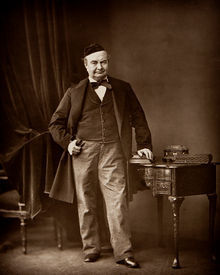
Charles Augustin Sainte-Beuve was a literary critic and one of the major figures of French literary history. He was born in Boulogne, educated there, and studied medicine at the Collège Charlemagne in Paris (1824-27). In 1828, he served in the St. Louis Hospital. Beginning in 1824, he contributed literary articles, the Premier lundis of his collected Works, to the Globe newspaper, and, in 1827, he came, through a review of Victor Hugo's Odes et ballads, into close association with Hugo and the Cénacle, the literary circle that strove to define the ideas of the rising Romanticism and struggle against classical formalism. Sainte-Beuve became friendly with Hugo after publishing a favourable review of the author's work but later had an affair with Hugo's wife, which, naturally enough, led to their estrangement. Curiously, when Sainte-Beuve was made a member of the French Academy in 1845, the ceremonial duty of giving the reception speech fell upon Hugo. Sainte-Beuve published collections of poems and the partly autobiographical novel Volupté in 1834. His articles and essays were collected the volumes Port-Royal and Portraits littéraires. During the turmoil of 1848 in Europe, he lectured at Liège on Chateaubriand et son groupe littéraire. He returned to Paris in 1849 and began his series of topical columns, Causeries du lundi ('Monday Chats') in the newspaper, Le Constitutionnel. When Louis Napoleon became Emperor, he made Sainte-Beuve professor of Latin poetry at the Collège de France, but anti-Imperialist students hissed him, and he resigned. After several books of poetry and a couple of failed novels, Sainte-Beuve began to undertake literary research, of which the most important is Port-Royal. He continued to contribute to La Revue contemporaine. Port-Royal (1837-1859), probably Sainte-Beuve's masterpiece, is an exhaustive history of the Jansenist abbey of Port-Royal-des-Champs. It not only influenced the history of religious belief, i.e., the methodology of such research, but also the philosophy of history and the history of esthetics. He was made Senator in 1865, in which capacity he distinguished himself by his pleas for freedom of speech and of the press. According to Jules Amédée Barbey d'Aurevilly, "Sainte-Beuve was a clever man with the temper of a turkey!" In his last years, he was an acute sufferer and lived much in retirement. One of Sainte-Beuve's critical contentions was that, in order to understand an artist and his work, it was necessary to understand that artist's biography. Marcel Proust took issue with this notion and refuted it in a set of essays, Contre Sainte-Beuve ("Against Sainte-Beuve"). Proust developed the ideas first voiced in those essays in À la recherche du temps perdu.

548 Market St PMB 65688, San Francisco California 94104-5401 USA
© 2026 Paratext Inc. All rights reserved