Margins
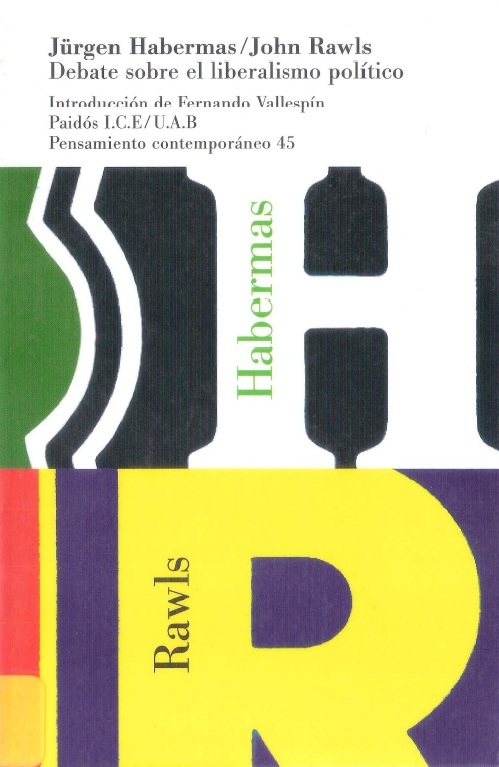
Debate Sobre El Liberalismo Politico book cover
Debate Sobre El Liberalismo Politico
2005
First Published
3.54
Average Rating
187
Number of Pages
Habermas ou Rawls? De Locke à Rawls et de Kant à Habermas, deux traditions démocratiques trouvent une nouvelle actualité dans la discussion directe qui nous est livrée ici. Au "libéralisme politique" revendiqué par John Rawls au nom d'une conception "pratique" de la justice politique, Jürgen Habermas oppose un "républicanisme kantien" pour lequel la référence centrale n'est plus la liberté négative des individus mais l'"autolégislation démocratique" de citoyens formant ensemble leur volonté politique. Tous deux se réclament cependant du principe kantien de Publicité ou "usage public de la raison". Pierre de touche de leur divergence philosophique quel est aujourd'hui le statut de cette "raison publique"; sa fonction par rapport à la constitution et à la validation des normes?

Avg Rating
3.54
Number of Ratings
24
5 STARS
21%
4 STARS
29%
3 STARS
38%
2 STARS
8%
1 STARS
4%
goodreads

Authors

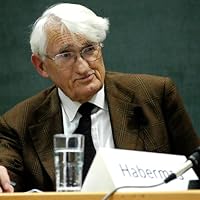
Jurgen Habermas
Jurgen Habermas
Author · 40 books
Jürgen Habermas is a German sociologist and philosopher in the tradition of critical theory and American pragmatism. He is perhaps best known for his work on the concept of the public sphere, the topic of his first book entitled The Structural Transformation of the Public Sphere. His work focuses on the foundations of social theory and epistemology, the analysis of advanced capitalistic societies and democracy, the rule of law in a critical social-evolutionary context, and contemporary politics—particularly German politics. Habermas' theoretical system is devoted to revealing the possibility of reason, emancipation, and rational-critical communication latent in modern institutions and in the human capacity to deliberate and pursue rational interests.
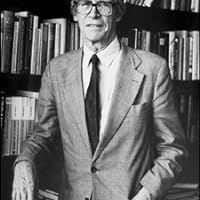
John Rawls
John Rawls
Author · 11 books

John Bordley Rawls was an American philosopher and a leading figure in moral and political philosophy. He held the James Bryant Conant University Professorship at Harvard. His magnum opus A Theory of Justice (1971) is now regarded as "one of the primary texts in political philosophy." His work in political philosophy, dubbed Rawlsianism, takes as its starting point the argument that "most reasonable principles of justice are those everyone would accept and agree to from a fair position." Rawls employs a number of thought experiments—including the famous veil of ignorance—to determine what constitutes a fair agreement in which "everyone is impartially situated as equals," in order to determine principles of social justice. Rawls received both the Schock Prize for Logic and Philosophy and the National Humanities Medal in 1999, the latter presented by President Bill Clinton, in recognition of how Rawls' thought "helped a whole generation of learned Americans revive their faith in democracy itself."

548 Market St PMB 65688, San Francisco California 94104-5401 USA
© 2026 Paratext Inc. All rights reserved