Margins
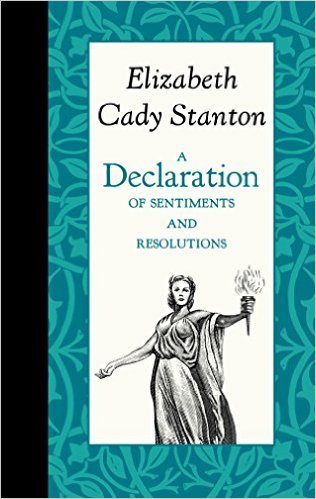
Declaration of Sentiments (Little Books of Wisdom book cover
Declaration of Sentiments (Little Books of Wisdom
1848
First Published
4.16
Average Rating
28
Number of Pages
With Elizabeth Cady Stanton and James Mott presiding, women met in Seneca Falls, NY on July 19, 1848 to debate the draft of the Declaration of Sentiments, whether or not to include male signatures, and the merits of each of twelve resolutions. The next day, July 20th, sixty-eight women and thirty-two men signed the Declaration. Most of the resolutions won unanimous approval. However, the suffrage resolution only passed by the narrowest of margins. This edition contains the complete text of the Declaration, along with brief biographies of the signers.

Avg Rating
4.16
Number of Ratings
128
5 STARS
42%
4 STARS
39%
3 STARS
13%
2 STARS
4%
1 STARS
2%
goodreads

Author

Elizabeth Stanton
Elizabeth Stanton
Author · 7 books

Elizabeth Cady Stanton was an American social activist and leading figure of the early woman's movement. Her Declaration of Sentiments, presented at the first women's rights convention held in 1848 in Seneca Falls, New York, is often credited with initiating the first organized woman's rights and woman's suffrage movements in the United States. Before Stanton narrowed her political focus almost exclusively to women's rights, she was an active abolitionist together with her husband, Henry Brewster Stanton and cousin, Gerrit Smith. Unlike many of those involved in the women's rights movement, Stanton addressed a number of issues pertaining to women beyond voting rights. Her concerns included women's parental and custody rights, property rights, employment and income rights, divorce laws, the economic health of the family, and birth control. She was also an outspoken supporter of the 19th-century temperance movement. After the American Civil War, Stanton's commitment to female suffrage caused a schism in the women's rights movement when she, along with Susan B. Anthony, declined to support passage of the Fourteenth and Fifteenth Amendments to the United States Constitution. She opposed giving added legal protection and voting rights to African American men while continuing to deny women, black and white, the same rights. Her position on this issue, together with her thoughts on organized Christianity and women's issues beyond voting rights, led to the formation of two separate women's rights organizations that were finally rejoined, with Stanton as president of the joint organization, approximately twenty years later.

548 Market St PMB 65688, San Francisco California 94104-5401 USA
© 2025 Paratext Inc. All rights reserved