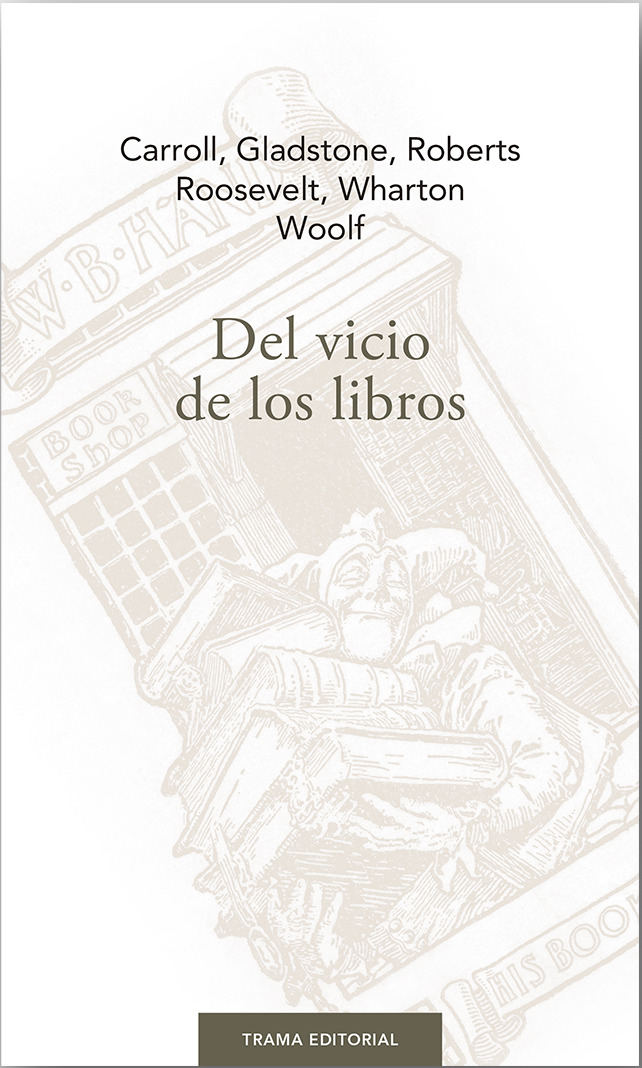



Puede parecer que este libro trata sobre libros –sobre su almacenamiento, las distintas formas de robarlos, los vicios que suscitan o sus digestiones–, pero la realidad es otra. Se trata de un panegírico. Una apología de la lectura. Una alabanza del lector (…) Gladstone y Roosevelt, Wharton y Woolf, Roberts y Carroll son aquí «lectores». Esta es la clave de los textos que reunimos en este volumen. A veces podrá darnos la sensación de que se enfrascan en otras cuestiones, pero quien preste atención observará cómo no logran reprimir del todo una sonrisa furtiva al saberse entre iguales. Porque, como los tahúres de Las Vegas, estos lectores saben que lo que pasa en los libros se queda en los libros.
Authors

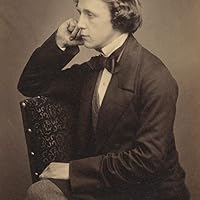
The Reverend Charles Lutwidge Dodgson, better known by the pen name Lewis Carroll, was an English author, mathematician, logician, Anglican clergyman and photographer. His most famous writings are Alice's Adventures in Wonderland and its sequel Through the Looking-Glass as well as the poems "The Hunting of the Snark" and "Jabberwocky", all considered to be within the genre of literary nonsense. Oxford scholar, Church of England Deacon, University Lecturer in Mathematics and Logic, academic author of learned theses, gifted pioneer of portrait photography, colourful writer of imaginative genius and yet a shy and pedantic man, Lewis Carroll stands pre-eminent in the pantheon of inventive literary geniuses. He also has works published under his real name.

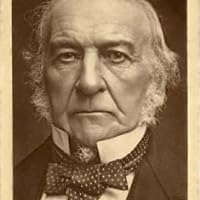
One of the most prominent figures in nineteenth century British politics. Known as G.O.M, which stood for 'Grand Old Man' (although his rival Benjamin Disraeli joked that it was actually 'God's Only Mistake') William Ewart Gladstone served four times as Liberal Prime Minister (1868 - 1874, 1880 - 1885, 1886 and 1892 - 1894). As such, he dominated the latter half of the century. His hobbies included reforming prostitutes, felling trees and insulting Benjamin Disraeli. Despite a mutual dislike between Gladstone and Queen Victoria, he was one of the most successful politicians of his day. His rule was dominated by the Irish Question, but his reforms were far-reaching and addressed a wide range of domestic and foreign policy issues.

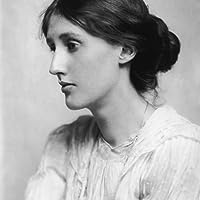
(Adeline) Virginia Woolf was an English novelist and essayist regarded as one of the foremost modernist literary figures of the twentieth century. During the interwar period, Woolf was a significant figure in London literary society and a member of the Bloomsbury Group. Her most famous works include the novels Mrs. Dalloway (1925), To the Lighthouse (1927), and Orlando (1928), and the book-length essay A Room of One's Own (1929) with its famous dictum, "a woman must have money and a room of her own if she is to write fiction."

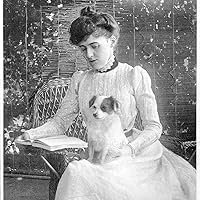
Edith Newbold Jones was born into such wealth and privilege that her family inspired the phrase "keeping up with the Joneses." The youngest of three children, Edith spent her early years touring Europe with her parents and, upon the family's return to the United States, enjoyed a privileged childhood in New York and Newport, Rhode Island. Edith's creativity and talent soon became obvious: By the age of eighteen she had written a novella, (as well as witty reviews of it) and published poetry in the Atlantic Monthly. After a failed engagement, Edith married a wealthy sportsman, Edward Wharton. Despite similar backgrounds and a shared taste for travel, the marriage was not a success. Many of Wharton's novels chronicle unhappy marriages, in which the demands of love and vocation often conflict with the expectations of society. Wharton's first major novel, The House of Mirth, published in 1905, enjoyed considerable literary success. Ethan Frome appeared six years later, solidifying Wharton's reputation as an important novelist. Often in the company of her close friend, Henry James, Wharton mingled with some of the most famous writers and artists of the day, including F. Scott Fitzgerald, André Gide, Sinclair Lewis, Jean Cocteau, and Jack London. In 1913 Edith divorced Edward. She lived mostly in France for the remainder of her life. When World War I broke out, she organized hostels for refugees, worked as a fund-raiser, and wrote for American publications from battlefield frontlines. She was awarded the French Legion of Honor for her courage and distinguished work. The Age of Innocence, a novel about New York in the 1870s, earned Wharton the Pulitzer Prize for fiction in 1921 — the first time the award had been bestowed upon a woman. Wharton traveled throughout Europe to encourage young authors. She also continued to write, lying in her bed every morning, as she had always done, dropping each newly penned page on the floor to be collected and arranged when she was finished. Wharton suffered a stroke and died on August 11, 1937. She is buried in the American Cemetery in Versailles, France.
- Barnesandnoble.com