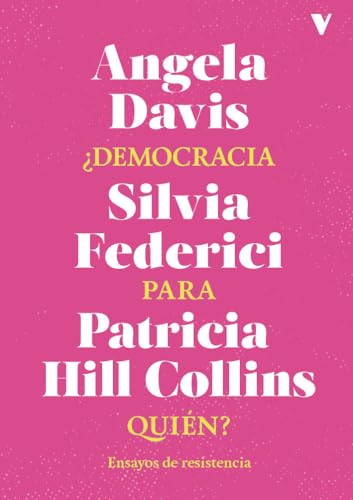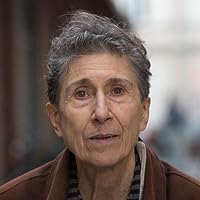



Democracia para quem? reúne as palestras proferidas de 15 a 19 de outubro de 2019, por três intelectuais do movimento feminista – Angela Davis, Patricia Hill Collins e Silvia Federici –no âmbito do seminário internacional "Democracia em Colapso?", promovido pelo Sesc São Paulo e pela Boitempo. No livro, é possível tomar contato com reflexões feitas pelas três autoras – referências globais em suas áreas de estudo e de atuação – sobre temas como capitalismo, racismo, desigualdade social, ecologia, entre outros. No que se refere, por exemplo, ao papel da mulher na sociedade, Angela Davis afirma que não pode haver democracia sem a luta histórica das mulheres "Quando as mulheres negras se moveram em direção à liberdade, elas nunca representaram apenas elas mesmas". Para Davis, a figura da mulher negra representa todas as comunidades que sofreram exploração econômica, opressão de gênero e violência racial. Em sua apresentação, Collins reflete sobre o conceito de liberdade e diz que não faz diferença pensar em liberdade para pessoas negras sem pensar no que isso significa tanto para homens negros quanto para mulheres "Seria maravilhoso se pudéssemos deixar para trás as partes feias do passado. Mas, se olharmos à nossa volta, podemos ver as mesmas relações atualmente e percebemos que esse é um discurso que está mais vivo que nunca e que tem uma longa história". Já a italiana Silvia Federici observa a resistência das mulheres em todo o mundo para reconstruir e defender os bens "Estão defendendo seus bens quando defendem a floresta ou a terra ou as águas de uma empresa de mineração ou de petróleo. Estão dizendo que a Terra pertence a todos e todas". Eram os últimos meses pré-pandemia. No início do ano seguinte, o terror sanitário, negacionista e golpista de Jair Bolsonaro e de seus aliados submeteu a democracia brasileira ao mais profundo estresse desde a redemocratização, em 1985. O evento paulistano ganhou um novo e pesado sentido quando o colapso das instituições brasileiras esteve na ordem do dia. A obra conta ainda com intervenções de Adriana Ferreira, Bianca Santana, Eliane Dias, Raquel Barreto e Winnie Bueno. O prefácio é de Marcela Soares e o texto de orelha de Juliana Borges.
Authors


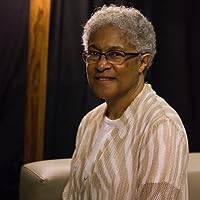
Patricia Hill Collins (born May 1, 1948) is currently a Distinguished University Professor of Sociology at the University of Maryland, College Park. She is also the former head of the Department of African American Studies at the University of Cincinnati, and the past President of the American Sociological Association Council. Collins' work primarily concerns issues involving feminism and gender within the African-American community. She first came to national attention for her book Black Feminist Thought: Knowledge, Consciousness and the Politics of Empowerment, originally published in 1990. Collins was born in Philadelphia, Pennsylvania in 1948. The only daughter of a factory worker and a secretary, Collins attended the Philadelphia public schools. After obtaining her bachelor's degree from Brandeis University in 1969, she continued on to earn a Master of Arts Degree in Teaching from Harvard University in 1970. From 1970 to 1976, she was a teacher and curriculum specialist at St Joseph Community School, among two others, in Boston. She continued on to become the Director of the Africana Center at Tufts University until 1980, after which she completed her doctorate in sociology back at Brandeis in 1984. While earning her PhD, Collins worked as an assistant professor at the University of Cincinnati beginning in 1982. In 1990, Collins published her first book, "Black Feminist Thought: Knowledge, Consciousness and the Politics of Empowerment". A revised tenth anniversary edition of the book was published in 2000, and subsequently translated into Korean in 2009. While working at Tufts, she married Roger L. Collins in the year 1977, a professor of education at the University of Cincinnati, with whom she has one daughter, Valerie L. Collins. In 1990, Collins was the recipient of the prestigious C. Wright Mills Award. She was later awarded the Jessie Bernard Award by the American Sociological Association in 1993. For her book Black Sexual Politics: African Americans, Gender and the New Racism (Routledge, 2005), she was presented the American Sociological Association Distinguished Scholarly Book Award in 2007. Collins is recognized as a social theorist, drawing from many intellectual traditions; her more than 40 articles and essays have been published in a wide range of fields, including philosophy, history, psychology, and most notably sociology. Moreover, Collins was the recipient of a Sydney Spivack Dissertation Support Award. The University of Cincinnati named Collins The Charles Phelps Taft Professor of Sociology in 1996, making her the first ever African-American, and only the second woman, to hold this position. She received emeritus status in the Spring of 2005, and became a professor of sociology at the University of Maryland, College Park. The University of Maryland named Collins a Distinguished University Professor in 2006. (from Wikipedia)

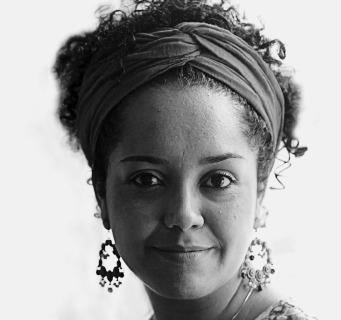
Diretora-executiva da Casa Sueli Carneiro. Militante da UNEafro Brasil, movimento que compõe a Coalizão Negra Por Direitos. Colunista de ECOA-UOL e da revista Gama. Doutora em ciência da informação pela Escola de Comunicações e Artes da Universidade de São Paulo, com uma tese sobre memória e escrita de mulheres negras. Mestra em educação também pela USP. Autora de Continuo preta: a vida de Sueli Carneiro (Companhia das Letras, 2021) e de Quando me descobri negra (SESI-SP, 2015). Organizadora das coletâneas Inovação Ancestral de Mulheres Negras: táticas e políticas do cotidiano ( Oralituras, 2019), Vozes Insurgentes de Mulheres Negras: do século XVIII à primeira década do século XXI (Mazza Edições/ Fundação Rosa Luxemburgo, 2019), e Recursos Educacionais Abertos: práticas colaborativas e políticas públicas (Edufba/Casa de Cultura Digital, 2012). Colaboradora da revista Cult. Escritora convidada na Feira do Livro de Frankfurt em 2018 e na Feira do Livro de Buenos Aires em 2019. Uma das curadoras do Festival Literário de Iguape em 2019 e 2020. É associada da SOF – Sempreviva Organização Feminista e compõe os conselhos da Artigo 19, dos institutos Marielle Franco e Vladimir Herzog. Foi professora da Faculdade Cásper Líbero e da pós-graduação em jornalismo multimídia na Faap.

Angela Yvonne Davis is an American political activist, scholar, and author. She emerged as a nationally prominent activist and radical in the 1960s, as a leader of the Communist Party USA, and had close relations with the Black Panther Party through her involvement in the Civil Rights Movement despite never being an official member of the party. Prisoner rights have been among her continuing interests; she is the founder of Critical Resistance, an organization working to abolish the prison-industrial complex. She is a retired professor with the History of Consciousness Department at the University of California, Santa Cruz, and is the former director of the university's Feminist Studies department. Her research interests are in feminism, African American studies, critical theory, Marxism, popular music, social consciousness, and the philosophy and history of punishment and prisons. Her membership in the Communist Party led to Ronald Reagan's request in 1969 to have her barred from teaching at any university in the State of California. She was tried and acquitted of suspected involvement in the Soledad brothers' August 1970 abduction and murder of Judge Harold Haley in Marin County, California. She was twice a candidate for Vice President on the Communist Party USA ticket during the 1980s.