Das Lesevergnügen für die schönste Zeit des Jahres. Sollte der Urlaub mal nicht so laufen wie geplant - macht nichts: Die hier versammelte Garde berühmter Krimi-Autoren ist die beste Garantie für totalen Ferienspaß. Wer sich von diesen spektakulären Fällen gefangen nehmen lässt, muss nur noch auf eines aufpassen: dass er die Heimreise nicht verpasst. Wo und wie immer Urlaub gemacht wird: Bessere Ferienspannung gibt es nicht.
Authors

Johannes Mario Simmel was an Austrian writer. He was born in Vienna and grew up in Austria and England. He was trained as a chemical engineer and worked in research from 1943 to the end of World War II. After the end of the war, he worked as a translator for the American military government and published reviews and stories in the Vienna Welt am Abend. Starting in 1950, he worked as a reporter for the Munich illustrated Quick in Europe and America. He wrote a number of screenplays and novels, which have sold tens of millions of copies. Many of his novels were successfully filmed in the 1960s and 1970s. He won numerous prizes, including the Award of Excellence of the Society of Writers of the UN. Important issues in his novels are a fervent pacifism as well as the relativity of good and bad. Several novels are said to have a true background, possibly autobiographic. According to his Swiss lawyer, Simmel died on January 1, 2009 in Lucerne, at 84 years of age.

Ross Macdonald is the pseudonym of the American-Canadian writer of crime fiction Kenneth Millar. He is best known for his series of hardboiled novels set in southern California and featuring private detective Lew Archer. Millar was born in Los Gatos, California, and raised in his parents' native Kitchener, Ontario, Canada, where he started college. When his father abandoned his family unexpectedly, Macdonald lived with his mother and various relatives, moving several times by his sixteenth year. The prominence of broken homes and domestic problems in his fiction has its roots in his youth. In Canada, he met and married Margaret Sturm (Margaret Millar)in 1938. They had a daughter, Linda, who died in 1970. He began his career writing stories for pulp magazines. Millar attended the University of Michigan, where he earned a Phi Beta Kappa key and a Ph.D. in literature. While doing graduate study, he completed his first novel, The Dark Tunnel, in 1944. At this time, he wrote under the name John Macdonald, in order to avoid confusion with his wife, who was achieving her own success writing as Margaret Millar. He then changed briefly to John Ross Macdonald before settling on Ross Macdonald, in order to avoid mixups with contemporary John D. MacDonald. After serving at sea as a naval communications officer from 1944 to 1946, he returned to Michigan, where he obtained his Ph.D. degree. Macdonald's popular detective Lew Archer derives his name from Sam Spade's partner, Miles Archer, and from Lew Wallace, author of Ben-Hur: A Tale of the Christ. Macdonald first introduced the tough but humane private eye in the 1946 short story Find the Woman. A full-length novel, The Moving Target, followed in 1949. This novel (the first in a series of eighteen) would become the basis for the 1966 Paul Newman film Harper. In the early 1950s, he returned to California, settling for some thirty years in Santa Barbara, the area where most of his books were set. The very successful Lew Archer series, including bestsellers The Goodbye Look, The Underground Man, and Sleeping Beauty, concluded with The Blue Hammer in 1976. Macdonald died of Alzheimer's disease in Santa Barbara, California. Macdonald is the primary heir to Dashiell Hammett and Raymond Chandler as the master of American hardboiled mysteries. His writing built on the pithy style of his predecessors by adding psychological depth and insights into the motivations of his characters. Macdonald's plots were complicated, and often turned on Archer's unearthing family secrets of his clients and of the criminals who victimized them. Lost or wayward sons and daughters were a theme common to many of the novels. Macdonald deftly combined the two sides of the mystery genre, the "whodunit" and the psychological thriller. Even his regular readers seldom saw a Macdonald denouement coming.

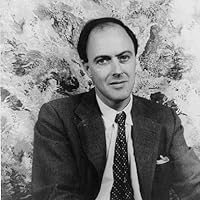
Roald Dahl was a British novelist, short story writer and screenwriter of Norwegian descent, who rose to prominence in the 1940's with works for both children and adults, and became one of the world's bestselling authors. Dahl's first published work, inspired by a meeting with C. S. Forester, was Shot Down Over Libya. Today the story is published as A Piece of Cake. The story, about his wartime adventures, was bought by the Saturday Evening Post for $900, and propelled him into a career as a writer. Its title was inspired by a highly inaccurate and sensationalized article about the crash that blinded him, which claimed he had been shot down instead of simply having to land because of low fuel. His first children's book was The Gremlins, about mischievous little creatures that were part of RAF folklore. The book was commissioned by Walt Disney for a film that was never made, and published in 1943. Dahl went on to create some of the best-loved children's stories of the 20th century, such as Charlie and the Chocolate Factory, Matilda and James and the Giant Peach. He also had a successful parallel career as the writer of macabre adult short stories, usually with a dark sense of humour and a surprise ending. Many were originally written for American magazines such as Ladies Home Journal, Harper's, Playboy and The New Yorker, then subsequently collected by Dahl into anthologies, gaining world-wide acclaim. Dahl wrote more than 60 short stories and they have appeared in numerous collections, some only being published in book form after his death. His stories also brought him three Edgar Awards: in 1954, for the collection Someone Like You; in 1959, for the story "The Landlady"; and in 1980, for the episode of Tales of the Unexpected based on "Skin".

Terse literary style of Ernest Miller Hemingway, an American writer, ambulance driver of World War I, journalist, and expatriate in Paris during the 1920s, marks short stories and novels, such as The Sun Also Rises (1926) and The Old Man and the Sea (1952), which concern courageous, lonely characters, and he won the Nobel Prize of 1954 for literature. Economical and understated style of Hemingway strongly influenced 20th-century fiction, whereas his life of adventure and his public image influenced later generations. Hemingway produced most of his work between the mid-1920s and the mid-1950s. He published seven novels, six short story collections and two nonfiction works. Survivors published posthumously three novels, four collections of short stories, and three nonfiction works. People consider many of these classics. After high school, Hemingway reported for a few months for the Kansas City Star before leaving for the Italian front to enlist. In 1918, someone seriously wounded him, who returned home. His wartime experiences formed the basis for his novel A Farewell to Arms . In 1922, he married Hadley Richardson, the first of his four wives. The couple moved, and he worked as a foreign correspondent and fell under the influence of the modernist writers and artists of the expatriate community of the "lost generation" of 1920s. After his divorce of 1927 from Hadley Richardson, Hemingway married Pauline Pfeiffer. At the Spanish civil war, he acted as a journalist; afterward, they divorced, and he wrote For Whom the Bell Tolls . Hemingway maintained permanent residences in Key West, Florida, and Cuba during the 1930s and 1940s. Martha Gellhorn served as third wife of Hemingway in 1940. When he met Mary Welsh in London during World War II, they separated; he presently witnessed at the Normandy landings and liberation of Paris. Shortly after 1952, Hemingway went on safari to Africa, where two plane crashes almost killed him and left him in pain and ill health for much of the rest of his life. Nevertheless, in 1959, he moved from Cuba to Ketchum, Idaho, where he committed suicide in the summer of 1961.

Daphne du Maurier was born on 13 May 1907 at 24 Cumberland Terrace, Regent's Park, London, the middle of three daughters of prominent actor-manager Sir Gerald du Maurier and actress Muriel, née Beaumont. In many ways her life resembles a fairy tale. Born into a family with a rich artistic and historical background, her paternal grandfather was author and Punch cartoonist George du Maurier, who created the character of Svengali in the 1894 novel Trilby, and her mother was a maternal niece of journalist, author, and lecturer Comyns Beaumont. She and her sisters were indulged as a children and grew up enjoying enormous freedom from financial and parental restraint. Her elder sister, Angela du Maurier, also became a writer, and her younger sister Jeanne was a painter. She spent her youth sailing boats, travelling on the Continent with friends, and writing stories. Her family connections helped her establish her literary career, and she published some of her early work in Beaumont's Bystander magazine. A prestigious publishing house accepted her first novel when she was in her early twenties, and its publication brought her not only fame but the attentions of a handsome soldier, Major (later Lieutenant-General Sir) Frederick Browning, whom she married. She continued writing under her maiden name, and her subsequent novels became bestsellers, earning her enormous wealth and fame. Many have been successfully adapted into films, including the novels Rebecca, Frenchman's Creek, My Cousin Rachel, and Jamaica Inn, and the short stories The Birds and Don't Look Now/Not After Midnight. While Alfred Hitchcock's films based upon her novels proceeded to make her one of the best-known authors in the world, she enjoyed the life of a fairy princess in a mansion in Cornwall called Menabilly, which served as the model for Manderley in Rebecca. Daphne du Maurier was obsessed with the past. She intensively researched the lives of Francis and Anthony Bacon, the history of Cornwall, the Regency period, and nineteenth-century France and England. Above all, however, she was obsessed with her own family history, which she chronicled in Gerald: A Portrait, a biography of her father; The du Mauriers, a study of her family which focused on her grandfather, George du Maurier, the novelist and illustrator for Punch; The Glassblowers, a novel based upon the lives of her du Maurier ancestors; and Growing Pains, an autobiography that ignores nearly 50 years of her life in favour of the joyful and more romantic period of her youth. Daphne du Maurier can best be understood in terms of her remarkable and paradoxical family, the ghosts which haunted her life and fiction. While contemporary writers were dealing critically with such subjects as the war, alienation, religion, poverty, Marxism, psychology and art, and experimenting with new techniques such as the stream of consciousness, du Maurier produced 'old-fashioned' novels with straightforward narratives that appealed to a popular audience's love of fantasy, adventure, sexuality and mystery. At an early age, she recognised that her readership was comprised principally of women, and she cultivated their loyal following through several decades by embodying their desires and dreams in her novels and short stories. In some of her novels, however, she went beyond the technique of the formulaic romance to achieve a powerful psychological realism reflecting her intense feelings about her father, and to a lesser degree, her mother. This vision, which underlies Julius, Rebecca and The Parasites, is that of an author overwhelmed by the memory of her father's commanding presence. In Julius and The Parasites, for example, she introduces the image of a domineering but deadly father and the daring subject of incest. In Rebecca, on the other hand, du Maurier fuses psychological realism with a sophisticated version of the Cinderella story. The nameless heroine has

Patricia Highsmith was an American novelist who is known mainly for her psychological crime thrillers which have led to more than two dozen film adaptations over the years. She lived with her grandmother, mother and later step-father (her mother divorced her natural father six months before 'Patsy' was born and married Stanley Highsmith) in Fort Worth before moving with her parents to New York in 1927 but returned to live with her grandmother for a year in 1933. Returning to her parents in New York, she attended public schools in New York City and later graduated from Barnard College in 1942. Shortly after graduation her short story 'The Heroine' was published in the Harper's Bazaar magazine and it was selected as one of the 22 best stories that appeared in American magazines in 1945 and it won the O Henry award for short stories in 1946. She continued to write short stories, many of them comic book stories, and regularly earned herself a weekly $55 pay-check. During this period of her life she lived variously in New York and Mexico. Her first suspense novel 'Strangers on a Train' published in 1950 was an immediate success with public and critics alike. The novel has been adapted for the screen three times, most notably by Alfred Hitchcock in 1951. In 1955 her anti-hero Tom Ripley appeared in the splendid 'The Talented Mr Ripley', a book that was awarded the Grand Prix de Litterature Policiere as the best foreign mystery novel translated into French in 1957. This book, too, has been the subject of a number of film versions. Ripley appeared again in 'Ripley Under Ground' in 1970, in 'Ripley's Game' in 1974, 'The boy who Followed Ripley' in 1980 and in 'Ripley Under Water' in 1991. Along with her acclaimed series about Ripley, she wrote 22 novels and eight short story collections plus many other short stories, often macabre, satirical or tinged with black humour. She also wrote one novel, non-mystery, under the name Claire Morgan , plus a work of non-fiction 'Plotting and Writing Suspense Fiction' and a co-written book of children's verse, 'Miranda the Panda Is on the Veranda'. She latterly lived in England and France and was more popular in England than in her native United States. Her novel 'Deep Water', 1957, was called by the Sunday Times one of the "most brilliant analyses of psychosis in America" and Julian Symons once wrote of her "Miss Highsmith is the writer who fuses character and plot most successfully ... the most important crime novelist at present in practice." In addition, Michael Dirda observed "Europeans honoured her as a psychological novelist, part of an existentialist tradition represented by her own favorite writers, in particular Dostoevsky, Conrad, Kafka, Gide, and Camus." She died of leukemia in Locarno, Switzerland on 4 February 1995 and her last novel, 'Small g: a Summer Idyll', was published posthumously a month later. Gerry Wolstenholme July 2010

Isaac Asimov was a Russian-born, American author, a professor of biochemistry, and a highly successful writer, best known for his works of science fiction and for his popular science books. Professor Asimov is generally considered one of the most prolific writers of all time, having written or edited more than 500 books and an estimated 90,000 letters and postcards. He has works published in nine of the ten major categories of the Dewey Decimal System (lacking only an entry in the 100s category of Philosophy). Asimov is widely considered a master of the science-fiction genre and, along with Robert A. Heinlein and Arthur C. Clarke, was considered one of the "Big Three" science-fiction writers during his lifetime. Asimov's most famous work is the Foundation Series; his other major series are the Galactic Empire series and the Robot series, both of which he later tied into the same fictional universe as the Foundation Series to create a unified "future history" for his stories much like those pioneered by Robert A. Heinlein and previously produced by Cordwainer Smith and Poul Anderson. He penned numerous short stories, among them "Nightfall", which in 1964 was voted by the Science Fiction Writers of America the best short science fiction story of all time, a title many still honor. He also wrote mysteries and fantasy, as well as a great amount of nonfiction. Asimov wrote the Lucky Starr series of juvenile science-fiction novels using the pen name Paul French. Most of Asimov's popularized science books explain scientific concepts in a historical way, going as far back as possible to a time when the science in question was at its simplest stage. He often provides nationalities, birth dates, and death dates for the scientists he mentions, as well as etymologies and pronunciation guides for technical terms. Examples include his Guide to Science, the three volume set Understanding Physics, and Asimov's Chronology of Science and Discovery. Asimov was a long-time member and Vice President of Mensa International, albeit reluctantly; he described some members of that organization as "brain-proud and aggressive about their IQs" He took more joy in being president of the American Humanist Association. The asteroid 5020 Asimov, the magazine Asimov's Science Fiction, a Brooklyn, NY elementary school, and two different Isaac Asimov Awards are named in his honor.

Librarian Note: There is more than one author in the Goodreads database with this name. Ian Lancaster Fleming was a British author, journalist, and commander in the royal Navy during the Second World War. He was a grandson of the Scottish financier Robert Fleming, who founded the Scottish American Investment Trust and the merchant bank Robert Fleming & Co. Fleming is best remembered for creating the character of James Bond and chronicling his adventures in twelve novels and nine short stories. Additionally, Fleming wrote the children's story Chitty Chitty Bang Bang and two non-fiction books.

The #1 New York Times bestselling author Mary Higgins Clark has written thirty-eight suspense novels, four collections of short stories, a historical novel, a memoir, and two children’s books. With bestselling author Alafair Burke she wrote the Under Suspicion series. With her daughter Carol Higgins Clark, she has coauthored five more suspense novels. Clark’s books have sold more than 100 million copies in the United States alone. Her books are beloved around the world and made her an international bestseller many times over.