


Margins
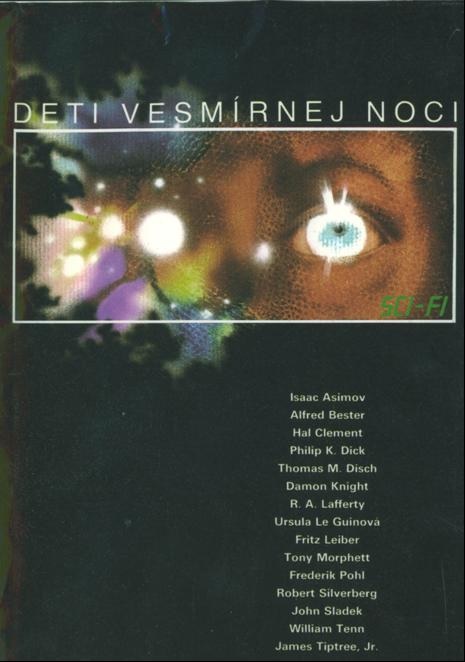
Deti vesmírnej noci book cover
Deti vesmírnej noci
1989
First Published
3.30
Average Rating
384
Number of Pages

Poviedky: William Tenn - Bernie Faust Alfred Bester - Dnes sa už nežije ako kedysi Frederik Pohl - Deti noci Philip K. Dick - Malá pozornosť pre tempunautov Ursula Le Guinová - Tí, čo odchádzajú z Omelas Fritz Leiber - Smrť princov Tony Morphett - Smetiar Thomas M. Disch - Veci zabudnuté John Sladek - Slon s drevenou nohou James Tiptree - Rajské mlieko Robert Silverberg - Breckenridge a kontinuum Damon Knight - Stanica cudzincov Isaac Asimov - Smrtiaci prach Hal Clement - Horúca planéta R.A. Lafferty - Ginny zahalená v Slnku.
Avg Rating
3.30
Number of Ratings
20
5 STARS
20%
4 STARS
15%
3 STARS
45%
2 STARS
15%
1 STARS
5%
goodreads

Authors

Damon Knight
Damon Knight
Author · 37 books

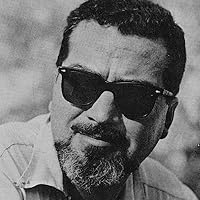
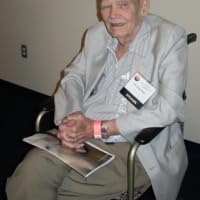
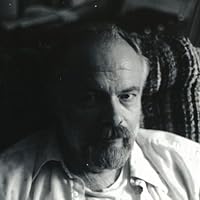
Damon Francis Knight was an American science fiction author, editor, and critic. Knight's first professional sale was a cartoon drawing to a science-fiction magazine, Amazing Stories. His first story, "Resilience", was published in 1941. He is best known as the author of "To Serve Man", which was adapted for The Twilight Zone. He was a recipient of the Hugo Award, founder of the Science Fiction and Fantasy Writers of America (SFWA), cofounder of the National Fantasy Fan Federation, cofounder of the Milford Writer's Workshop, and cofounder of the Clarion Writers Workshop. Knight lived in Eugene, Oregon, with his wife Kate Wilhelm.

Frederik Pohl
Frederik Pohl
Author · 110 books
Frederik George Pohl, Jr. was an American science fiction writer, editor and fan, with a career spanning over seventy years. From about 1959 until 1969, Pohl edited Galaxy magazine and its sister magazine IF winning the Hugo for IF three years in a row. His writing also won him three Hugos and multiple Nebula Awards. He became a Nebula Grand Master in 1993.
Thomas M. Disch
Thomas M. Disch
Author · 36 books

Poet and cynic, Thomas M. Disch brought to the sf of the New Wave a camp sensibility and a sardonicism that too much sf had lacked. His sf novels include Camp Concentration, with its colony of prisoners mutated into super-intelligence by the bacteria that will in due course kill them horribly, and On Wings of Song, in which many of the brightest and best have left their bodies for what may be genuine, or entirely illusory, astral flight and his hero has to survive until his lover comes back to him; both are stunningly original books and both are among sf's more accomplishedly bitter-sweet works. In recent years, Disch had turned to ironically moralized horror novels like The Businessman, The MD, The Priest and The Sub in which the nightmare of American suburbia is satirized through the terrible things that happen when the magical gives people the chance to do what they really really want. Perhaps Thomas M. Disch's best known work, though, is The Brave Little Toaster, a reworking of the Brothers Grimm's "Town Musicians of Bremen" featuring wornout domestic appliances—what was written as a satire on sentimentality became a successful children's animated musical. Thomas M. Disch committed suicide by gunshot on July 4, 2008.

Tony Morphett
Author · 2 books
Tony Morphett was one of Australia’s leading television script writers. In addition to his television career, he wrote several stage plays and a collection of addresses about his Christian faith titled A Hole in My Ceiling (1985). His six published novels included two for young adults, including Quest Beyond Time (1985), which was adapted for television .
Hal Clement
Hal Clement
Author · 27 books

Harry Clement Stubbs better known by the pen name Hal Clement , was an American science fiction writer and a leader of the hard science fiction subgenre. Further details at Wikipedia.

Ursula K. Le Guin
Ursula K. Le Guin
Author · 218 books

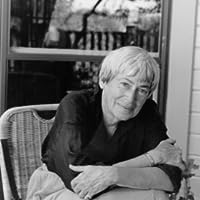
Ursula K. Le Guin published twenty-two novels, eleven volumes of short stories, four collections of essays, twelve books for children, six volumes of poetry and four of translation, and has received many awards: Hugo, Nebula, National Book Award, PEN-Malamud, etc. Her recent publications include the novel Lavinia, an essay collection, Cheek by Jowl, and The Wild Girls. She lived in Portland, Oregon. She was known for her treatment of gender (The Left Hand of Darkness, The Matter of Seggri), political systems (The Telling, The Dispossessed) and difference/otherness in any other form. Her interest in non-Western philosophies was reflected in works such as "Solitude" and The Telling but even more interesting are her imagined societies, often mixing traits extracted from her profound knowledge of anthropology acquired from growing up with her father, the famous anthropologist, Alfred Kroeber. The Hainish Cycle reflects the anthropologist's experience of immersing themselves in new strange cultures since most of their main characters and narrators (Le Guin favoured the first-person narration) are envoys from a humanitarian organization, the Ekumen, sent to investigate or ally themselves with the people of a different world and learn their ways.

Philip K. Dick
Philip K. Dick
Author · 266 books

Philip K. Dick was born in Chicago in 1928 and lived most of his life in California. In 1952, he began writing professionally and proceeded to write numerous novels and short-story collections. He won the Hugo Award for the best novel in 1962 for The Man in the High Castle and the John W. Campbell Memorial Award for best novel of the year in 1974 for Flow My Tears, the Policeman Said. Philip K. Dick died on March 2, 1982, in Santa Ana, California, of heart failure following a stroke. In addition to 44 published novels, Dick wrote approximately 121 short stories, most of which appeared in science fiction magazines during his lifetime. Although Dick spent most of his career as a writer in near-poverty, ten of his stories have been adapted into popular films since his death, including Blade Runner, Total Recall, A Scanner Darkly, Minority Report, Paycheck, Next, Screamers, and The Adjustment Bureau. In 2005, Time magazine named Ubik one of the one hundred greatest English-language novels published since 1923. In 2007, Dick became the first science fiction writer to be included in The Library of America series.

R.A. Lafferty
R.A. Lafferty
Author · 59 books
Raphael Aloysius Lafferty, published under the name R.A. Lafferty, was an American science fiction and fantasy writer known for his original use of language, metaphor, and narrative structure, as well as for his etymological wit. He also wrote a set of four autobiographical novels, a history book, and a number of novels that could be loosely called historical fiction.
Fritz Leiber
Fritz Leiber
Author · 114 books

Fritz Reuter Leiber Jr. was one of the more interesting of the young writers who came into HP Lovecraft's orbit, and some of his best early short fiction is horror rather than sf or fantasy. He found his mature voice early in the first of the sword-and-sorcery adventures featuring the large sensitive barbarian Fafhrd and the small street-smart-ish Gray Mouser; he returned to this series at various points in his career, using it sometimes for farce and sometimes for gloomy mood pieces—The Swords of Lankhmar is perhaps the best single volume of their adventures. Leiber's science fiction includes the planet-smashing The Wanderer in which a large cast mostly survive flood, fire, and the sexual attentions of feline aliens, and the satirical A Spectre is Haunting Texas in which a gangling, exo-skeleton-clad actor from the Moon leads a revolution and finds his true love. Leiber's late short fiction, and the fine horror novel Our Lady of Darkness, combine autobiographical issues like his struggle with depression and alcoholism with meditations on the emotional content of the fantastic genres. Leiber's capacity for endless self-reinvention and productive self-examination kept him, until his death, one of the most modern of his sf generation. Used These Alternate Names: Maurice Breçon, Fric Lajber, Fritz Leiber, Jr., Fritz R. Leiber, Fritz Leiber Jun., Фриц Лейбер, F. Lieber, フリッツ・ライバー

Isaac Asimov
Isaac Asimov
Author · 520 books

Isaac Asimov was a Russian-born, American author, a professor of biochemistry, and a highly successful writer, best known for his works of science fiction and for his popular science books. Professor Asimov is generally considered one of the most prolific writers of all time, having written or edited more than 500 books and an estimated 90,000 letters and postcards. He has works published in nine of the ten major categories of the Dewey Decimal System (lacking only an entry in the 100s category of Philosophy). Asimov is widely considered a master of the science-fiction genre and, along with Robert A. Heinlein and Arthur C. Clarke, was considered one of the "Big Three" science-fiction writers during his lifetime. Asimov's most famous work is the Foundation Series; his other major series are the Galactic Empire series and the Robot series, both of which he later tied into the same fictional universe as the Foundation Series to create a unified "future history" for his stories much like those pioneered by Robert A. Heinlein and previously produced by Cordwainer Smith and Poul Anderson. He penned numerous short stories, among them "Nightfall", which in 1964 was voted by the Science Fiction Writers of America the best short science fiction story of all time, a title many still honor. He also wrote mysteries and fantasy, as well as a great amount of nonfiction. Asimov wrote the Lucky Starr series of juvenile science-fiction novels using the pen name Paul French. Most of Asimov's popularized science books explain scientific concepts in a historical way, going as far back as possible to a time when the science in question was at its simplest stage. He often provides nationalities, birth dates, and death dates for the scientists he mentions, as well as etymologies and pronunciation guides for technical terms. Examples include his Guide to Science, the three volume set Understanding Physics, and Asimov's Chronology of Science and Discovery. Asimov was a long-time member and Vice President of Mensa International, albeit reluctantly; he described some members of that organization as "brain-proud and aggressive about their IQs" He took more joy in being president of the American Humanist Association. The asteroid 5020 Asimov, the magazine Asimov's Science Fiction, a Brooklyn, NY elementary school, and two different Isaac Asimov Awards are named in his honor.

Alfred Bester
Alfred Bester
Author · 36 books

Alfred Bester was an American science fiction author, TV and radio scriptwriter, magazine editor and scripter for comic strips and comic books. Though successful in all these fields, he is best remembered for his science fiction, including The Demolished Man, winner of the inaugural Hugo Award in 1953, a story about murder in a future society where the police are telepathic, and The Stars My Destination, a 1956 SF classic about a man bent on revenge in a world where people can teleport, that inspired numerous authors in the genre and is considered an early precursor to the cyberpunk movement in the 1980s. AKA: Άλφρεντ Μπέστερ (Greek)

James Tiptree Jr.
James Tiptree Jr.
Author · 29 books

"James Tiptree Jr." was born Alice Bradley in Chicago in 1915. Her mother was the writer Mary Hastings Bradley; her father, Herbert, was a lawyer and explorer. Throughout her childhood she traveled with her parents, mostly to Africa, but also to India and Southeast Asia. Her early work was as an artist and art critic. During World War II she enlisted in the Army and became the first American female photointelligence officer. In Germany after the war, she met and married her commanding officer, Huntington D. Sheldon. In the early 1950s, both Sheldons joined the then-new CIA; he made it his career, but she resigned in 1955, went back to college, and earned a Ph.D. in experimental psychology. At about this same time, Alli Sheldon started writing science fiction. She wrote four stories and sent them off to four different science fiction magazines. She did not want to publish under her real name, because of her CIA and academic ties, and she intended to use a new pseudonym for each group of stories until some sold. They started selling immediately, and only the first pseudonym—"Tiptree" from a jar of jelly, "James" because she felt editors would be more receptive to a male writer, and "Jr." for fun—was needed. (A second pseudonym, "Raccoona Sheldon," came along later, so she could have a female persona.) Tiptree quickly became one of the most respected writers in the field, winning the Hugo Award for The Girl Who was Plugged In and Houston, Houston, Do You Read?, and the Nebula Award for "Love is the Plan, the Plan is Death" and Houston, Houston. Raccoona won the Nebula for "The Screwfly Solution," and Tiptree won the World Fantasy Award for the collection Tales from the Quintana Roo. The Tiptree fiction reflects Alli Sheldon's interests and concerns throughout her life: the alien among us (a role she portrayed in her childhood travels), the health of the planet, the quality of perception, the role of women, love, death, and humanity's place in a vast, cold universe. The Otherwise Award (formerly the Tiptree Award) has celebrated science fiction that "expands and explores gender roles" since 1991. Alice Sheldon died in 1987 by her own hand. Writing in her first book about the suicide of Hart Crane, she said succinctly: "Poets extrapolate." Julie Phillips wrote her biography, James Tiptree, Jr.: The Double Life of Alice B. Sheldon

548 Market St PMB 65688, San Francisco California 94104-5401 USA
© 2026 Paratext Inc. All rights reserved