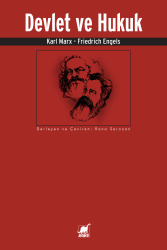



Şimdiye kadar pek az düşünür Marx kadar tartışılmıştır. Aradan yüzyıllar geçmiş olmasına rağmen Marx’ın “dünyayı değiştirmeyi” hedef alan devrimci politik fikirleri hâlâ etkili ve canlı. Bu canlılığın herkesin hayatını etkileyen kapitalist dünya sistemiyle de doğrudan ilgisi var tabii: İnsanı özüne ve hemcinslerine yabancılaştıran, tüm insani değerleri “meta”ya indirgeyen, yoksulları daha yoksul kılan, gelir uçurumunu derinleştiren, ücretleri düşüren, iş güvenliğini hiçe sayan, ekonomik krizleri ve sosyal felaketleri yaratan, hukuk devletini otoriter polis devletine çeviren, dünyanın her köşesinde maddi çıkar uğruna savaşlar çıkaran ve insanları birbirine kırdıran “kapitalizm” sürdükçe, Marx’ın anti-kapitalist görüşleri varlığını sürdüreceğe benziyor. Marx kapitalizmin şifrelerini kendine özgü metoduyla teker teker çözerken, kapitalist üretim tarzının modern devlet yapılanmasıyla olan ilişkisini de derinlemesine eleştirmiş; buradan hareketle de, insanlığın özgürleşmesi için hem modern devletin hem de kapitalizm ortadan kalkması gerektiği sonucuna ulaşmıştır. Bu kitapta bir araya getirilen parçalar Marx ve Engels’in özellikle devlet ve hukuk eleştirilerini içeriyor ve bu parçalar güncel kimi sorulara da cevaplar sunuyor: Devlet nedir? Modern hukuk sistemi temelinde neye dayanmaktadır? Hukuk ve devlet arasındaki ilişkilerin kapitalizmin işleyişiyle ne türden bağlantıları vardır?
Authors

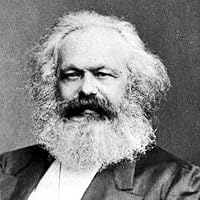
Karl Marx, Ph.D. (University of Jena, 1841) was a social scientist who was a key contributor to the development of Communist theory. Marx was born in Trier, a city then in the Kingdom of Prussia's Province of the Lower Rhine. His father, born Jewish, converted to Protestantism shortly before Karl's birth in response to a prohibition newly introduced into the Rhineland by the Prussian Kingdom on Jews practicing law. Educated at the Universities of Bonn, Jena, and Berlin, Marx founded the Socialist newspaper Vorwärts! in 1844 in Paris. After being expelled from France at the urging of the Prussian government, which "banished" Marx in absentia, Marx studied economics in Brussels. He and Engels founded the Communist League in 1847 and published the Communist Manifesto. After the failed revolution of 1848 in Germany, in which Marx participated, he eventually wound up in London. Marx worked as foreign correspondent for several U.S. publications. His Das Kapital came out in three volumes (1867, 1885 and 1894). Marx organized the International and helped found the Social Democratic Party of Germany. Although Marx was not religious, Bertrand Russell later remarked, "His belief that there is a cosmic force called Dialectical Materialism which governs human history independently of human volitions, is mere mythology" (Portraits from Memory, 1956). Marx once quipped, "All I know is that I am not a Marxist" (according to Engels in a letter to C. Schmidt; see Who's Who in Hell by Warren Allen Smith). D. 1883. Marx began co-operating with Bruno Bauer on editing Hegel's Philosophy of Religion in 1840. Marx was also engaged in writing his doctoral thesis, The Difference Between the Democritean and Epicurean Philosophy of Nature, which he completed in 1841. It was described as "a daring and original piece of work in which Marx set out to show that theology must yield to the superior wisdom of philosophy": the essay was controversial, particularly among the conservative professors at the University of Berlin. Marx decided, instead, to submit his thesis to the more liberal University of Jena, whose faculty awarded him his PhD in April 1841. As Marx and Bauer were both atheists, in March 1841 they began plans for a journal entitled Archiv des Atheismus (Atheistic Archives), but it never came to fruition. Marx has been described as one of the most influential figures in human history. Marx is typically cited, with Émile Durkheim and Max Weber, as one of the three principal architects of modern social science. More: http://en.wikipedia.org/wiki/Karl\_Marx http://plato.stanford.edu/entries/marx/ http://www.econlib.org/library/Enc/bi... http://www.marxists.org/archive/marx/... http://www.historyguide.org/intellect... http://www.bbc.co.uk/history/historic... http://www.spartacus.schoolnet.co.uk/... http://www.britannica.com/EBchecked/t...