Author
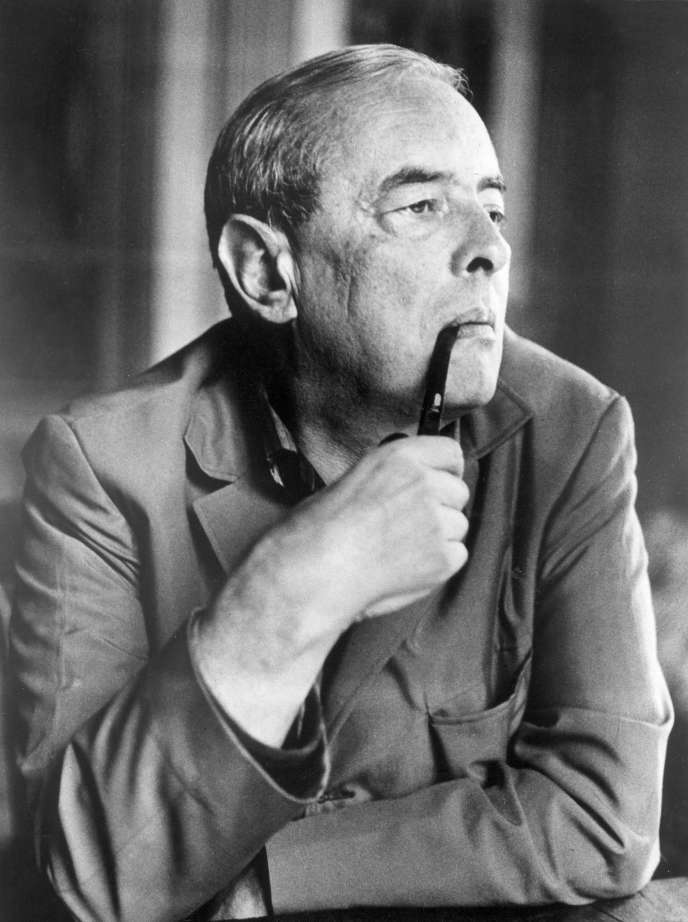
Witold Marian Gombrowicz (August 4, 1904 in Małoszyce, near Kielce, Congress Poland, Russian Empire – July 24, 1969 in Vence, near Nice, France) was a Polish novelist and dramatist. His works are characterized by deep psychological analysis, a certain sense of paradox and an absurd, anti-nationalist flavor. In 1937 he published his first novel, Ferdydurke, which presented many of his usual themes: the problems of immaturity and youth, the creation of identity in interactions with others, and an ironic, critical examination of class roles in Polish society and culture. He gained fame only during the last years of his life but is now considered one of the foremost figures of Polish literature. —————————————————————————- Biography Gombrowicz was born in Małoszyce, in Congress Poland, Russian Empire to a wealthy gentry family. He was the youngest of four children of Jan and Antonina (née Kotkowska.) In 1911 his family moved to Warsaw. After completing his education at Saint Stanislaus Kostka's Gymnasium in 1922, he studied law at Warsaw University (in 1927 he obtained a master’s degree in law.) Gombrowicz spent a year in Paris where he studied at the Institut des Hautes Etudes Internationales; although he was less than diligent in his studies his time in France brought him in constant contact with other young intellectuals. He also visited the Mediterranean. When he returned to Poland he began applying for legal positions with little success. In the 1920s he started writing, but soon rejected the legendary novel, whose form and subject matter were supposed to manifest his 'worse' and darker side of nature. Similarly, his attempt to write a popular novel in collaboration with Tadeusz Kępiński turned out to be a failure. At the turn of the 20's and 30's he started to write short stories, which were later printed under the title Memoirs Of A Time Of Immaturity. From the moment of this literary debut, his reviews and columns started appearing in the press, mainly in the Kurier Poranny (Morning Courier). He met with other young writers and intellectuals forming an artistic café society in Zodiak and Ziemiańska, both in Warsaw. The publication of Ferdydurke, his first novel, brought him acclaim in literary circles. Just before the outbreak of the Second World War, Gombrowicz took part in the maiden voyage of the Polish cruise liner, Chrobry, to South America. When he found out about the outbreak of war in Europe, he decided to wait in Buenos Aires till the war was over, but was actually to stay there until 1963 — often, especially during the war, in great poverty. At the end of the 1940s Gombrowicz was trying to gain a position among Argentine literary circles by publishing articles, giving lectures in Fray Mocho café, and finally, by publishing in 1947 a Spanish translation of Ferdydurke written with the help of Gombrowicz’s friends, among them Virgilio Piñera. Today, this version of the novel is considered to be a significant literary event in the history of Argentine literature; however, when published it did not bring any great renown to the author, nor did the publication of Gombrowicz’s drama Ślub in Spanish (The Wedding, El Casamiento) in 1948. From December 1947 to May 1955 Gombrowicz worked as a bank clerk in Banco Polaco, the Argentine branch of PeKaO SA Bank. In 1950 he started exchanging letters with Jerzy Giedroyc and from 1951 he started having works published in the Parisian journal Culture, where, in 1953, fragments of Dziennik (Diaries) appeared. In the same year he published a volume of work which included the drama Ślub (The Wedding) and the novel Trans-Atlantyk, where the subject of national identity on emigration was controversially raised. After October 1956 four books written by Gombrowicz appeared in Poland and they brought him great renown despite the fact that the authorities did not allow the publication of Dziennik (Diaries), and later organized