Margins
Margins
Sign in
Margins
Subscribe to our newsletter
548 Market St PMB 65688, San Francisco California 94104-5401 USA
hello@margins.app
·
+1 (650) 223-5283
Privacy Policy
·
Terms of Use
© 2026 Paratext Inc. All rights reserved
📚 Dick
📚
Dick
Do Androids Dream of Electric Sheep?
1968
Philip K. Dick
It was January 2021, and Rick Deckard had a license to kill. Somewhere among the hordes of humans out there, lurked several rogue androids. Deckard's assignment—find them and then..."retire" them. Trouble was, the androids all looked exactly like humans, and they didn't want to be found!
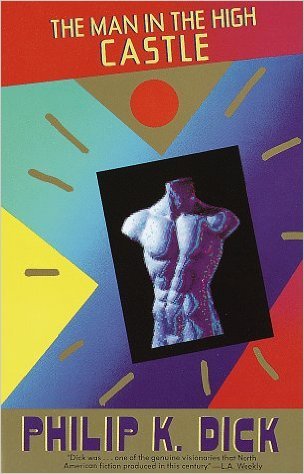
The Man in the High Castle
1962
Philip K. Dick
It's America in 1962. Slavery is legal once again. The few Jews who still survive hide under assumed names. In San Francisco, the I Ching is as common as the Yellow Pages. All because some twenty years earlier the United States lost a war—and is now occupied by Nazi Germany and Japan. This harrowing, Hugo Award-winning novel is the work that established Philip K. Dick as an innovator in science fiction while breaking the barrier between science fiction and the serious novel of ideas. In it Dick offers a haunting vision of history as a nightmare from which it may just be possible to wake.
Ubik
1969
Philip K. Dick
Glen Runciter runs a lucrative business—deploying his teams of anti-psychics to corporate clients who want privacy and security from psychic spies. But when he and his top team are ambushed by a rival, he is gravely injured and placed in “half-life,” a dreamlike state of suspended animation. Soon, though, the surviving members of the team begin experiencing some strange phenomena, such as Runciter’s face appearing on coins and the world seeming to move backward in time. As consumables deteriorate and technology gets ever more primitive, the group needs to find out what is causing the shifts and what a mysterious product called Ubik has to do with it all.
The Three Stigmata of Palmer Eldritch
1965
Philip K. Dick
In the overcrowded world and cramped space colonies of the late 21st century, tedium can be endured through the drug Can-D, which enables users to inhabit a shared illusory world. When industrialist Palmer Eldritch returns from an interstellar trip, he brings with him a new drug, Chew-Z. It is far more potent than Can-D, but threatens to plunge the world into a permanent state of drugged illusion controlled by the mysterious Eldritch. Cover illustration: Chris Moore
A Maze of Death
1970
Philip K. Dick
Fourteen strangers come to Delmak-O. Thirteen of them were transferred by the usual authorities. One got there by praying. But once they arrived on that treacherous planet, whose very atmosphere seemed to induce paranoia and psychosis, the newcomers tound that even prayer was useless. For on Delmak-O, God is either absent or intent on destroying His creations. At once a wrenching metaphysical thriller and an ingenious meditation on the nature of divinity, A Maze of Death is Philip K. Dick at his most dizzyingly provocative.
Eye in the Sky
1957
Philip K. Dick
While sightseeing at the Belmont Bevatron, Jack Hamilton, along with seven others, is caught in a lab accident. When he regains consciousness, he is in a fantasy world of Old Testament morality gone awry—a place of instant plagues, immediate damnations, and death to all perceived infidels. Hamilton figures out how he and his compatriots can escape this world and return to their own, but first they must pass through three other vividly fantastical worlds, each more perilous and hilarious than the one before. Winner of both the Hugo and John W. Campbell awards for best novel, widely regarded as the premiere science fiction writer of his day, and the object of cult-like adoration from his legions of fans, Philip K. Dick has come to be seen in a literary light that defies classification in much the same way as Borges and Calvino. With breathtaking insight, he utilizes vividly unfamiliar worlds to evoke the hauntingly and hilariously familiar in our society and ourselves.
Time Out of Joint
1959
Philip K. Dick
Ragle Gumm is an ordinary man leading an ordinary life, except that he makes his living by entering a newspaper contest every day - and winning, every day. But he gradually begins to suspect that his life - indeed his whole world - is an illusion, constructed around him for the express purpose of keeping him docile and happy. But if that is the case, what is his real world like, and what is he actually doing every day when he thinks he is guessing 'Where Will The Little Green Man Be Next?'
The Game-Players of Titan
1963
Philip K. Dick
In this sardonically funny gem of speculative fiction, Philip K. Dick creates a novel that manages to be simultaneously unpredictable and perversely logical. Poor Pete Garden has just lost Berkeley. He's also lost his wife, but he'll get a new one as soon as he rolls a three. It's all part of the rules of Bluff, the game that's become a blinding obsession for the last inhabitants of the planet Earth. But the rules are about to change—drastically and terminally—because Pete Garden will be playing his next game against an opponent who isn't even human, for stakes that are a lot higher than Berkeley.
Counter-Clock World
1967
Philip K. Dick
In Counter-Clock World, one of the most theologically probing of all of Dick’s books, the world has entered the Hobart Phase—a vast sidereal process in which time moves in reverse. As a result, libraries are busy eradicating books, copulation signifies the end of pregnancy, people greet with, “Good-bye,” and part with, “Hello,” and underneath the world’s tombstones, the dead are coming back to life. One imminent old-born is Anarch Peak, a vibrant religious leader whose followers continued to flourish long after his death. His return from the dead has such awesome implications that those who apprehend him will very likely be those who control the fate of the world.
Flow My Tears, the Policeman Said
1974
Philip K. Dick
Jason Tavener woke up one morning to find himself completely unknown. The night before he had been the top-rated television star with millions of devoted watchers. The next day he was just an unidentified walking object, whose face nobody recognised, of whom no one had heard, and without the I.D. papers required in that near future. When he finally found a man who would agree to counterfeiting such cards for him, that man turned out to be a police informer. And then Taverner found out not only what it was like to be a nobody but also to be hunted by the whole apparatus of society. It was obvious that in some way Taverner had become the pea in in some sort of cosmic shell game - but how? And why? Philip K. Dick takes the reader on a walking tour of solipsism's scariest margin in his latest novel about the age we are already half into.