


Diese Ausgabe der Werke von Tschechow wurde mit einem funktionalen Layout erstellt und sorgfältig formatiert. Dieses eBook ist mit interaktiven Inhalt und Begleitinformationen versehen, einfach zu navigieren und gut gegliedert. Anton Pawlowitsch Tschechow (1860-1904) war ein russischer Schriftsteller, Novellist und Dramatiker. Mit der für ihn typischen, wertneutralen und zurückhaltenden Art, Aspekte aus dem Leben und der Denkweise der Menschen in der russischen Provinz darzustellen, gilt Tschechow als einer der bedeutendsten Autoren der russischen Literatur. Inhalt: Dramen: Der Bär Ein Heiratsantrag Die Möwe Onkel Wanja Drei Schwestern Der Kirschgarten Erzählungen: Ein wehrloses Geschöpf Eine Tochter Albions Das Drama Das Kunstwerk Mnemotechnik Der Tod des Beamten Ja, das Publikum! Starker Tobak Ein Chamäleon Aus dem Regen in die Traufe Teure Stunden Das Gewinnlos Die Sünde Schlafen! Eine schreckliche Nacht Der Redner Die Nacht vor der Verhandlung Verwirrung der Geister Schatten des Todes Die Verleumdung Der Kuß Die Dame mit dem Hündchen Der Rächer seiner Ehre Ein Glücklicher Der teure Hund Der Dramatiker Der Gast Der Kater Ein Unikum Die Rache Die Freude! Duell (Ein Zweikampf) Eine Schutzlose Auf der Post In den Chambregarnies In der Barbierstube Nur seine Frau! Kaschtanka Schlechte Aufführung Der geheimnisvolle Fremde Eine neue, sehr angenehme Bekanntschaft Blaue Wunder Genie! Genie! Eine unruhige Nacht Ein mißlungenes Debut Tsss! . . . Ohne Auslagen Das schwedische Zündholz Der Löwen- und Sonnenorden Grischa Die Apothekerin Der Orden Eine problematische Natur Der teure Hund Plappertasche Die Sirene Der Dicke und der Dünne Der böse Knabe Ein bekannter Herr Der Repetitor Einmal im Jahr In der Sommerfrische Der Taugenichts In der Osternacht Das Ende des Komödianten Der Typhus Wolodja Jonytsch Im Alter Die Kinder Zinotschka Die letzte Mohikanerin Die Jungens Eine Bagatelle Zu Hause Ein Fall aus der Praxis Ein Verhängnis Ein Ereignis und mehr
Author

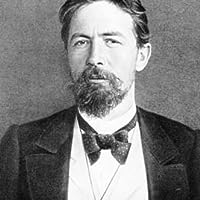
Anton Pavlovich Chekhov (Russian: Антон Павлович Чехов ) was born in the small seaport of Taganrog, southern Russia, the son of a grocer. Chekhov's grandfather was a serf, who had bought his own freedom and that of his three sons in 1841. He also taught himself to read and write. Yevgenia Morozova, Chekhov's mother, was the daughter of a cloth merchant. "When I think back on my childhood," Chekhov recalled, "it all seems quite gloomy to me." His early years were shadowed by his father's tyranny, religious fanaticism, and long nights in the store, which was open from five in the morning till midnight. He attended a school for Greek boys in Taganrog (1867-68) and Taganrog grammar school (1868-79). The family was forced to move to Moscow following his father's bankruptcy. At the age of 16, Chekhov became independent and remained for some time alone in his native town, supporting himself through private tutoring. In 1879 Chekhov entered the Moscow University Medical School. While in the school, he began to publish hundreds of comic short stories to support himself and his mother, sisters and brothers. His publisher at this period was Nicholas Leikin, owner of the St. Petersburg journal Oskolki (splinters). His subjects were silly social situations, marital problems, farcical encounters between husbands, wives, mistresses, and lovers, whims of young women, of whom Chekhov had not much knowledge – the author was shy with women even after his marriage. His works appeared in St. Petersburg daily papers, Peterburskaia gazeta from 1885, and Novoe vremia from 1886. Chekhov's first novel, Nenunzhaya pobeda (1882), set in Hungary, parodied the novels of the popular Hungarian writer Mór Jókai. As a politician Jókai was also mocked for his ideological optimism. By 1886 Chekhov had gained a wide fame as a writer. His second full-length novel, The Shooting Party, was translated into English in 1926. Agatha Christie used its characters and atmosphere in her mystery novel The Murder of Roger Ackroyd (1926). Chekhov graduated in 1884, and practiced medicine until 1892. In 1886 Chekhov met H.S. Suvorin, who invited him to become a regular contributor for the St. Petersburg daily Novoe vremya. His friendship with Suvorin ended in 1898 because of his objections to the anti-Dreyfus campaign conducted by paper. But during these years Chechov developed his concept of the dispassionate, non-judgmental author. He outlined his program in a letter to his brother Aleksandr: "1. Absence of lengthy verbiage of political-social-economic nature; 2. total objectivity; 3. truthful descriptions of persons and objects; 4. extreme brevity; 5. audacity and originality; flee the stereotype; 6. compassion." Chekhov's first book of stories (1886) was a success, and gradually he became a full-time writer. The author's refusal to join the ranks of social critics arose the wrath of liberal and radical intelligentsia and he was criticized for dealing with serious social and moral questions, but avoiding giving answers. However, he was defended by such leading writers as Leo Tolstoy and Nikolai Leskov. "I'm not a liberal, or a conservative, or a gradualist, or a monk, or an indifferentist. I should like to be a free artist and that's all..." Chekhov said in 1888. The failure of his play The Wood Demon (1889) and problems with his novel made Chekhov to withdraw from literature for a period. In 1890 he travelled across Siberia to remote prison island, Sakhalin. There he conducted a detailed census of some 10,000 convicts and settlers condemned to live their lives on that harsh island. Chekhov hoped to use the results of his research for his doctoral dissertation. It is probable that hard conditions on the island also weakened his own physical condition. From this journey was born his famous travel book T